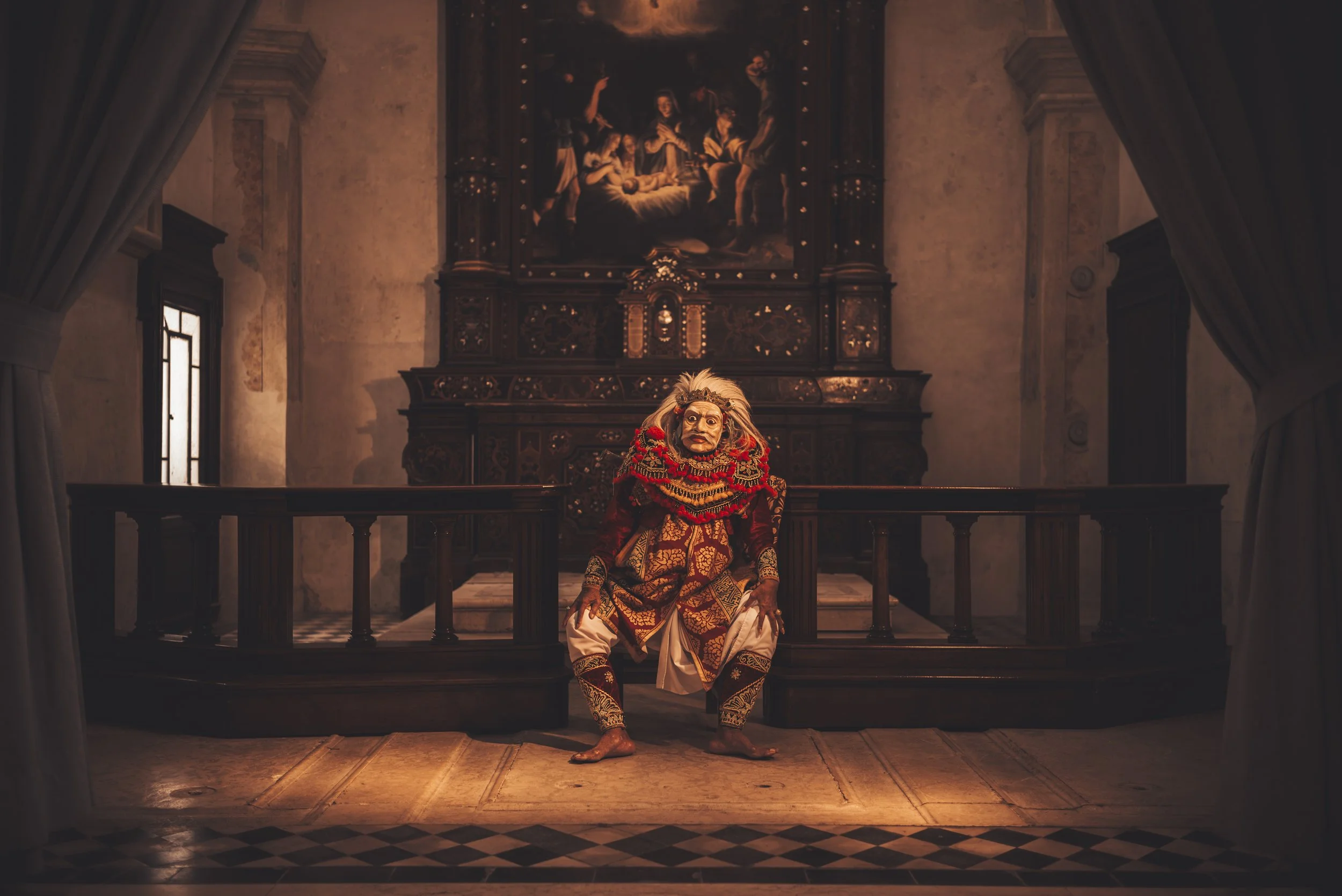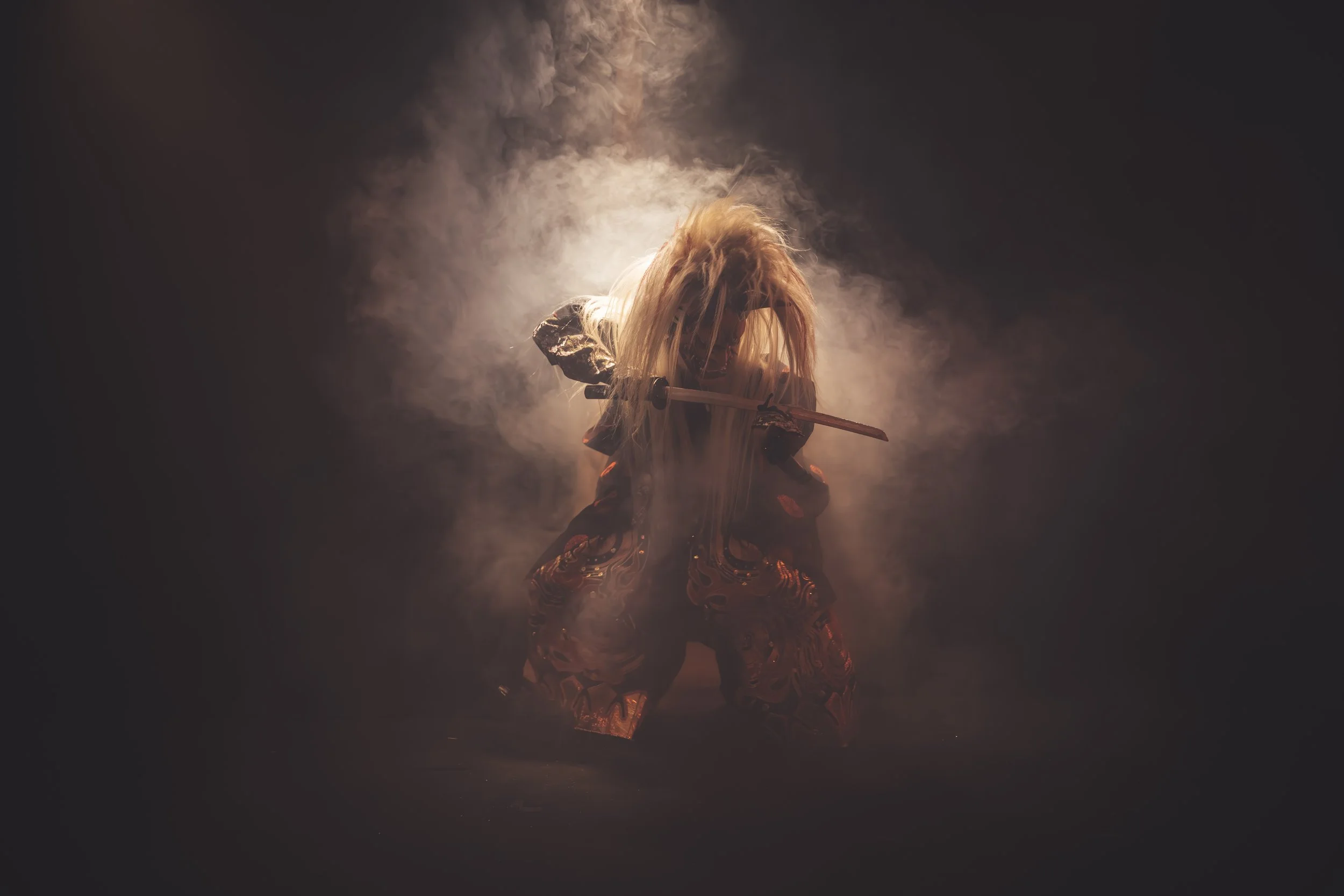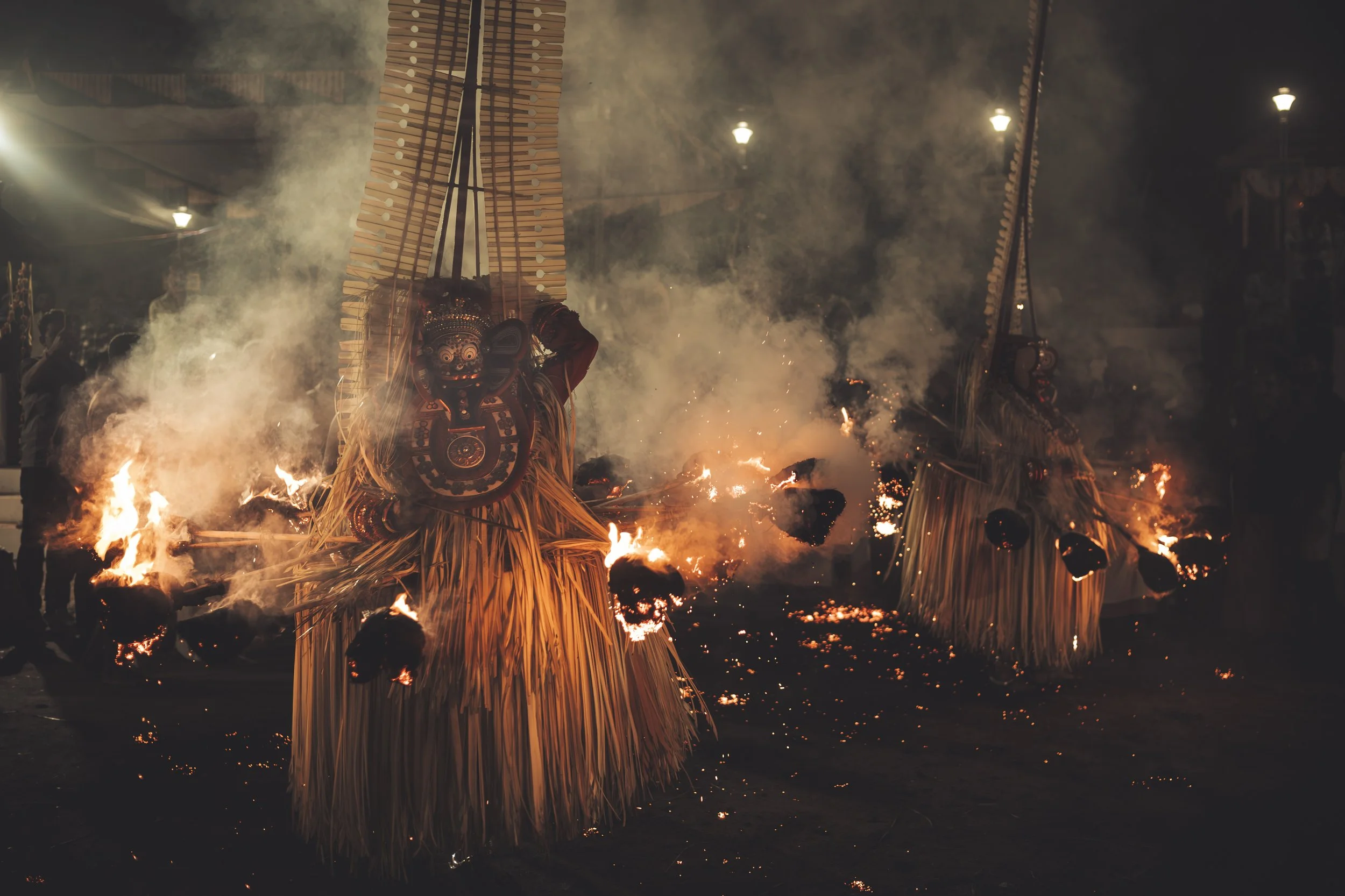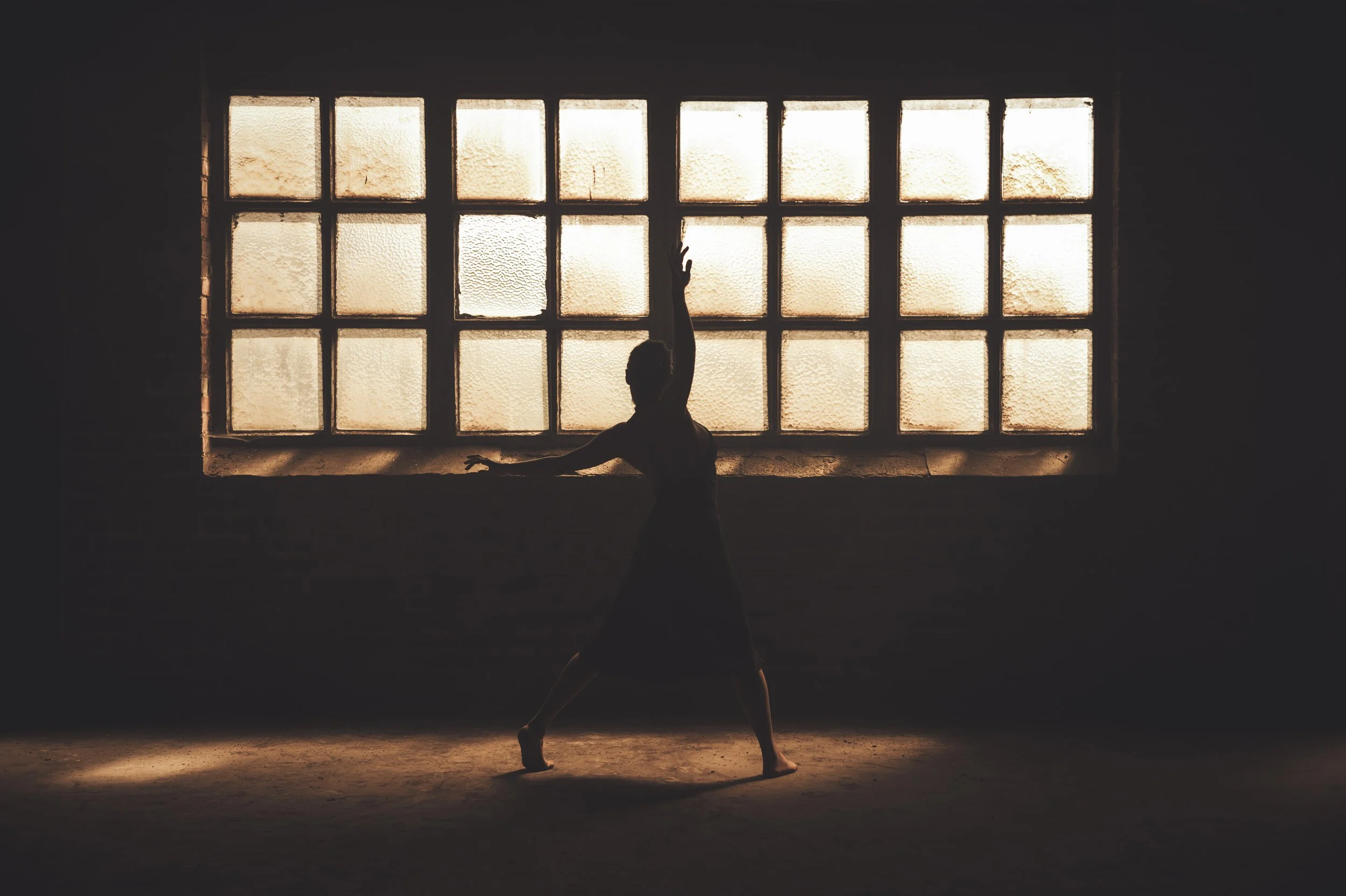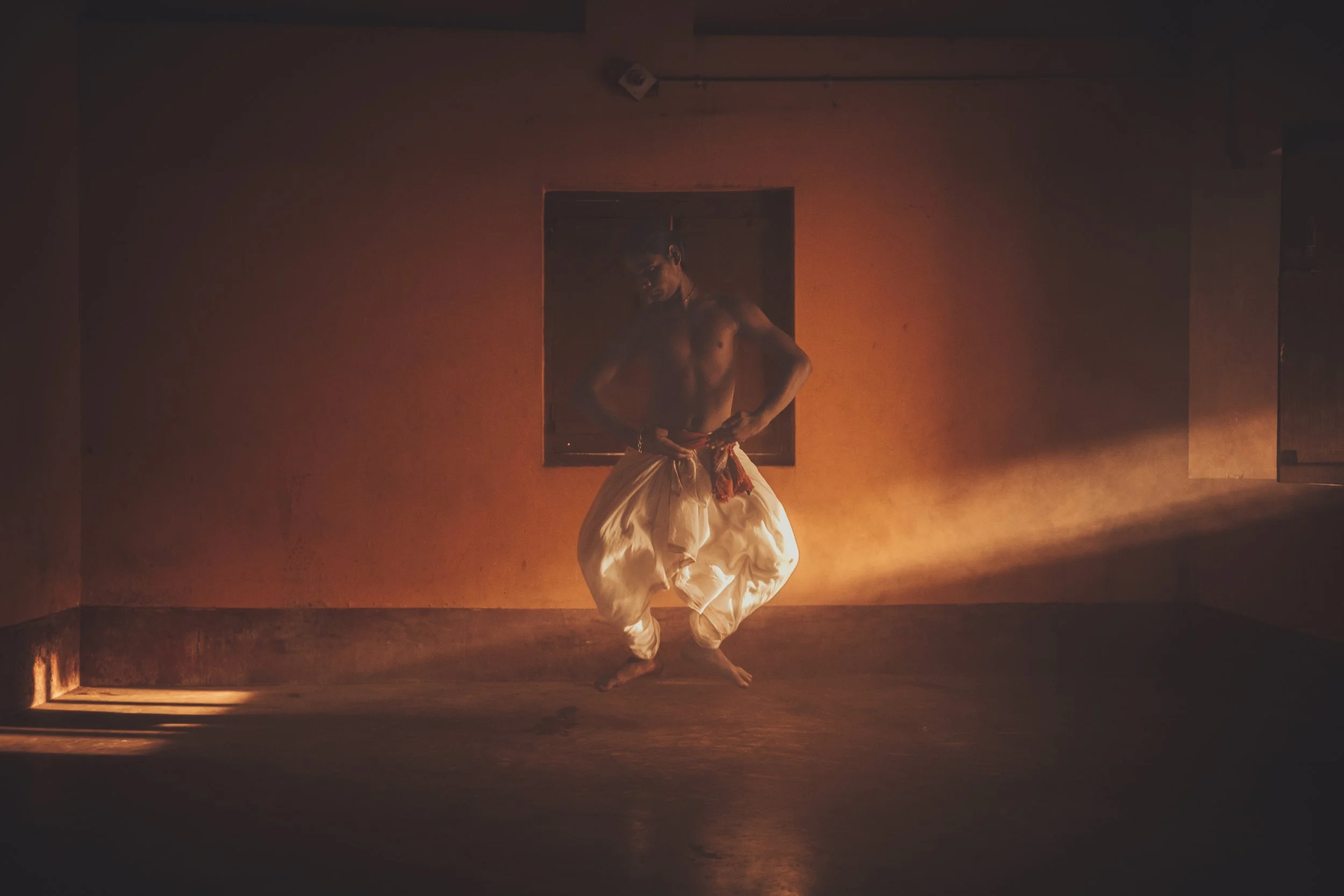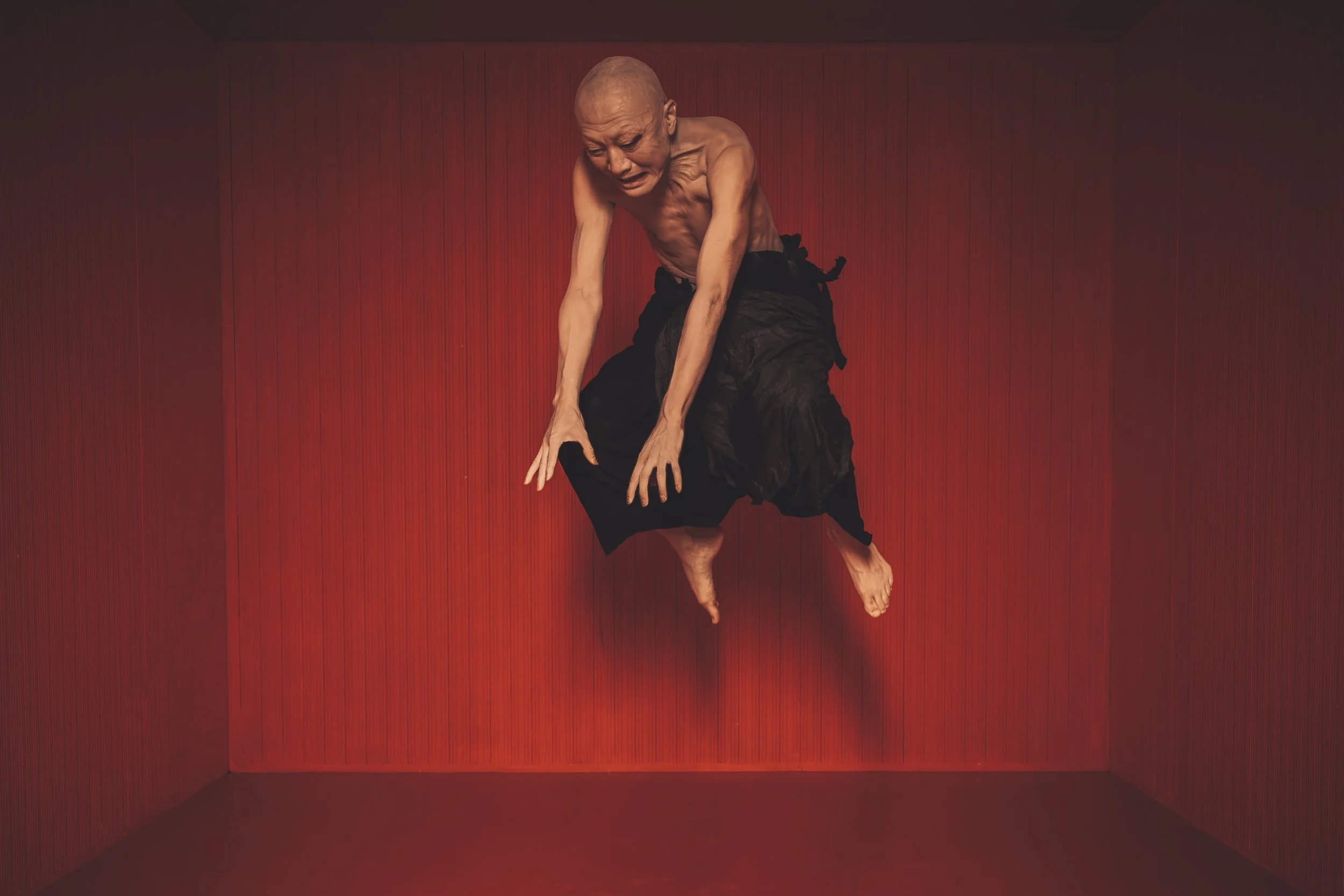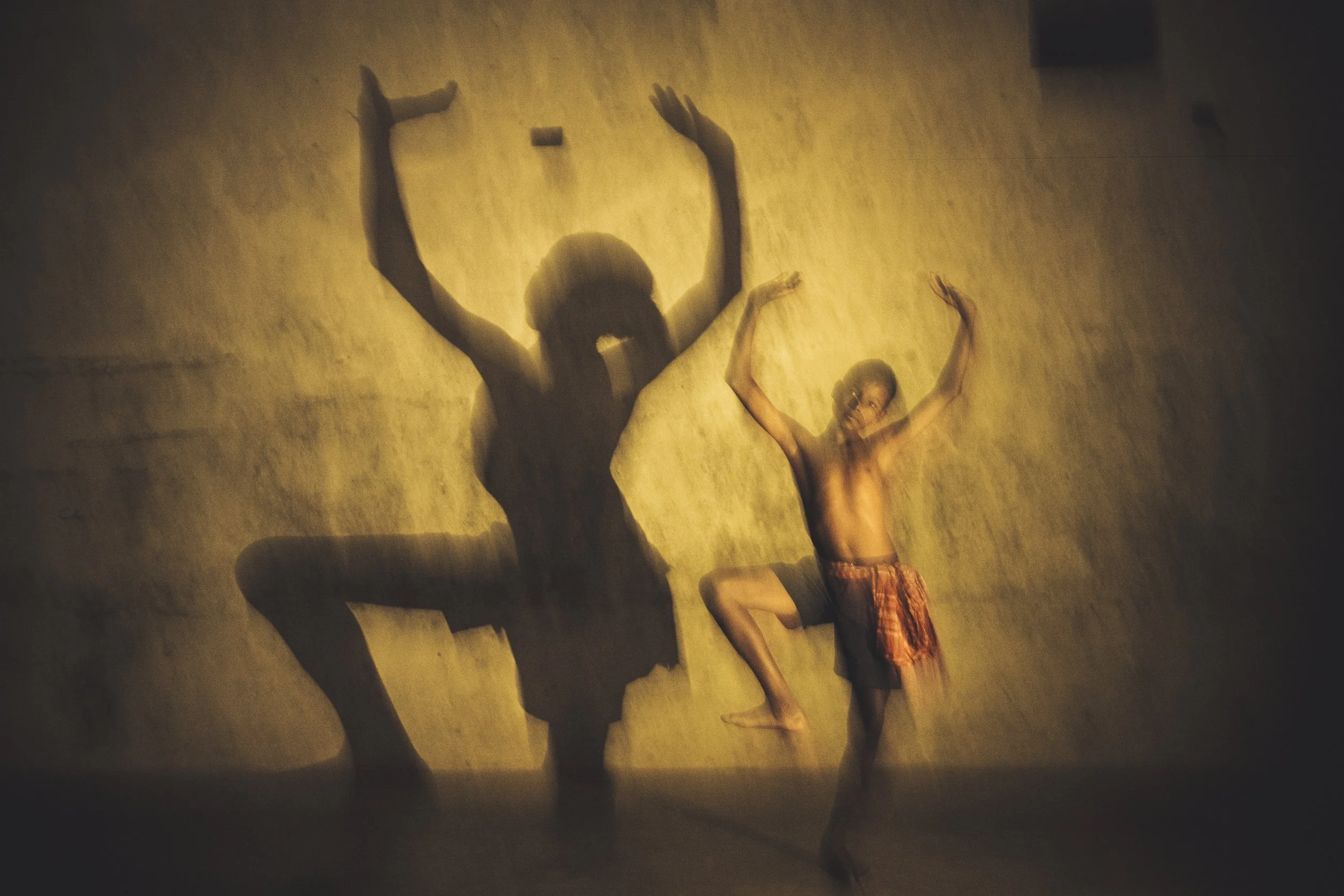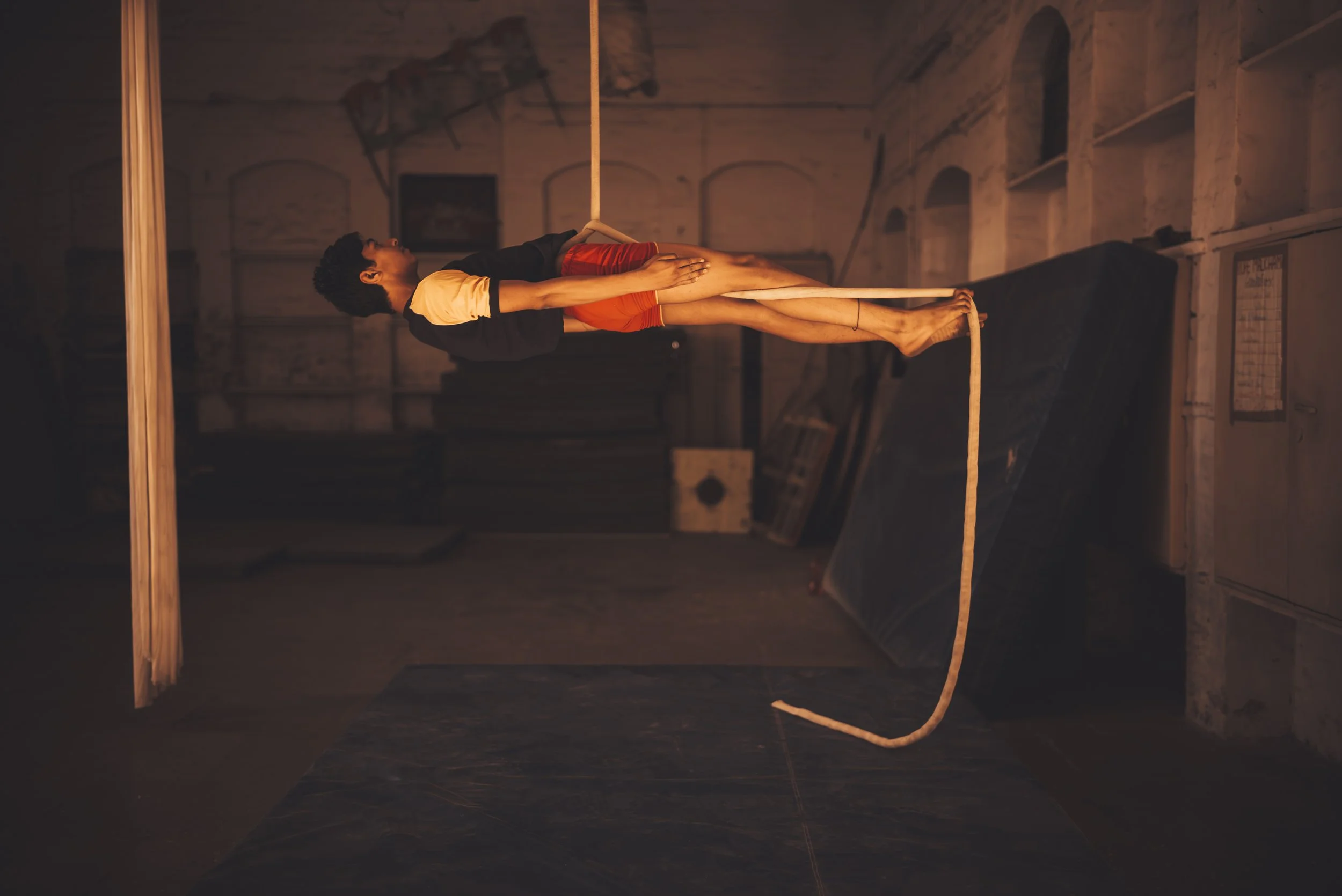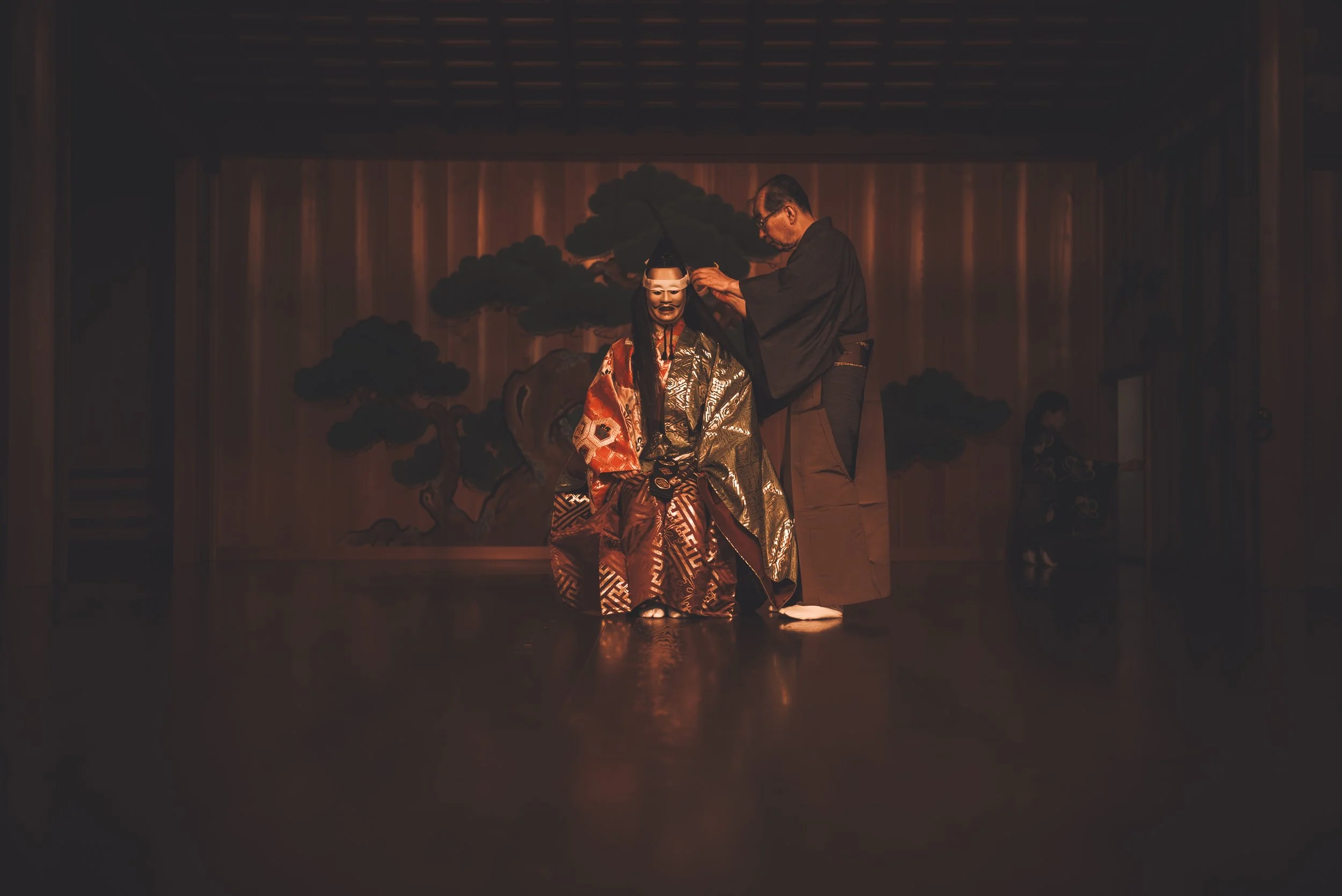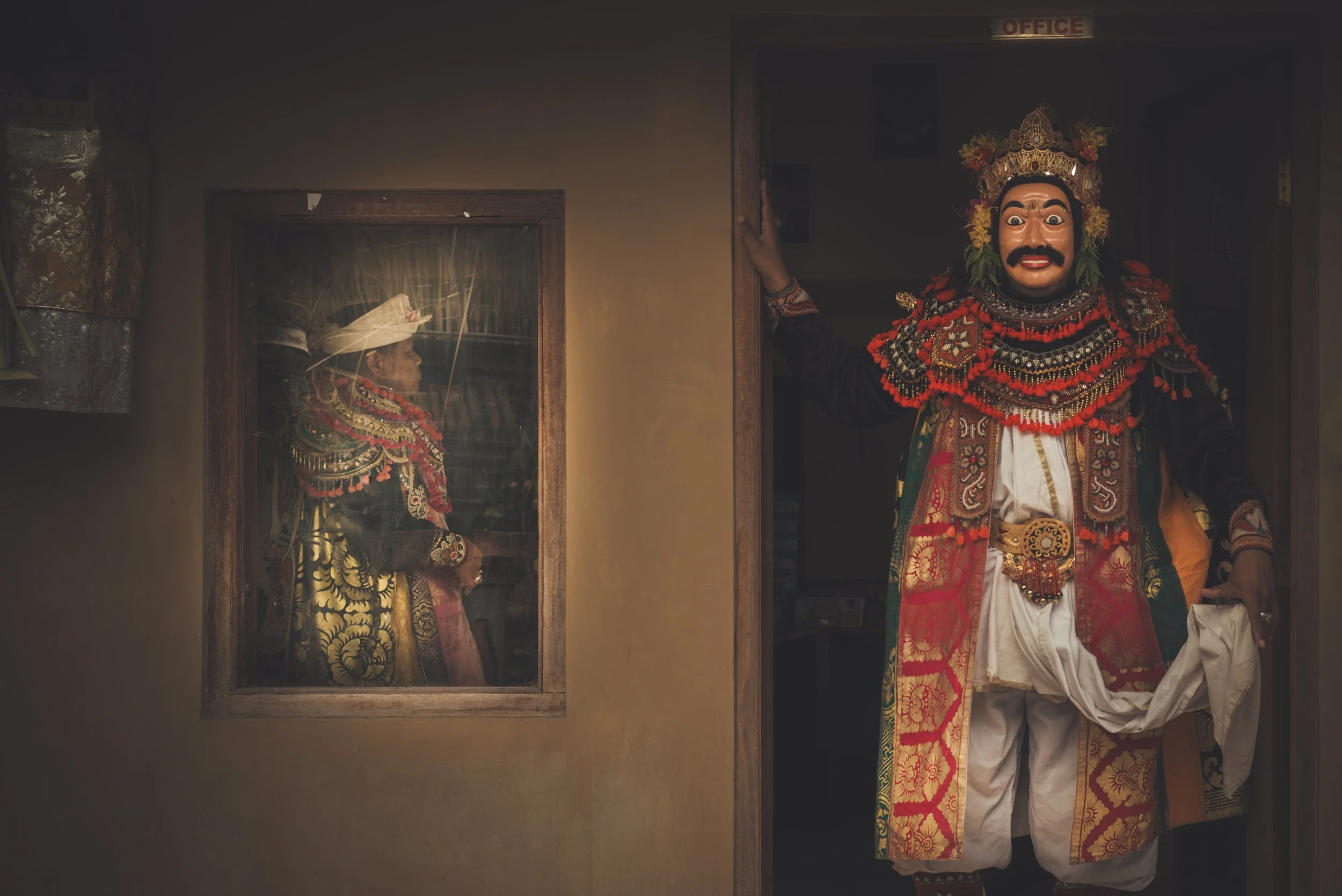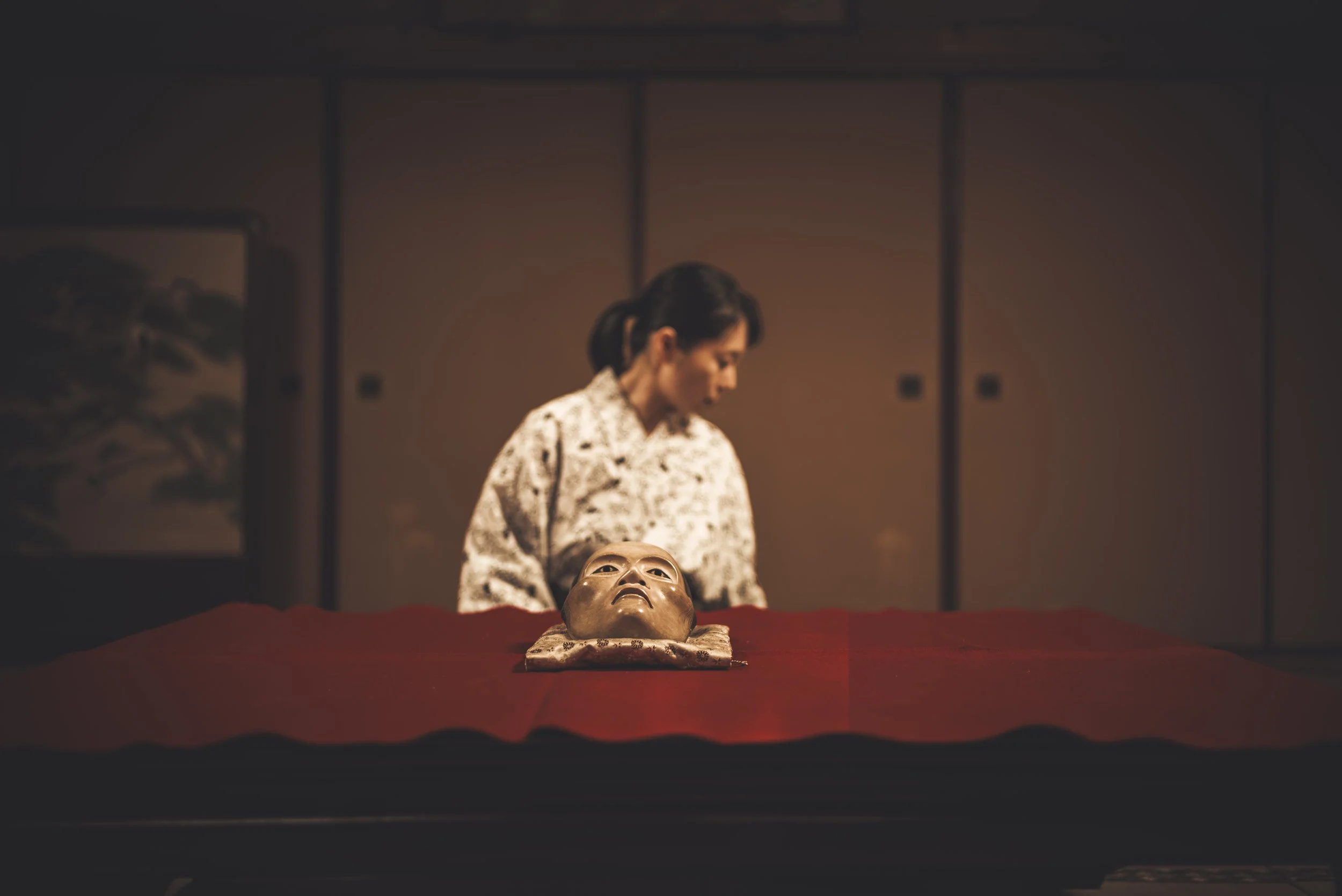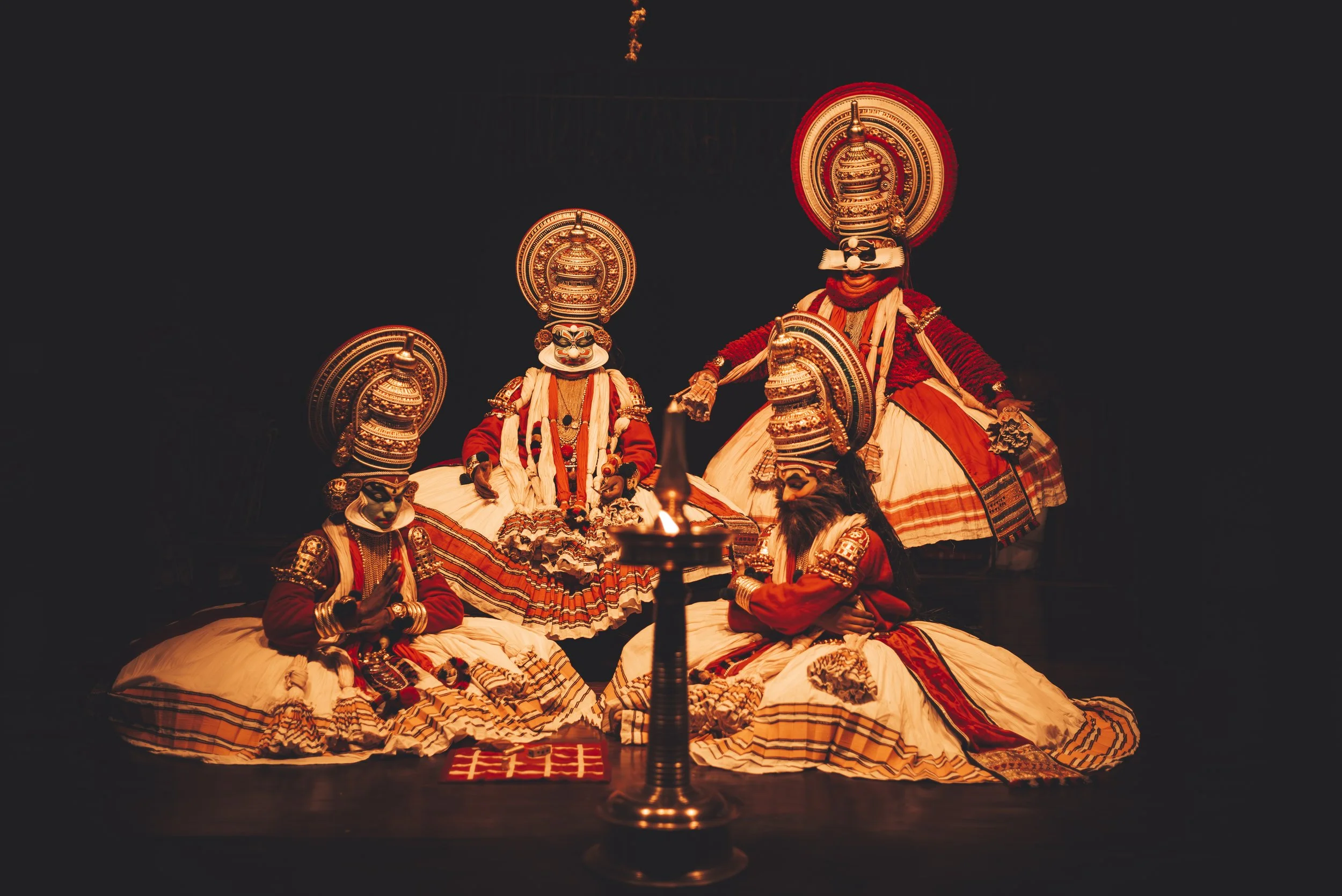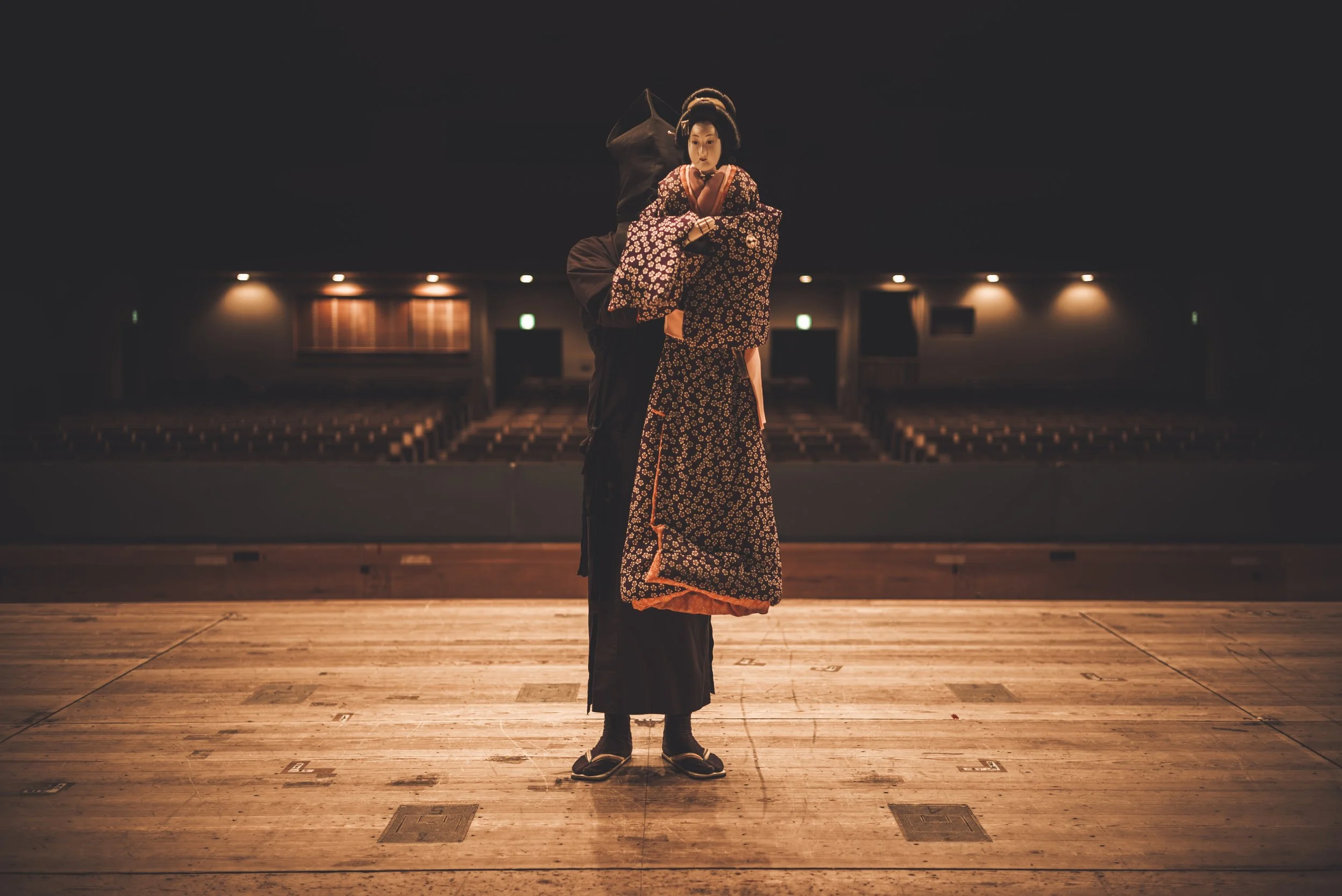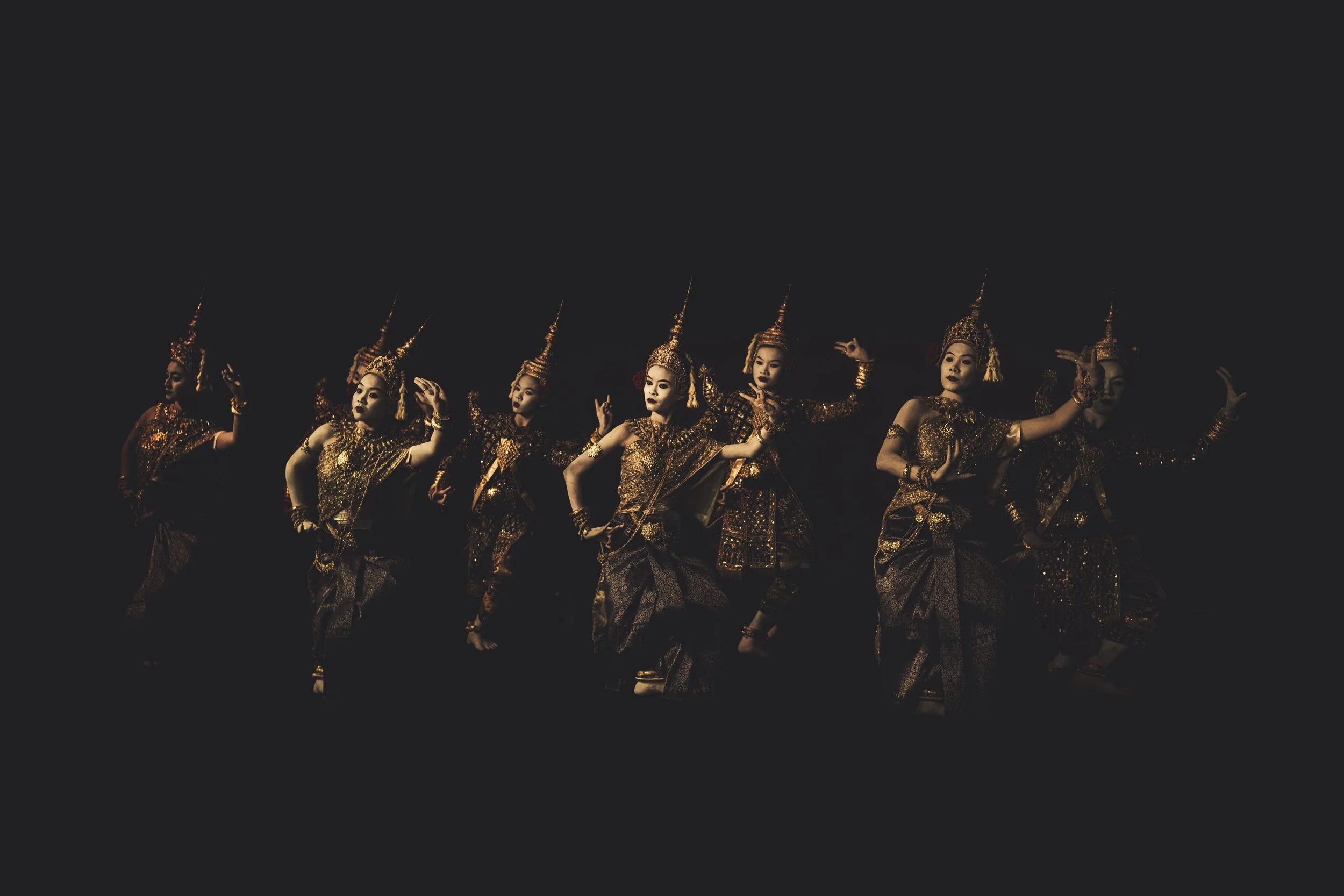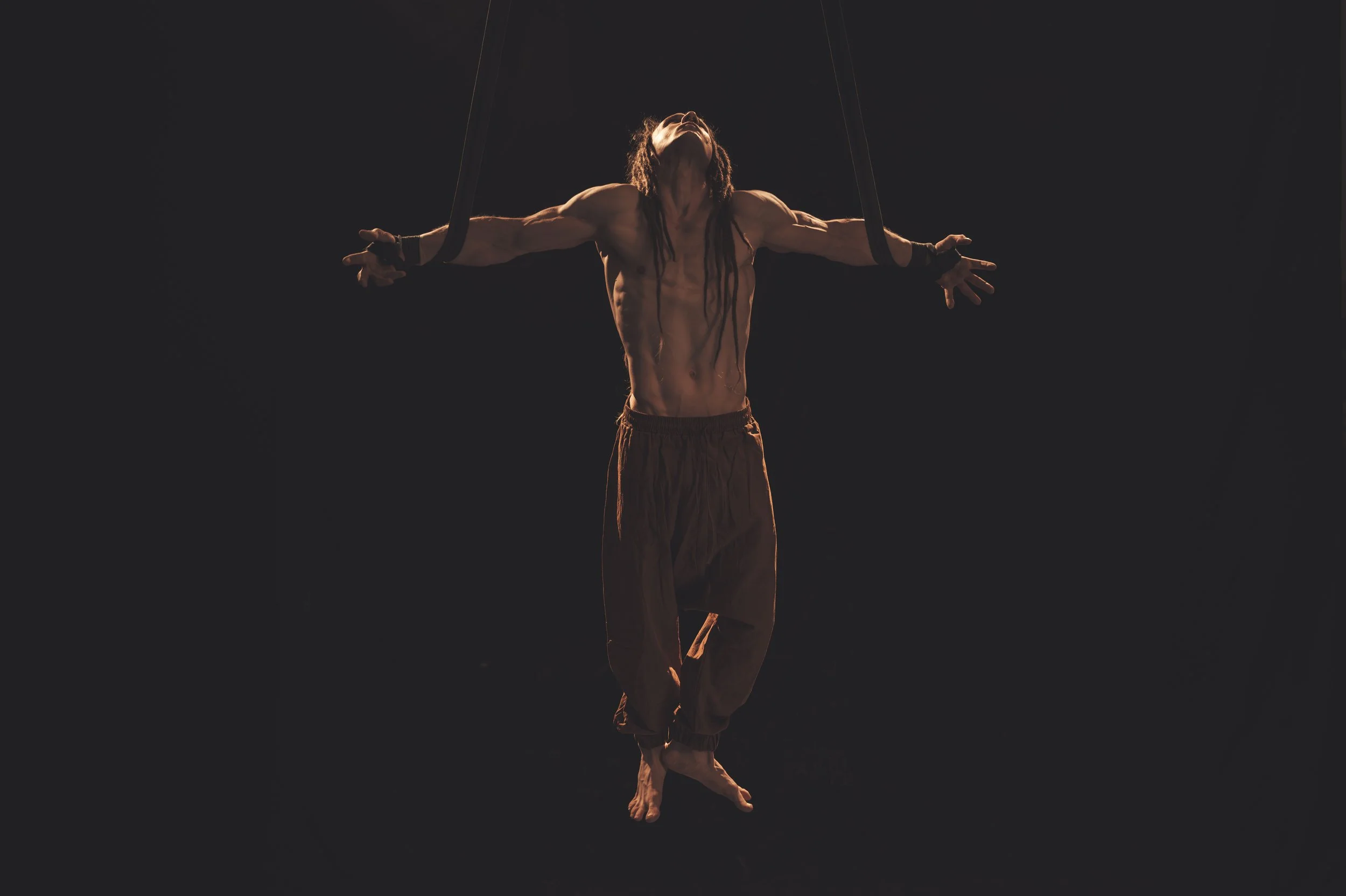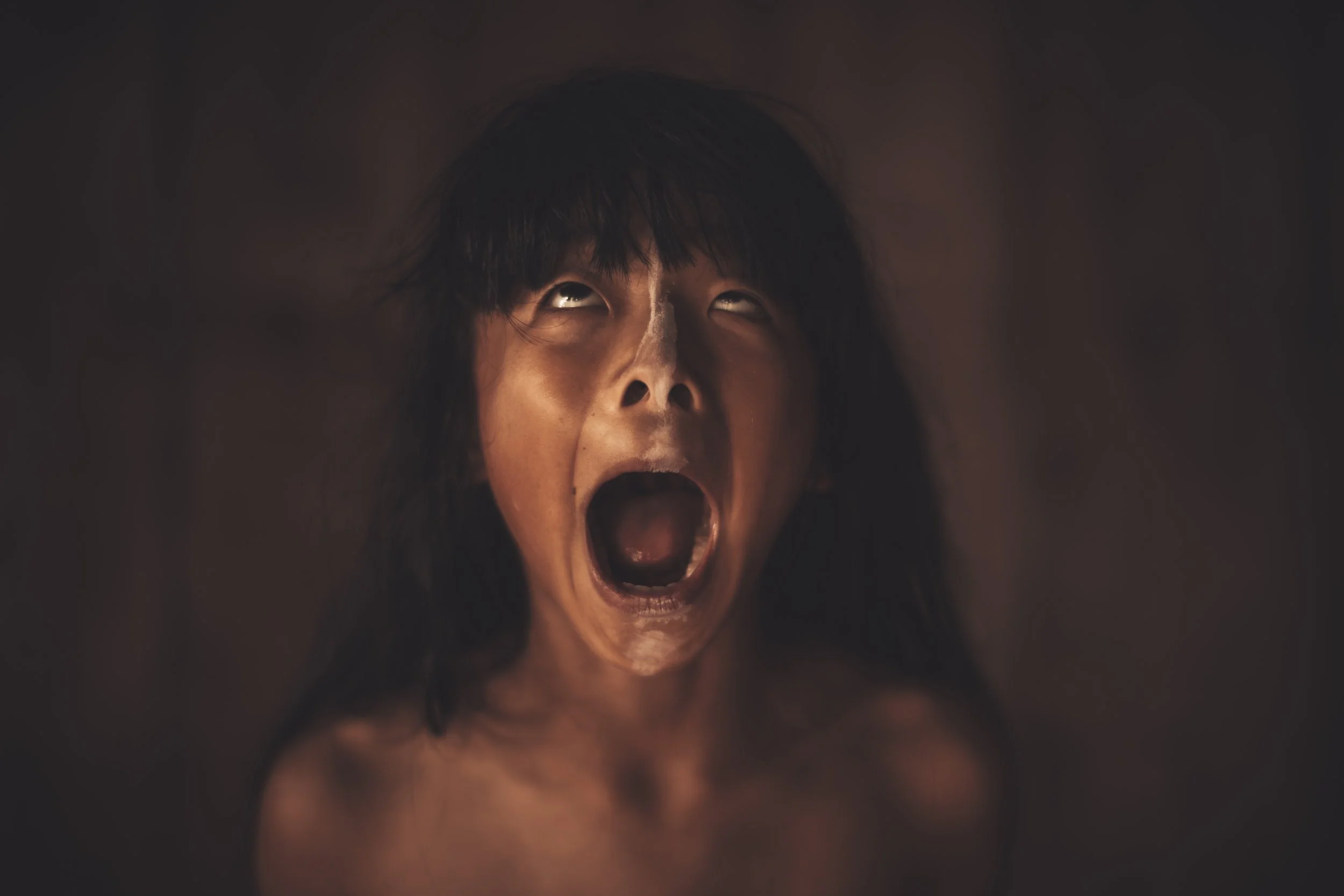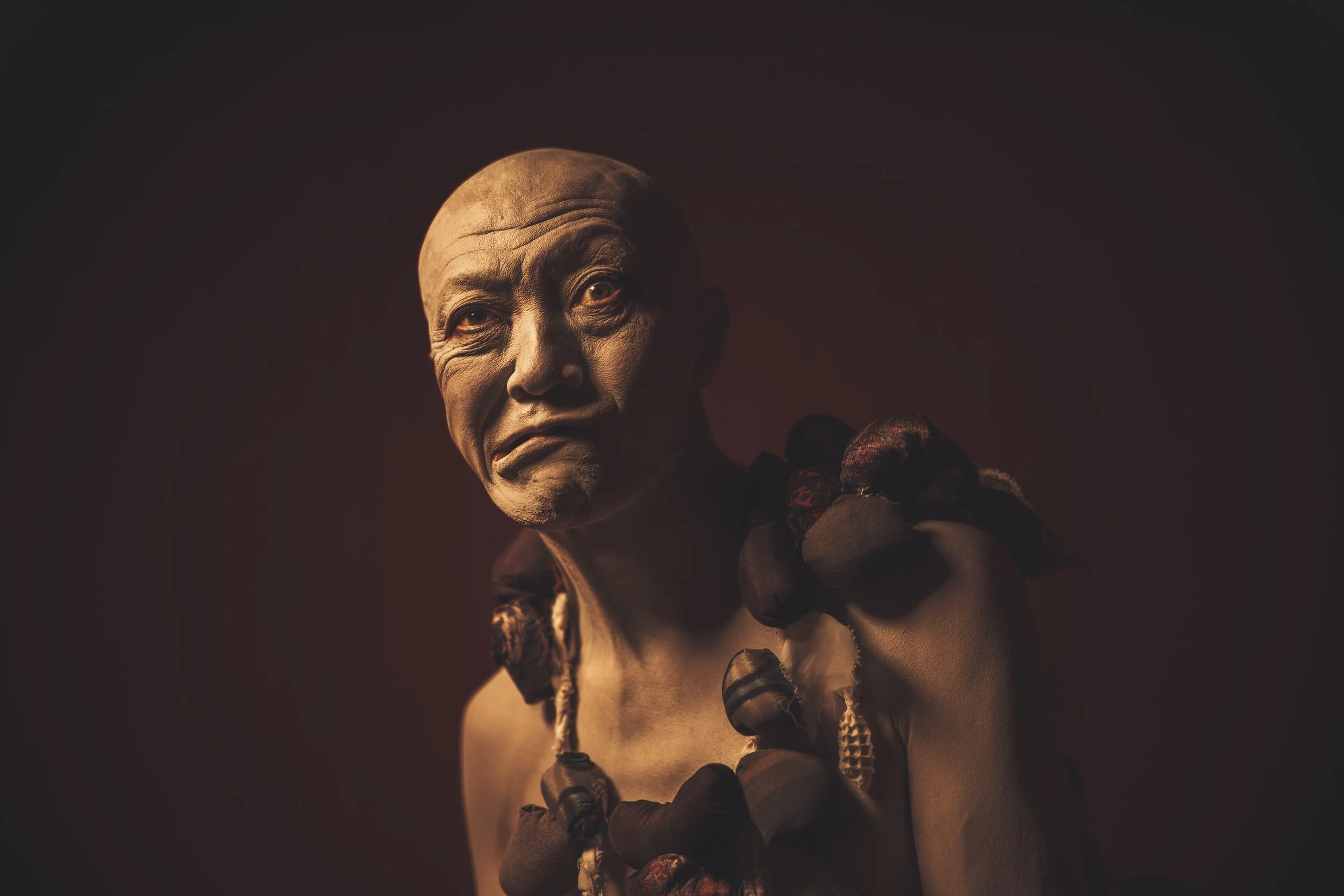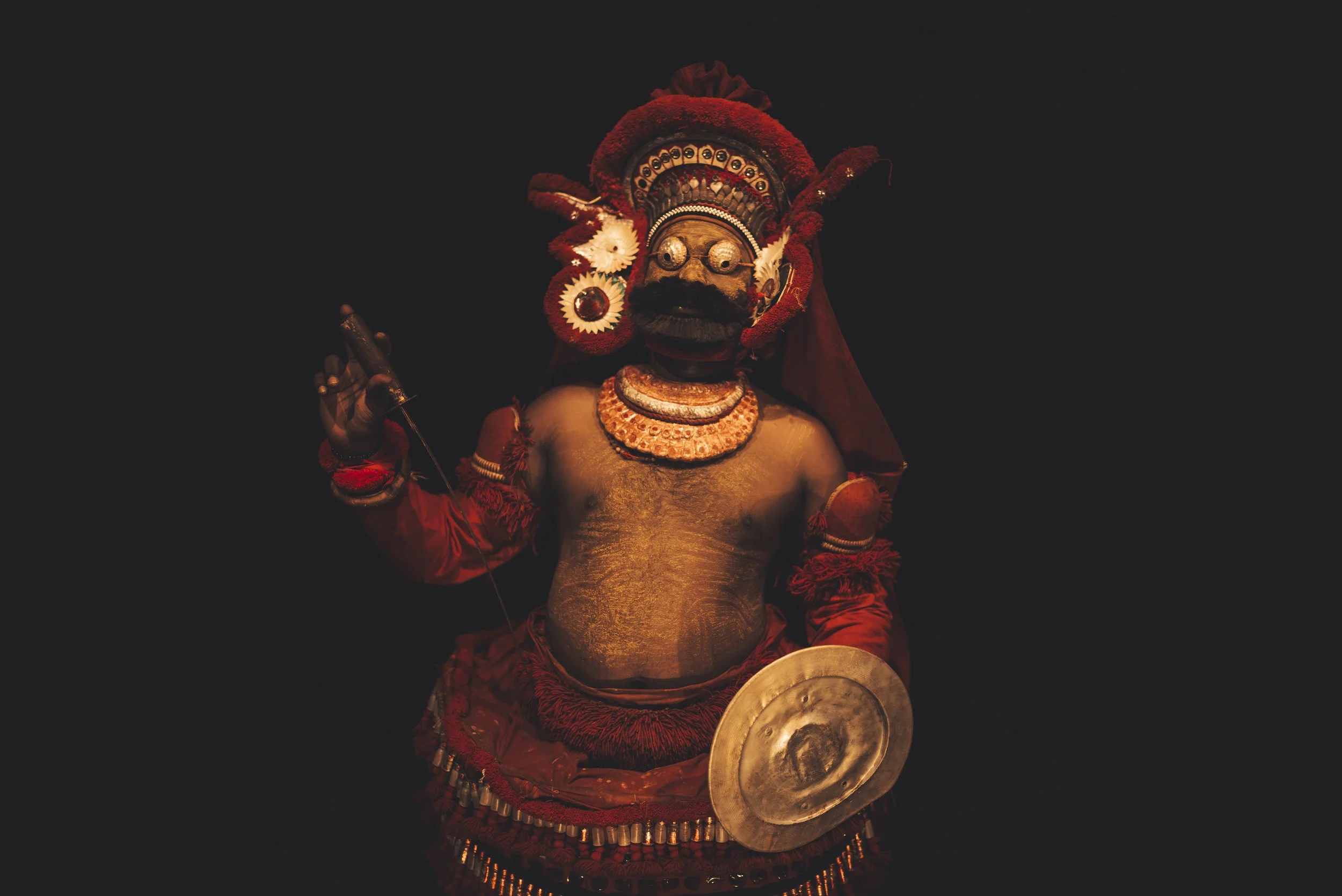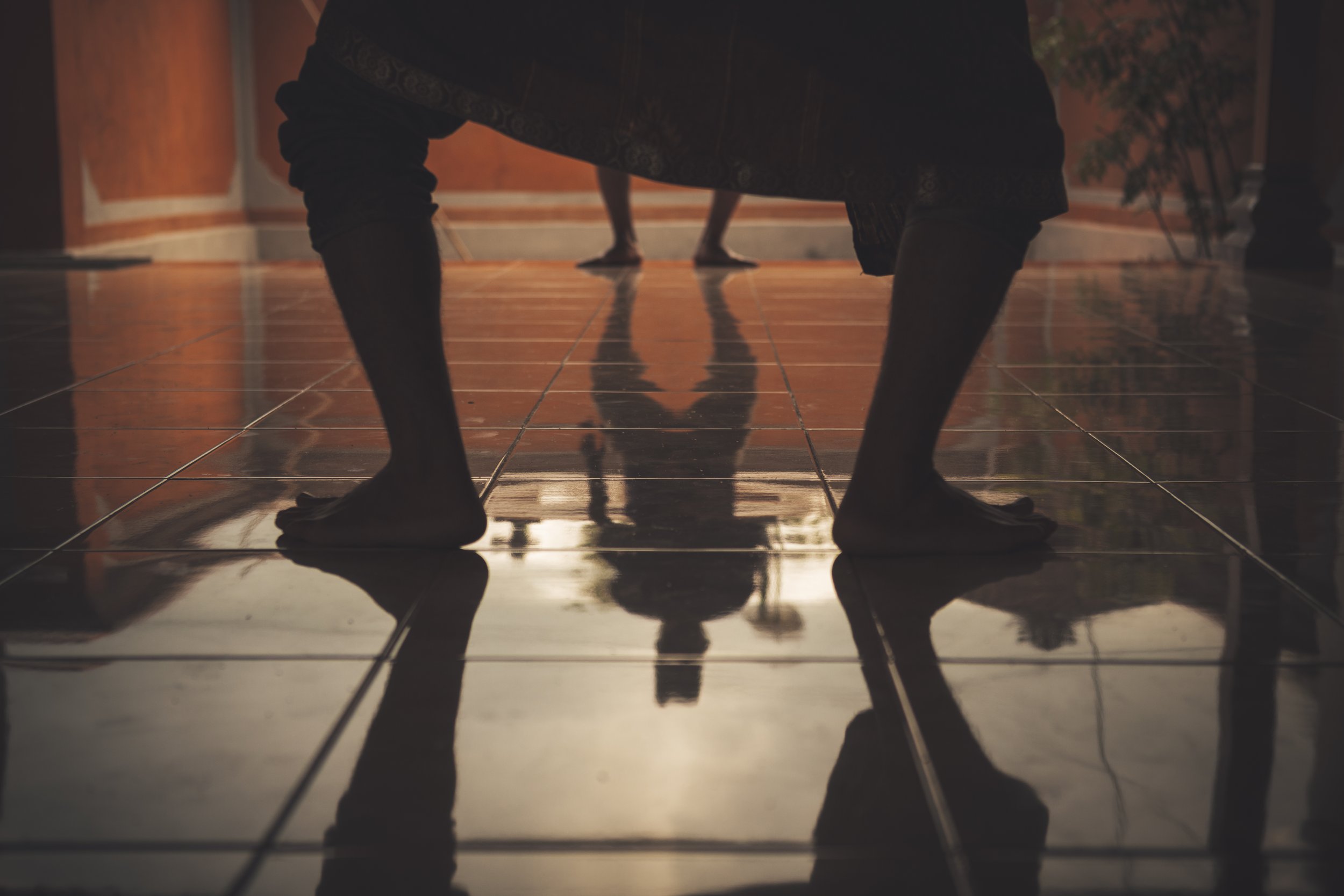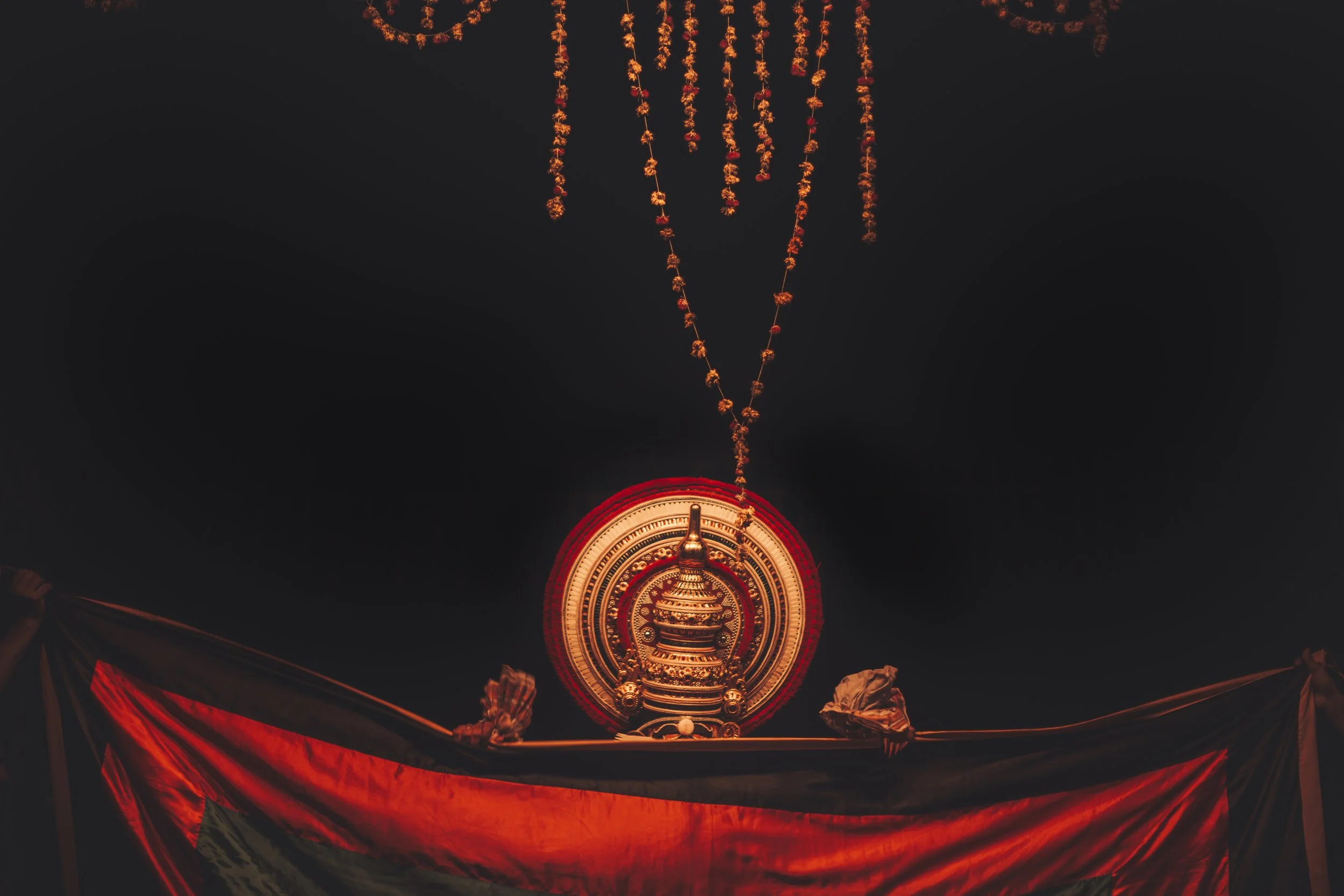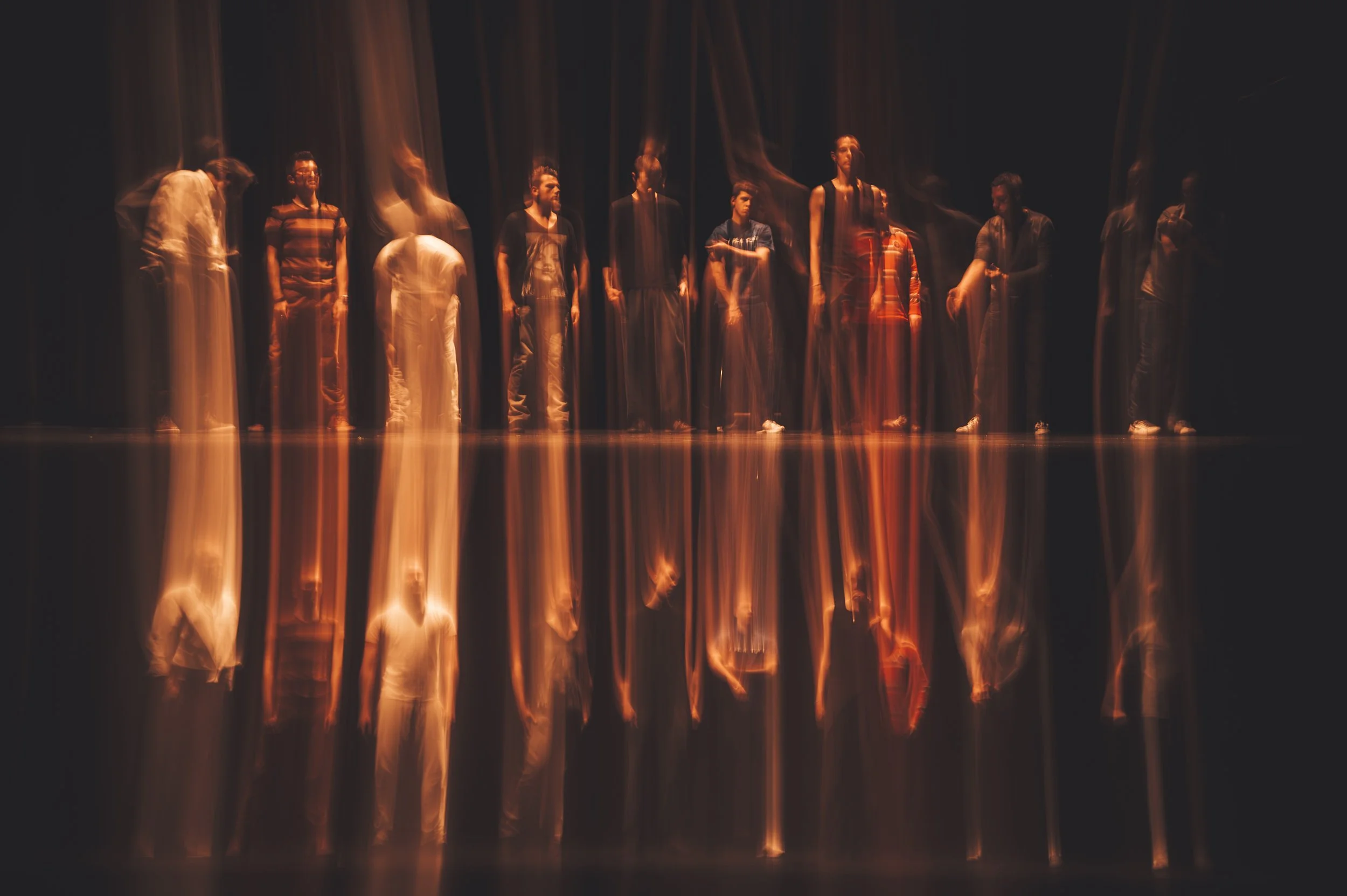

Many of these forms are still bound to the sacred and can demand a lifetime of practice. Theatre is not only what I photograph; it is the world I come from. I approach them not as a specialist, but as a witness from within. It is my way of taking part, and of leaving something that will outlast me.
What is shown here is only a glimpse of an archive built over almost two decades, with a contemporary thread running through it. The archive is also made of stories.
In Japan, I began photographing Noh with Kinue Oshima and her father. In 1998, she became the first woman of the Kita school to be registered with the Nohgaku Association. In Bali, I Made Djimat, a Topeng master who learned from his mother, let me follow him for years, to places I would never otherwise have seen. In India, Gotipua, danced by boys, is one of the roots of Odissi, now known internationally, while Gotipua itself remains far more fragile. In Cambodia, classical dance was almost wiped out under the Khmer Rouge and rebuilt by those who survived.
This work is not an inventory of traditions, nor an attempt to explain them. I photograph to remember, and to honour those who devote their lives to their art.
From the Greeks to Shakespeare to the stages of Asia, the same need returns: to tell our own story. This is what I mean when I say I am searching for the gods of theatre.