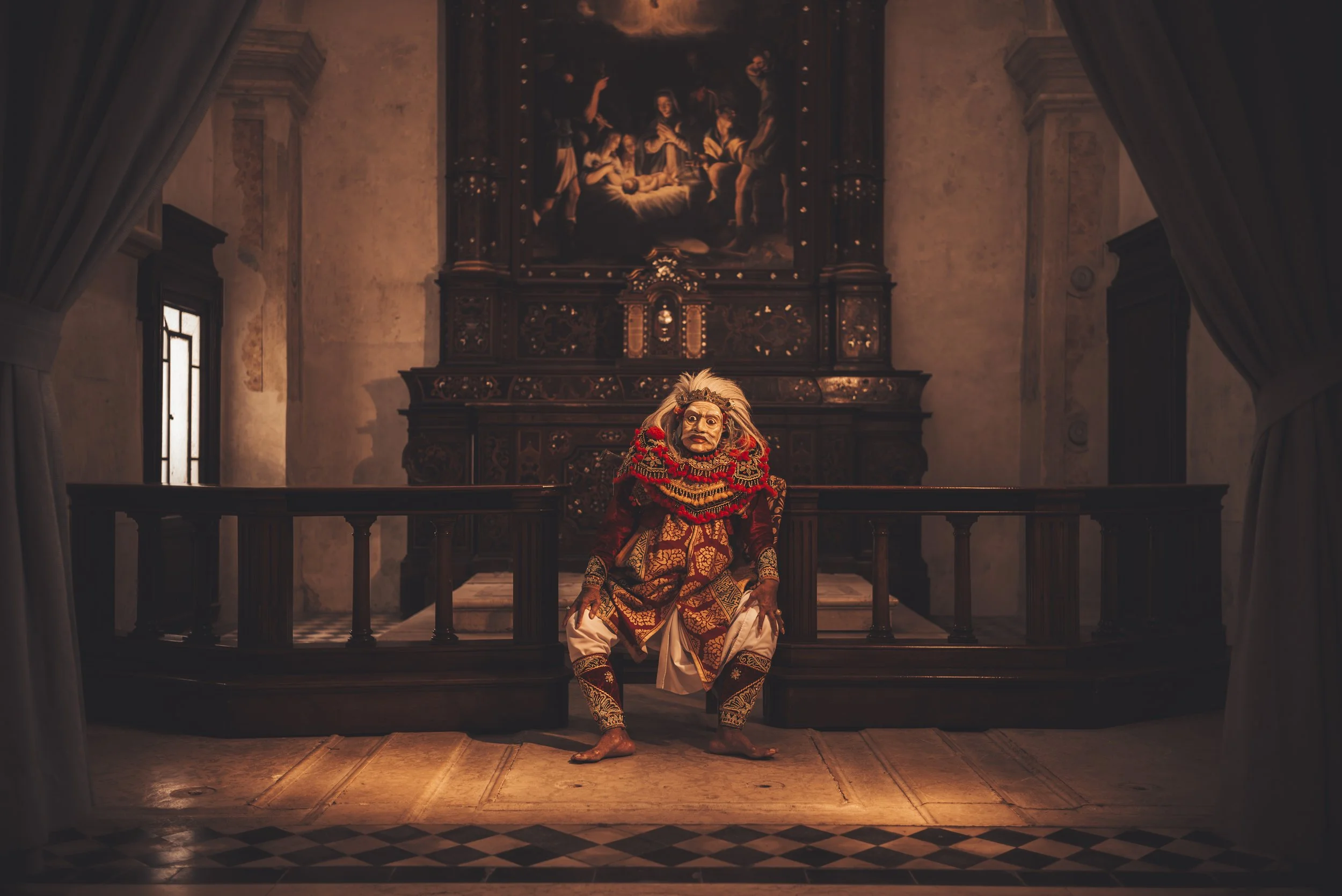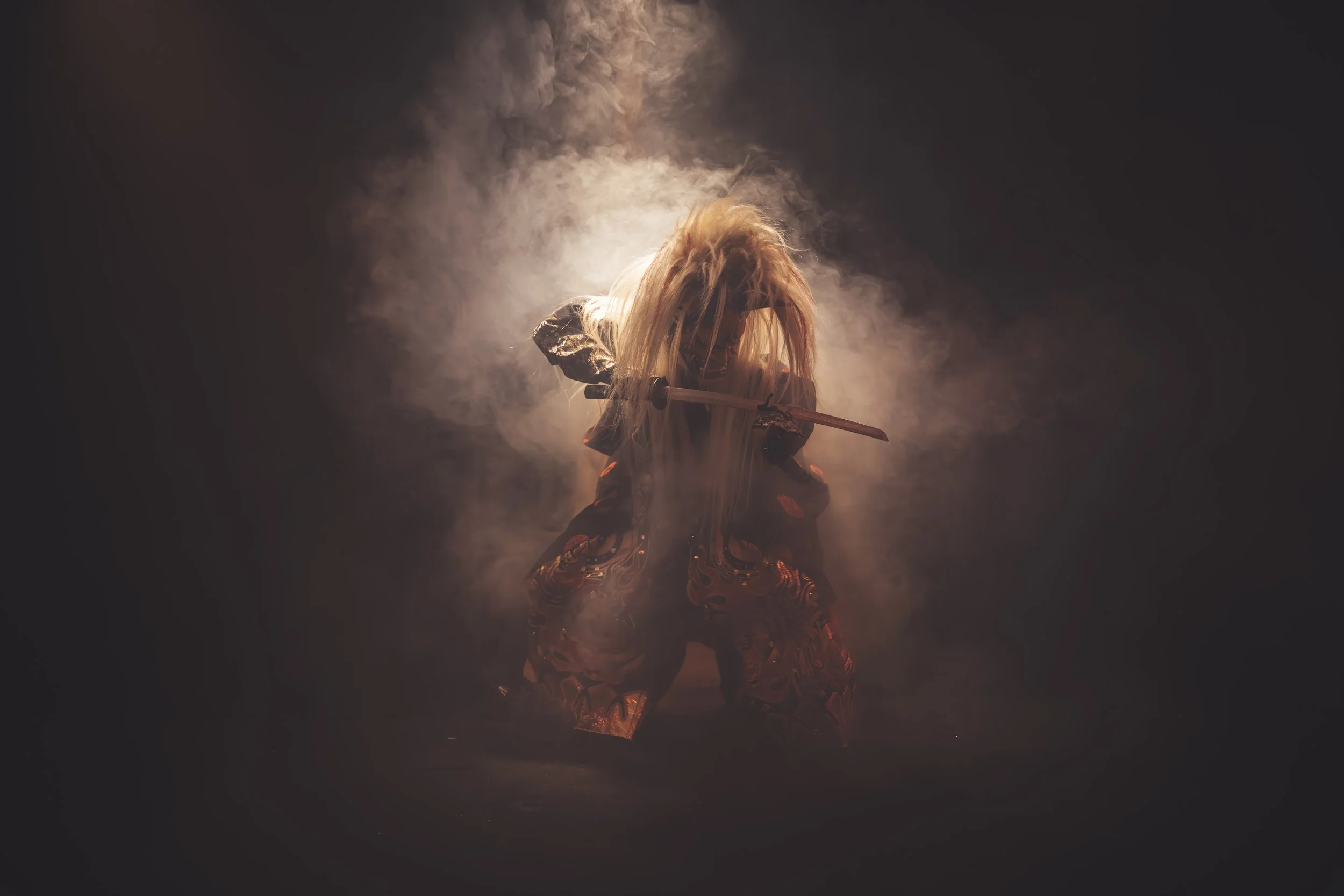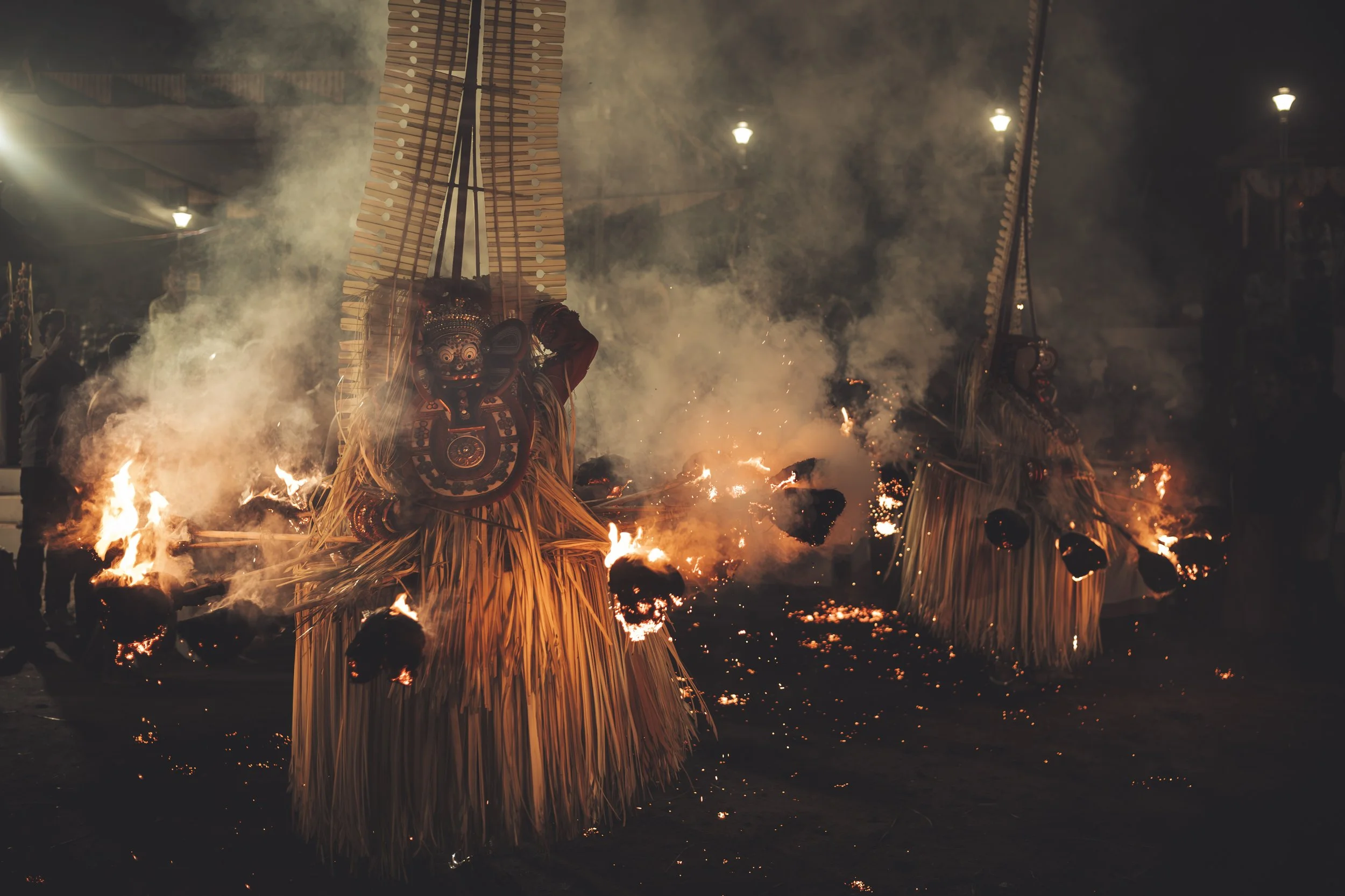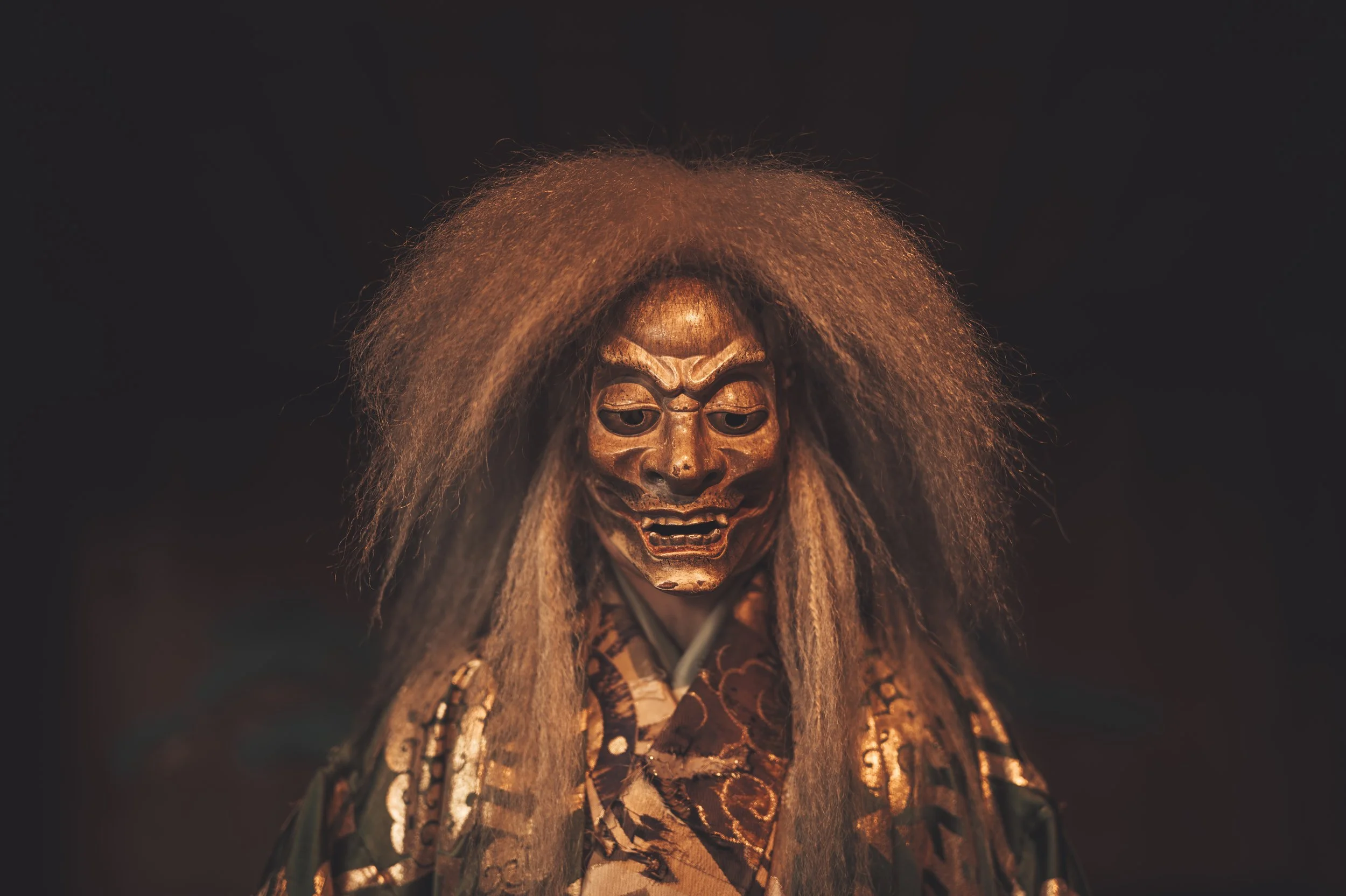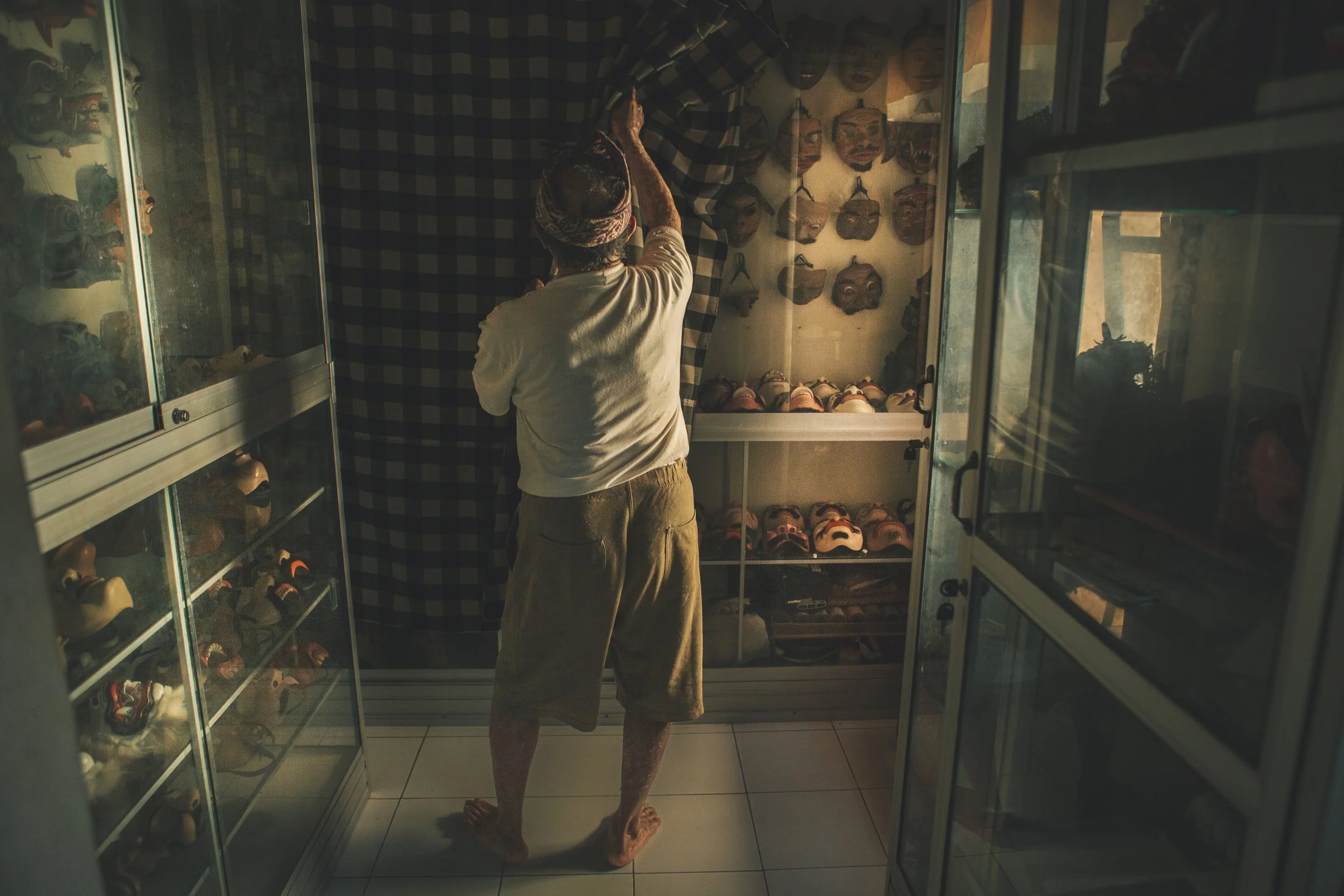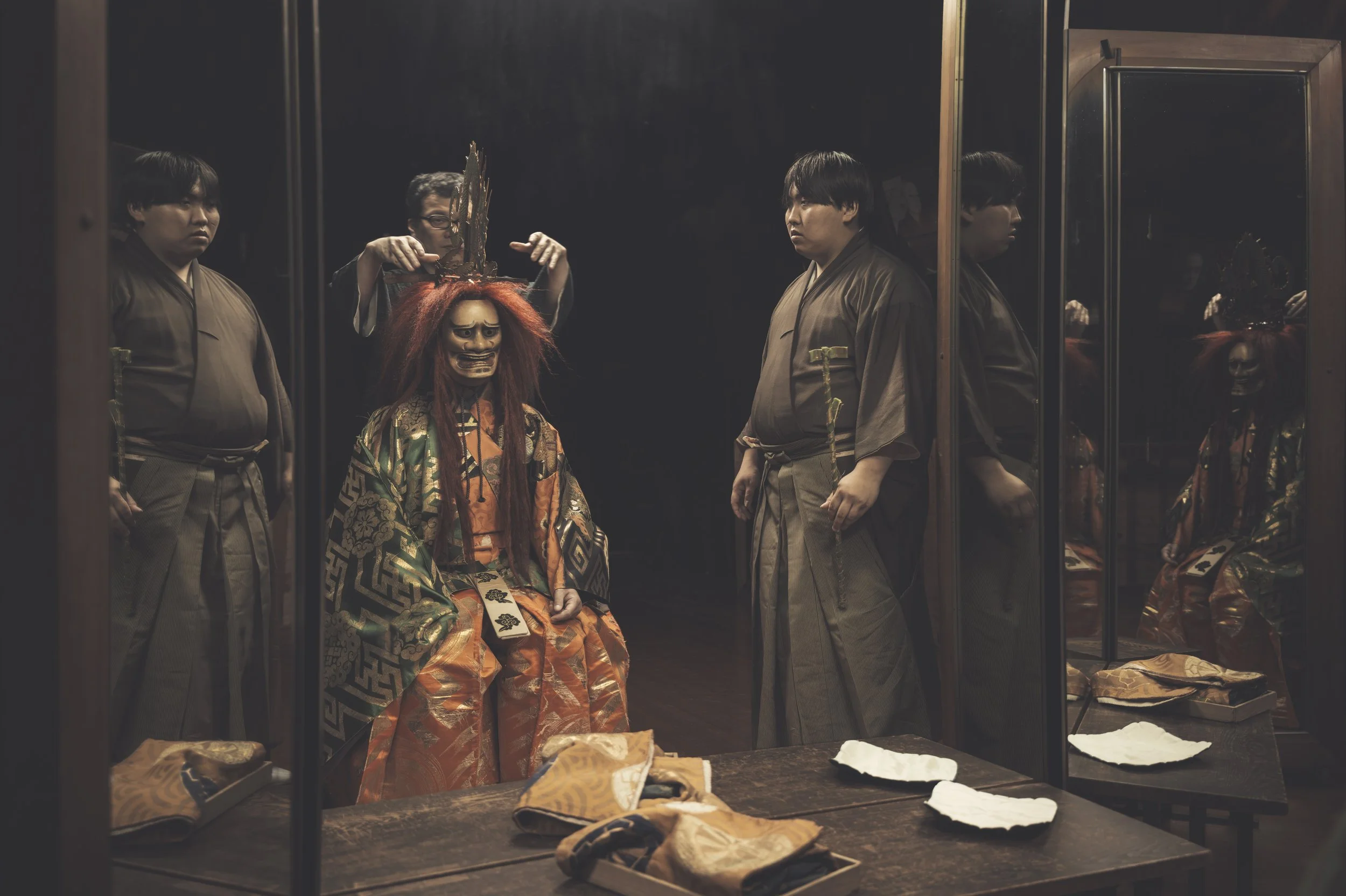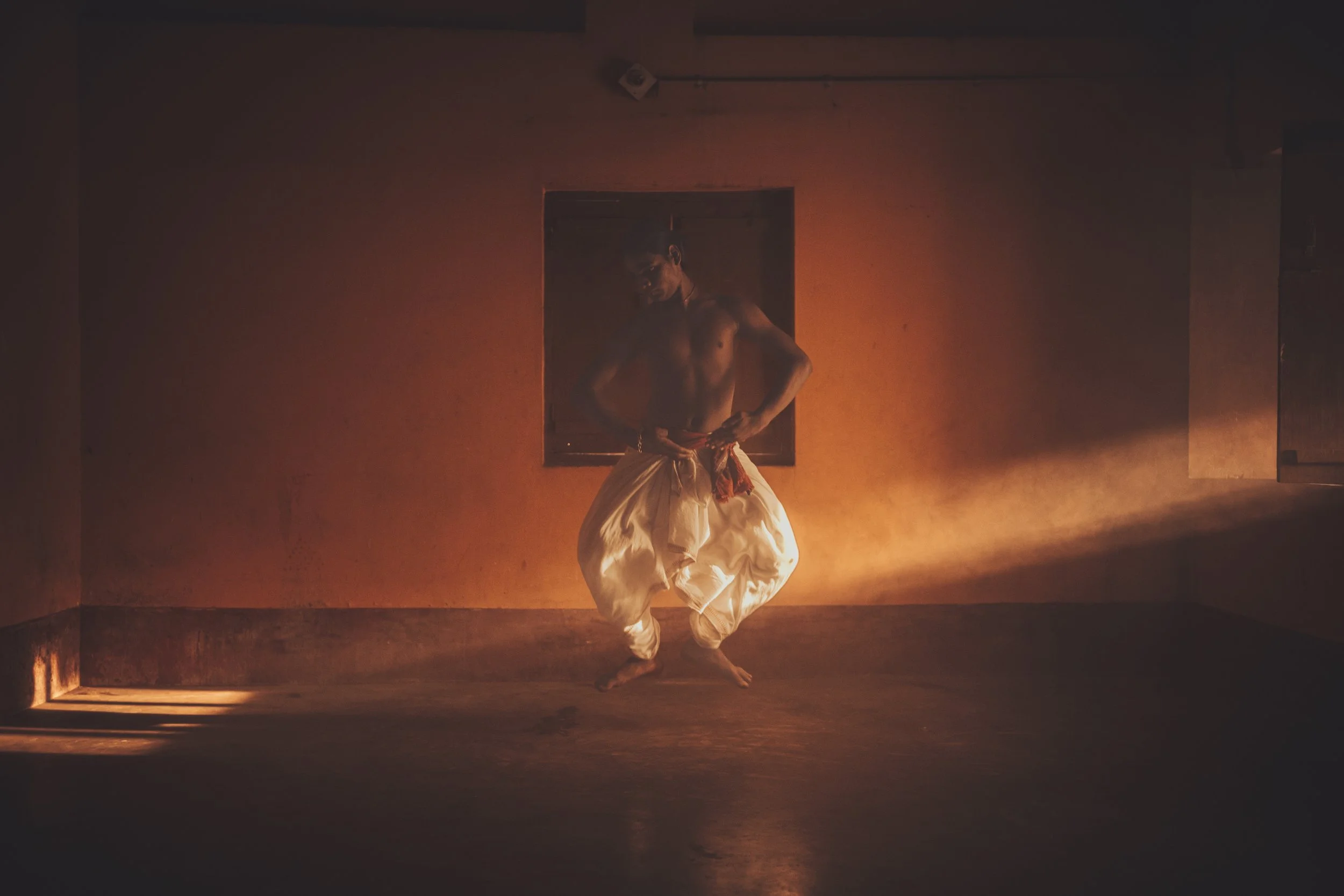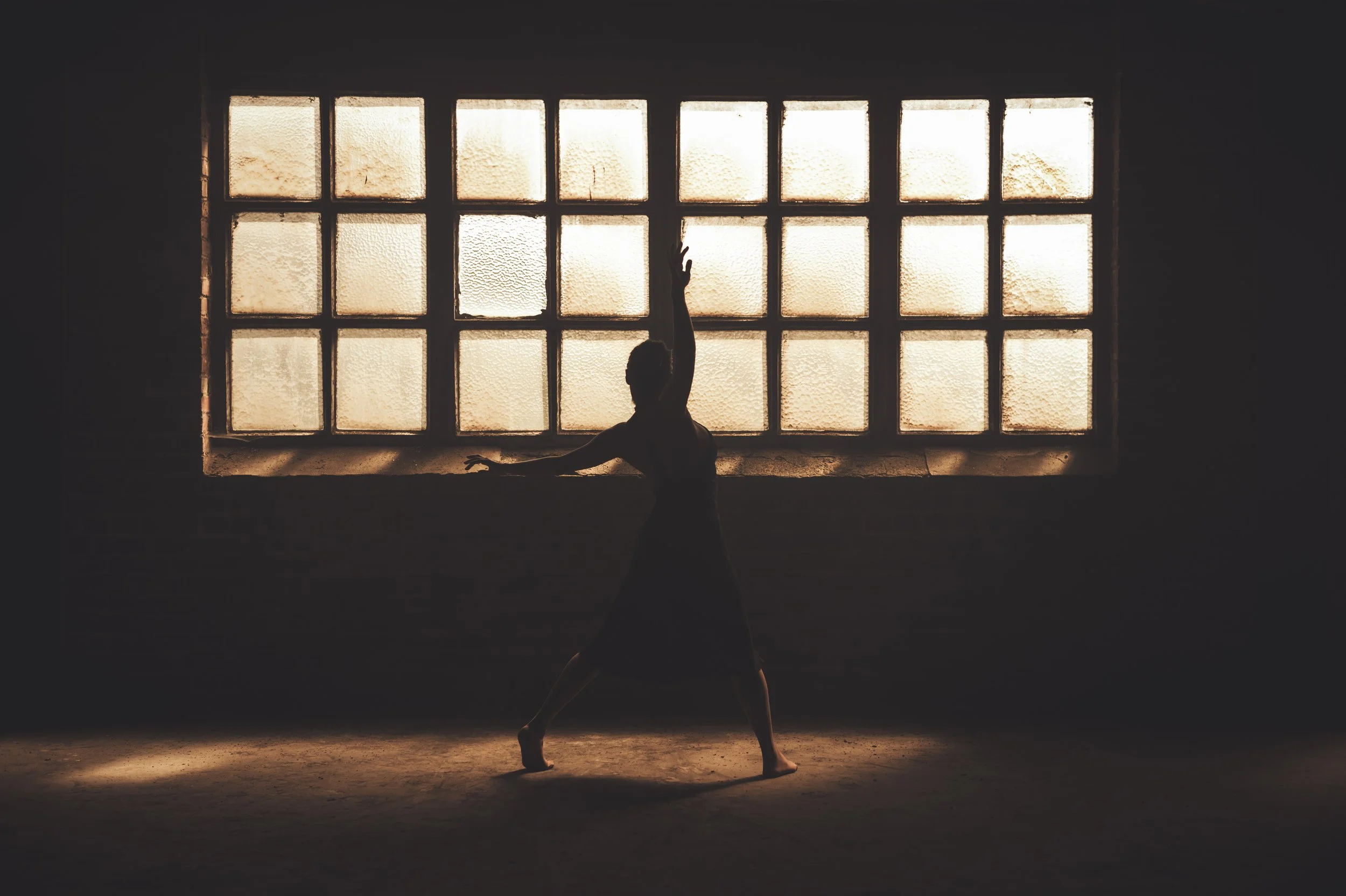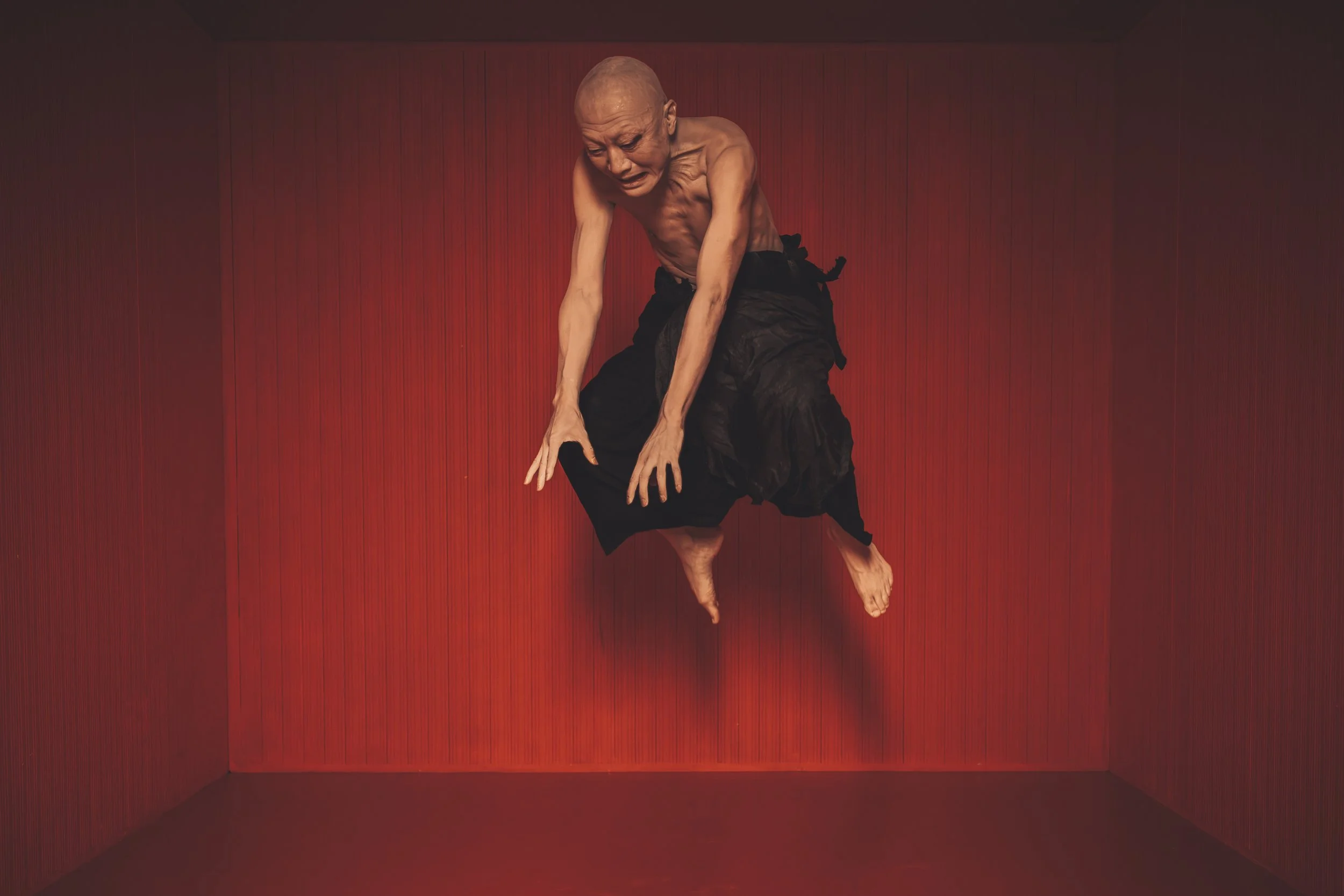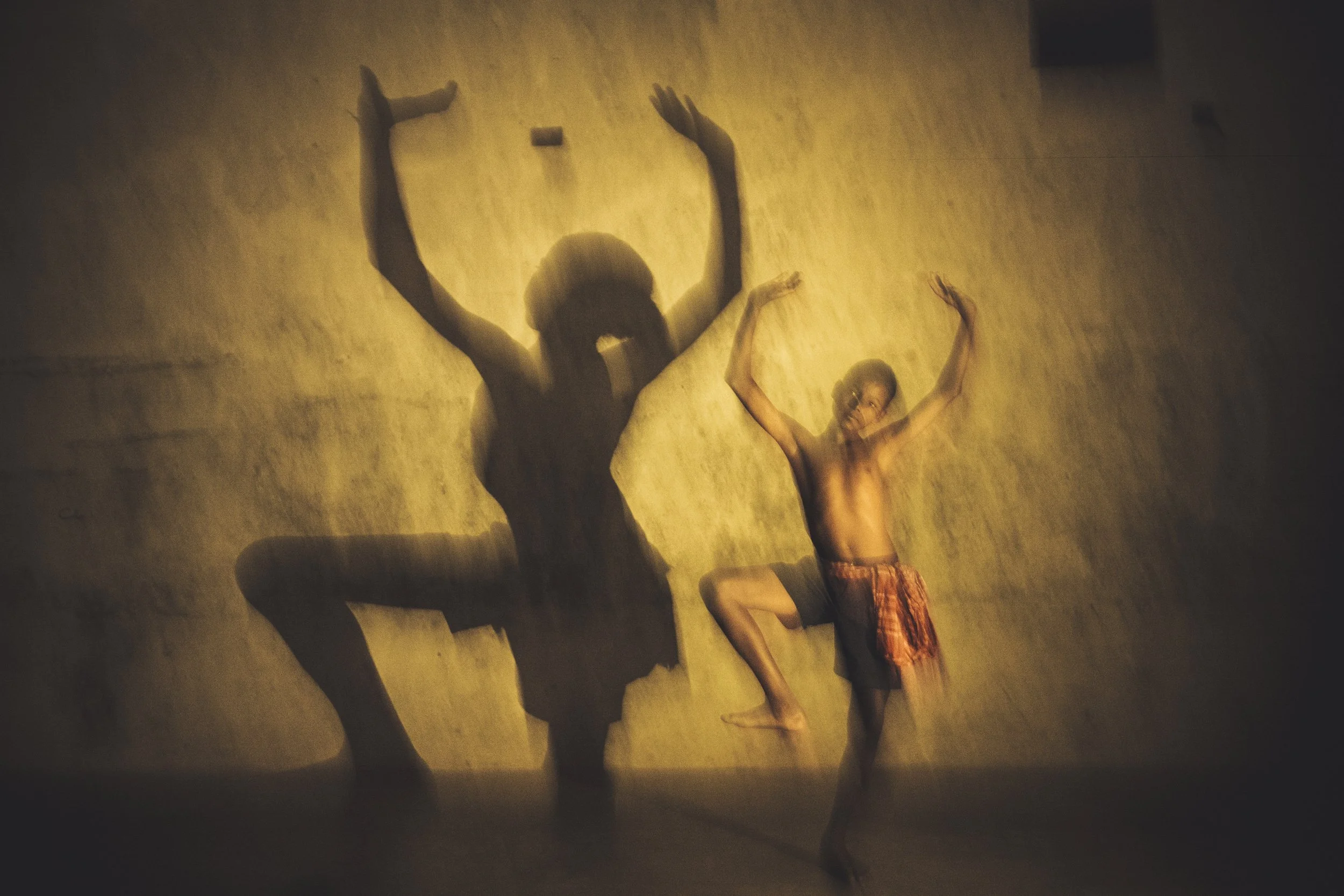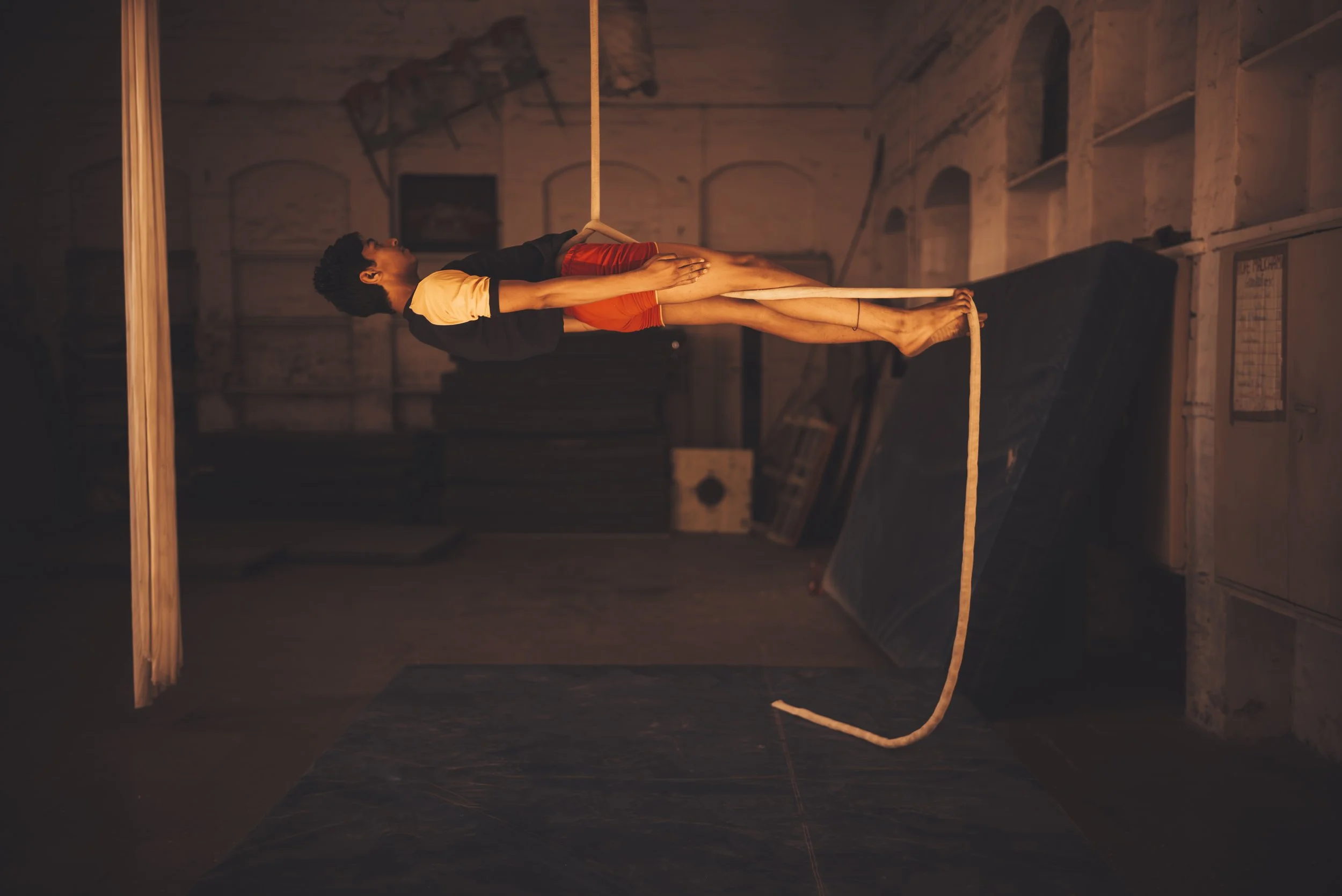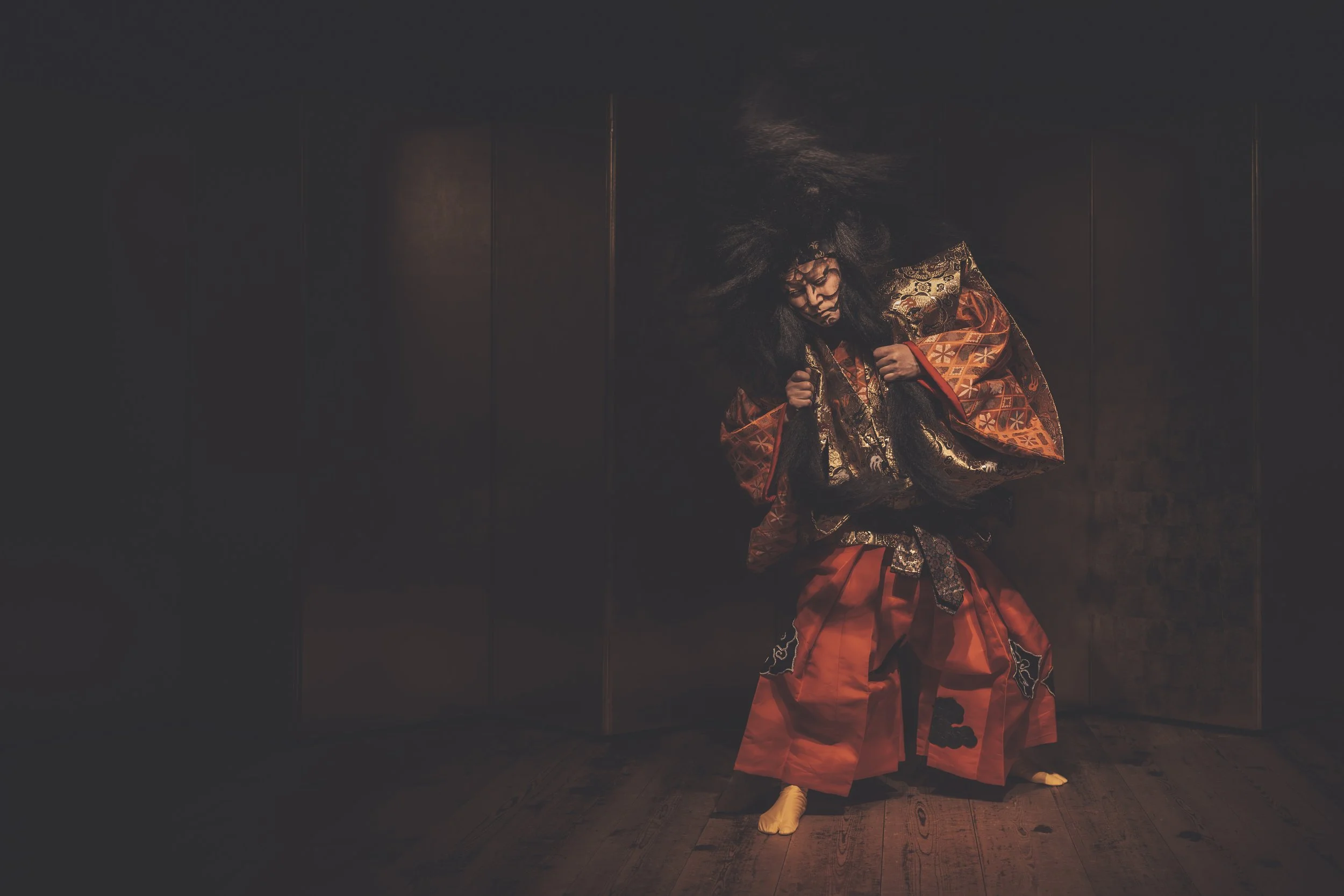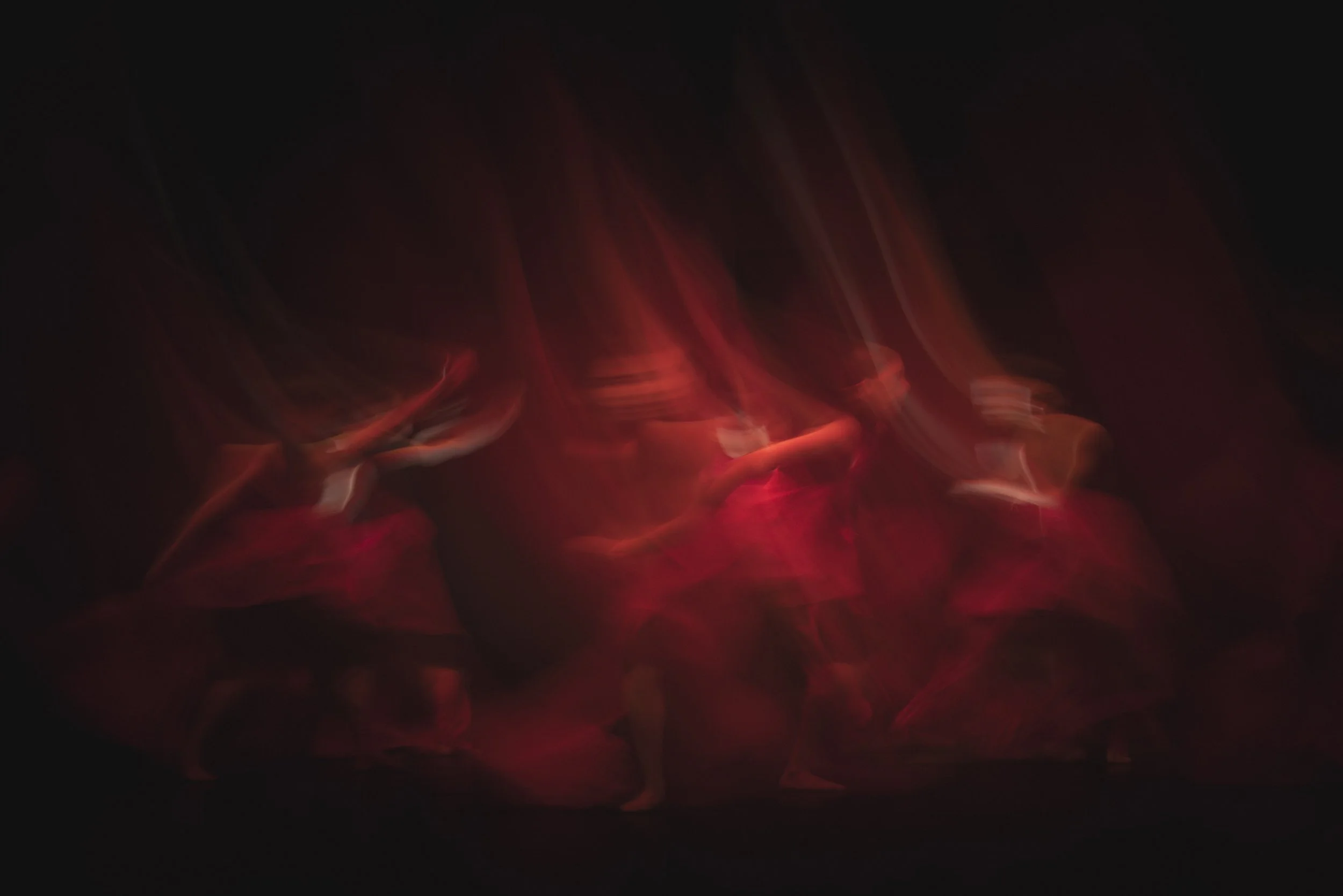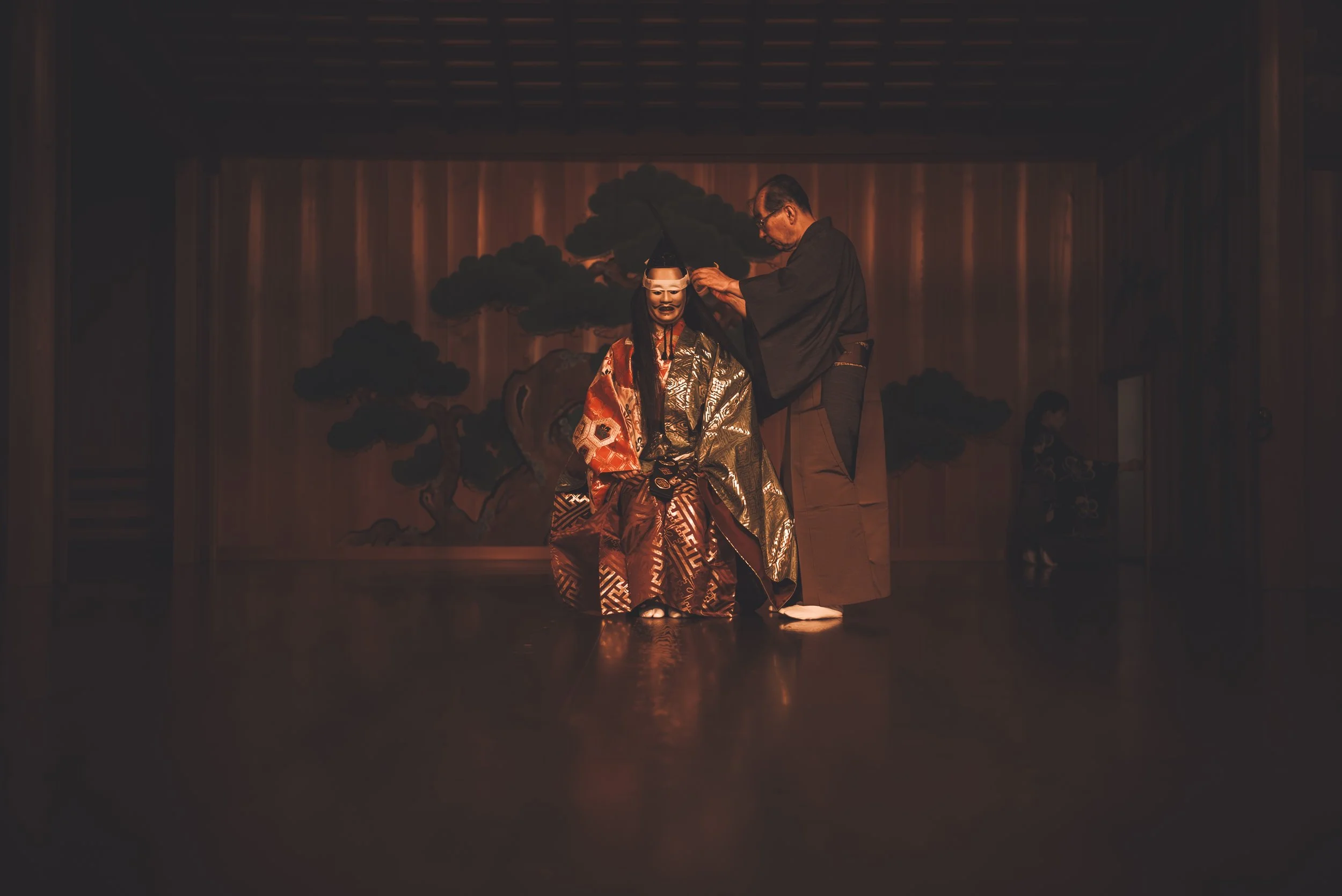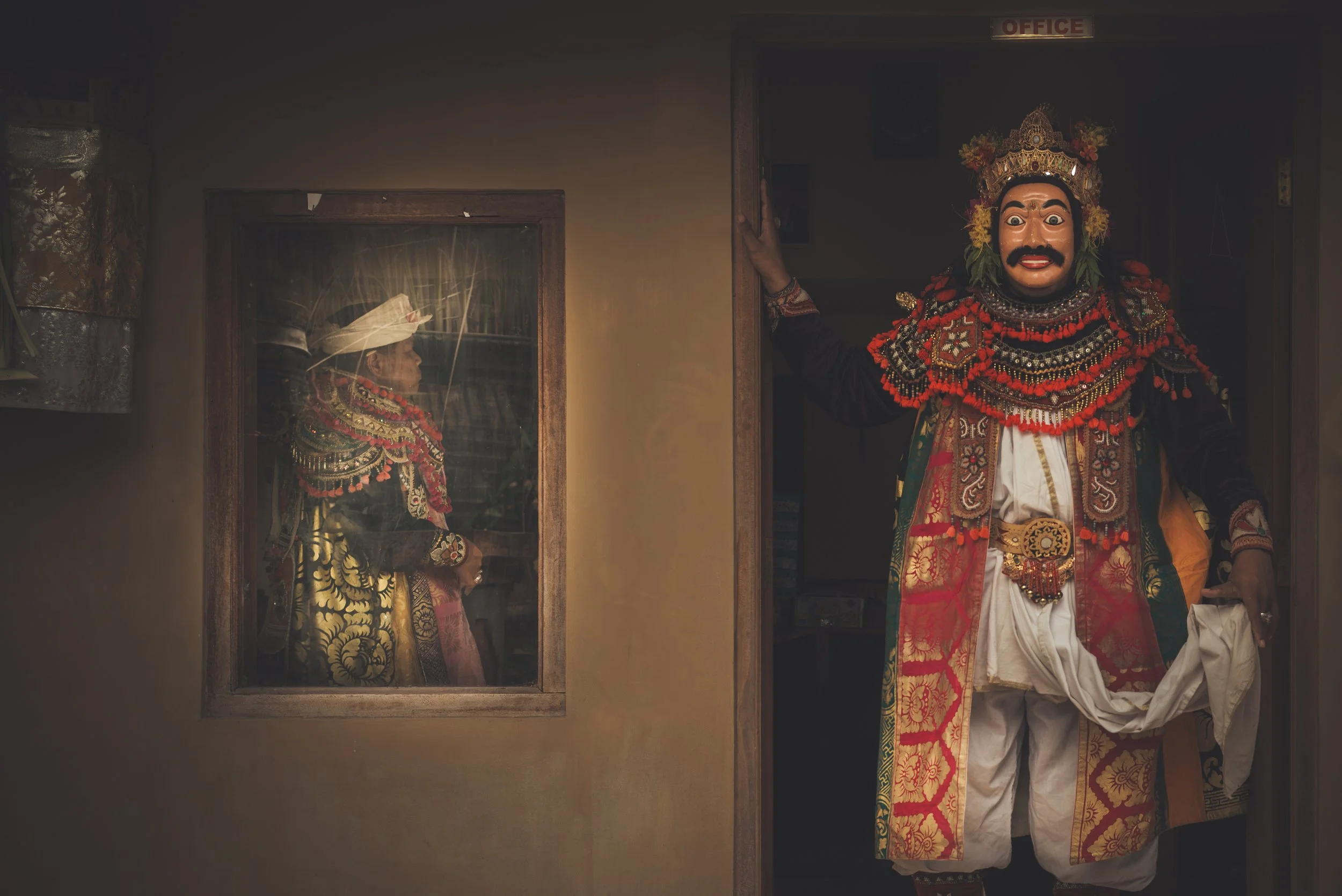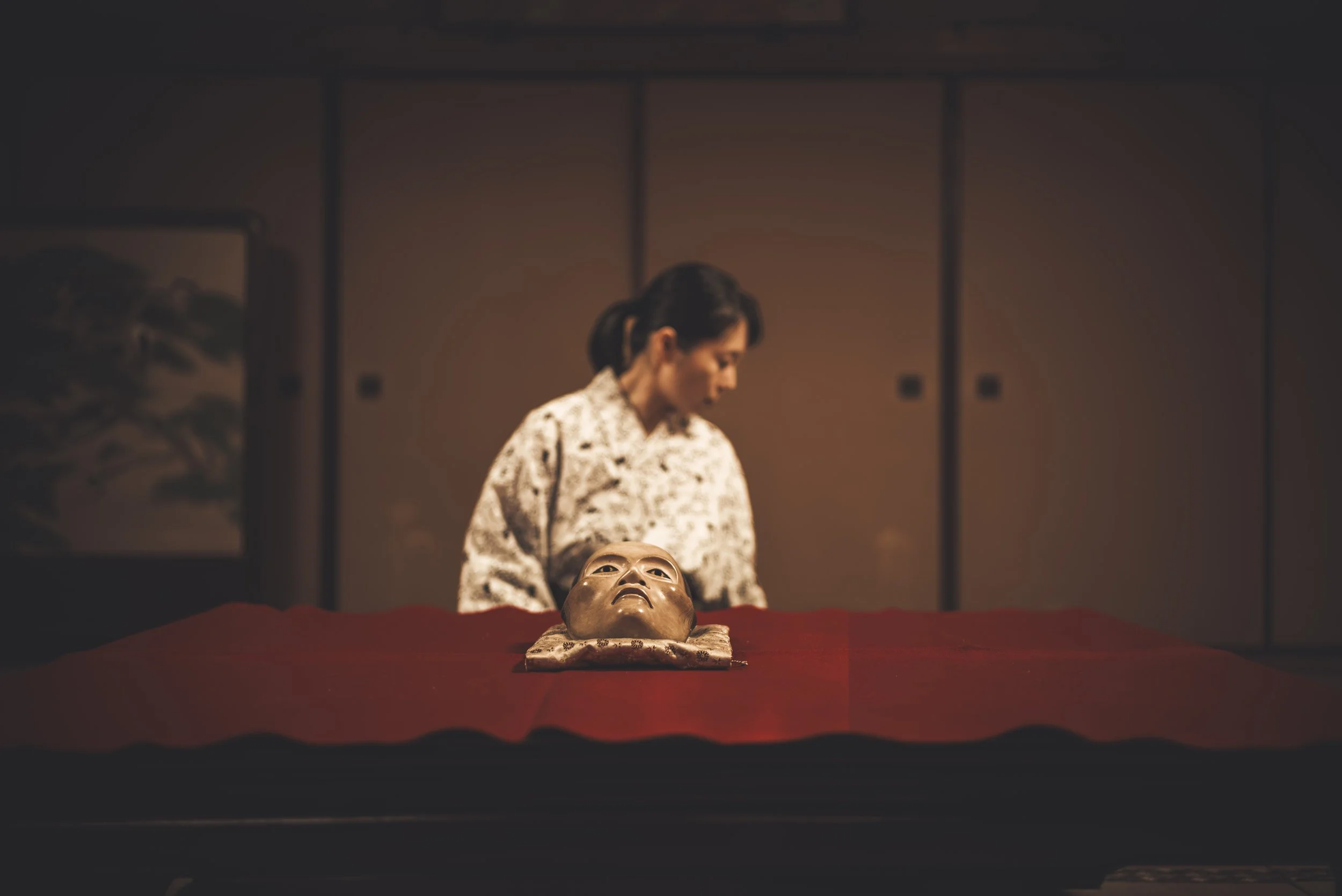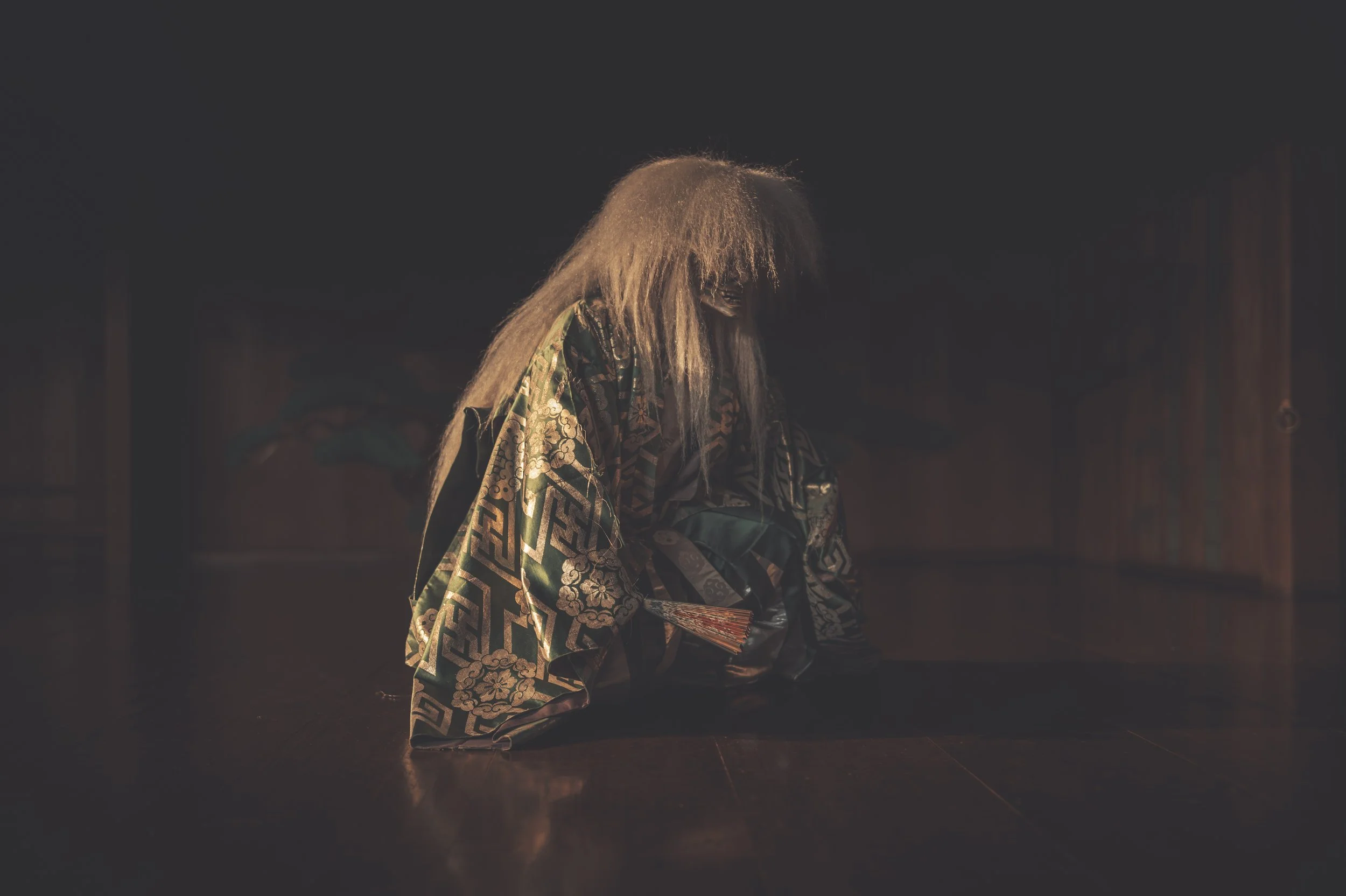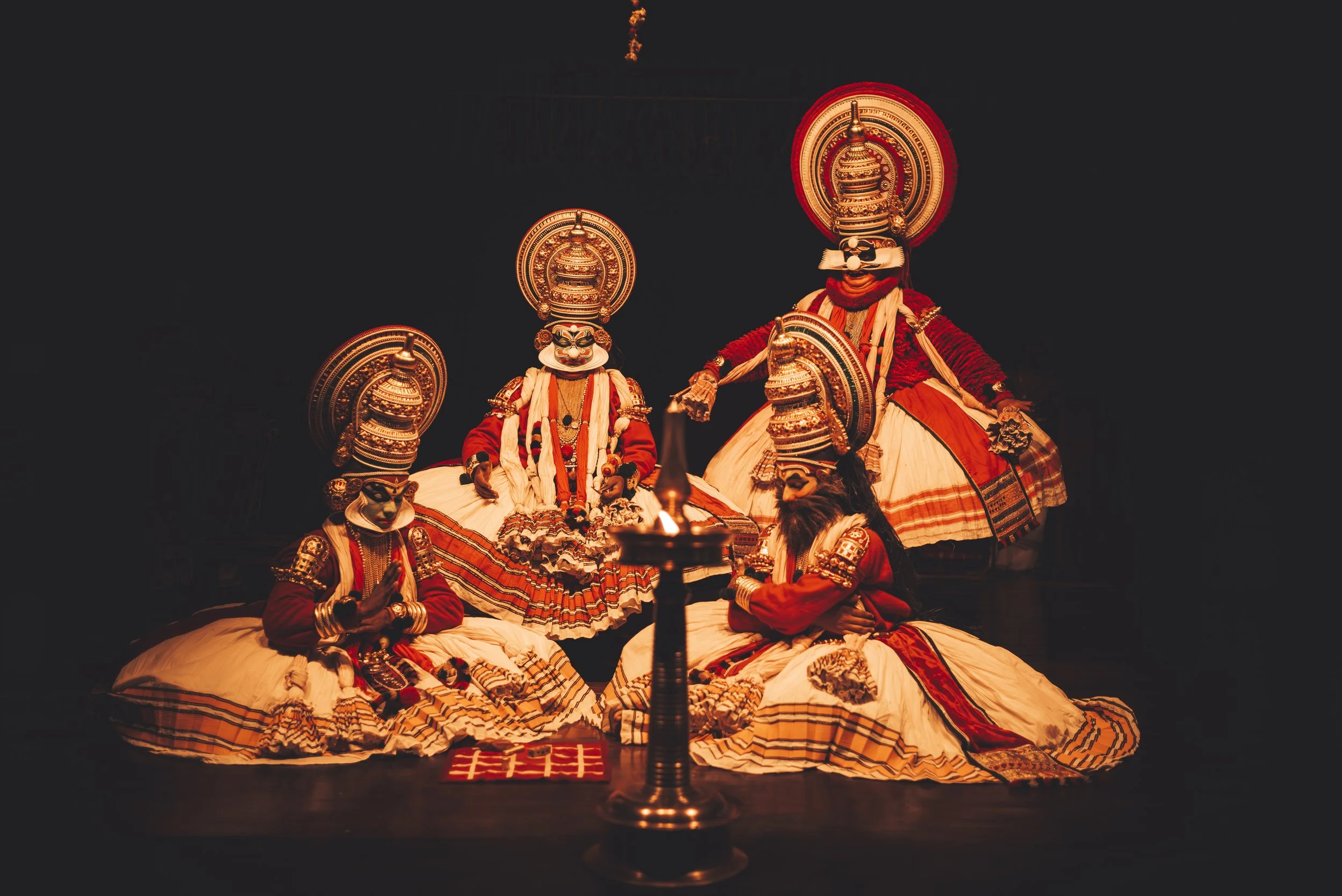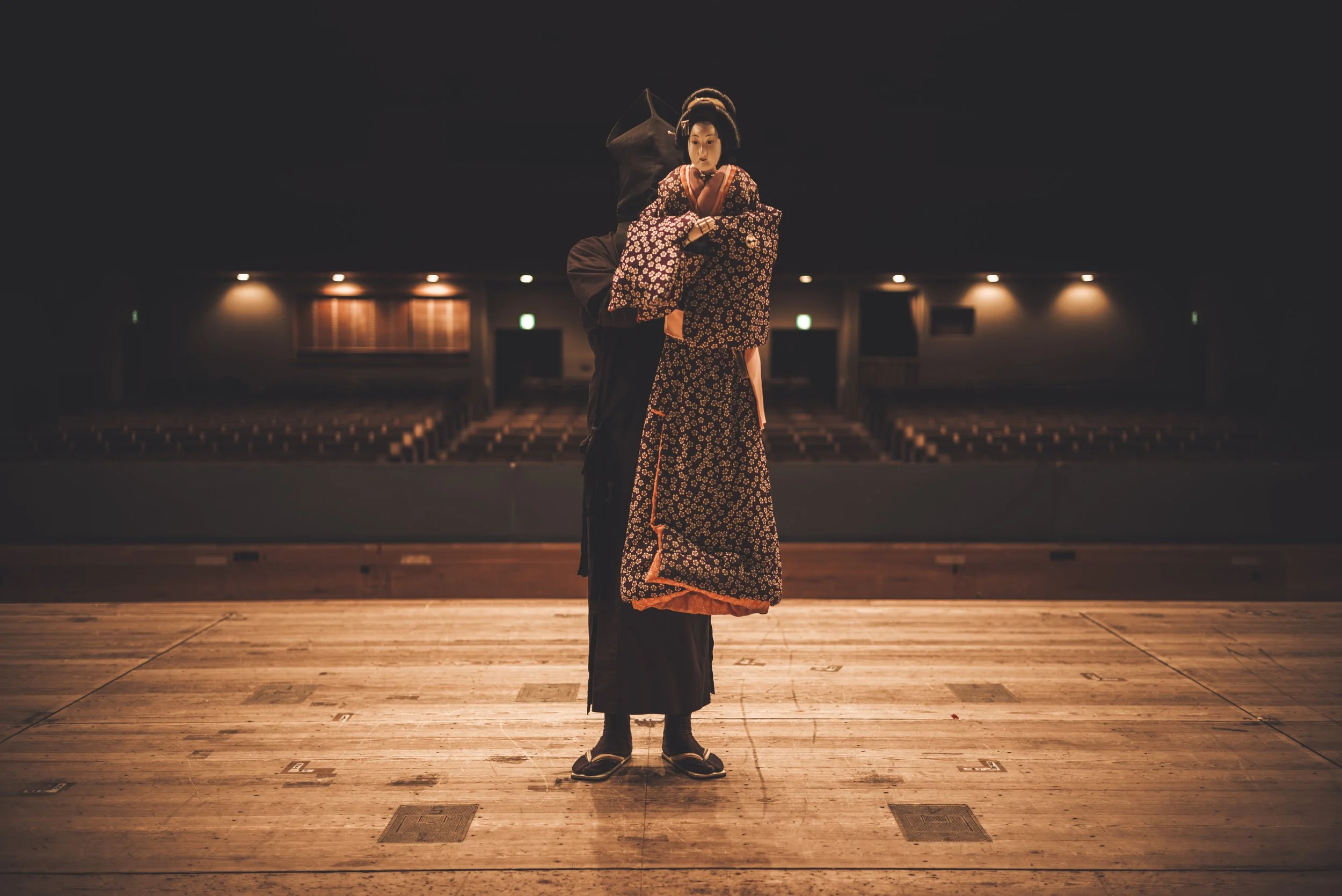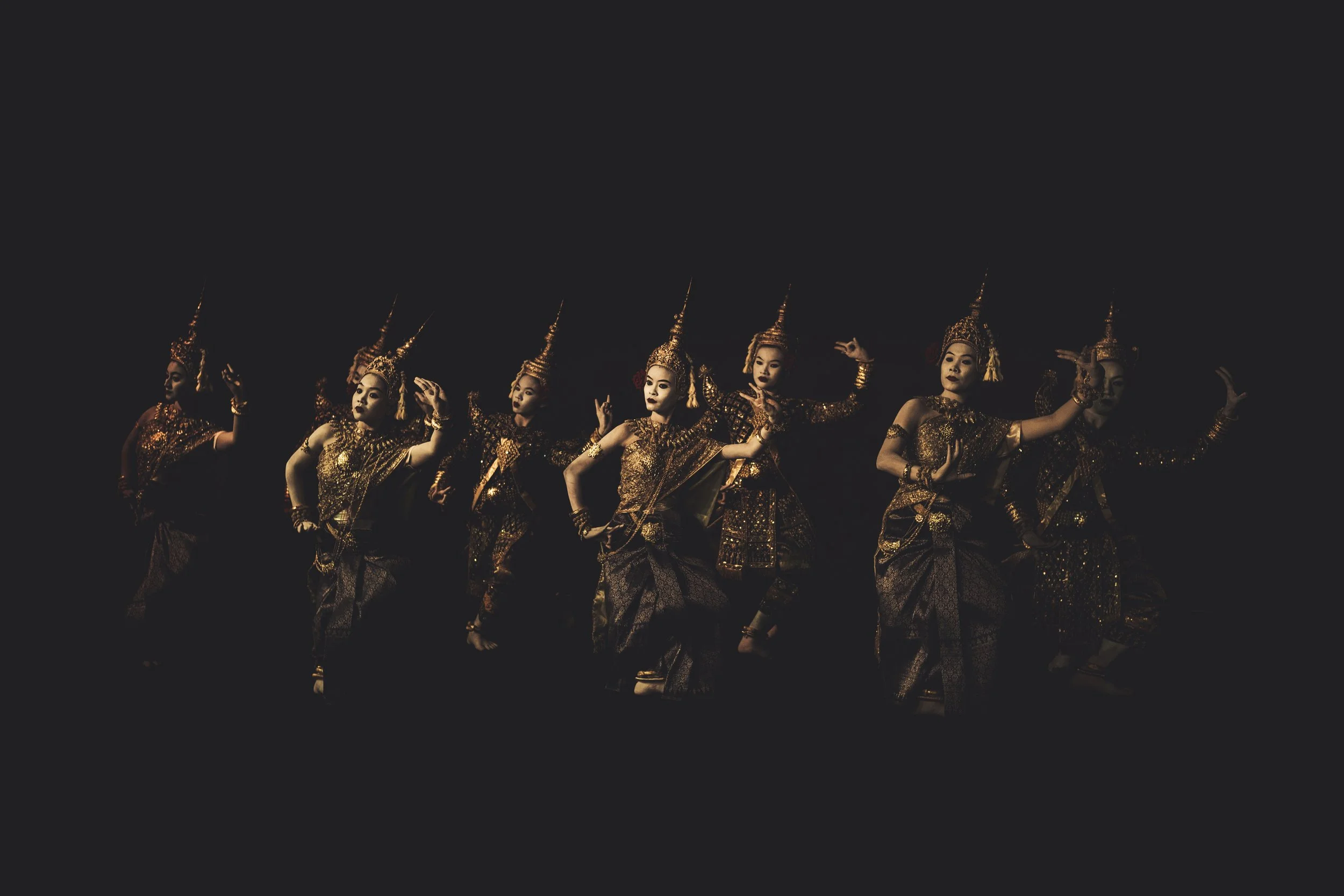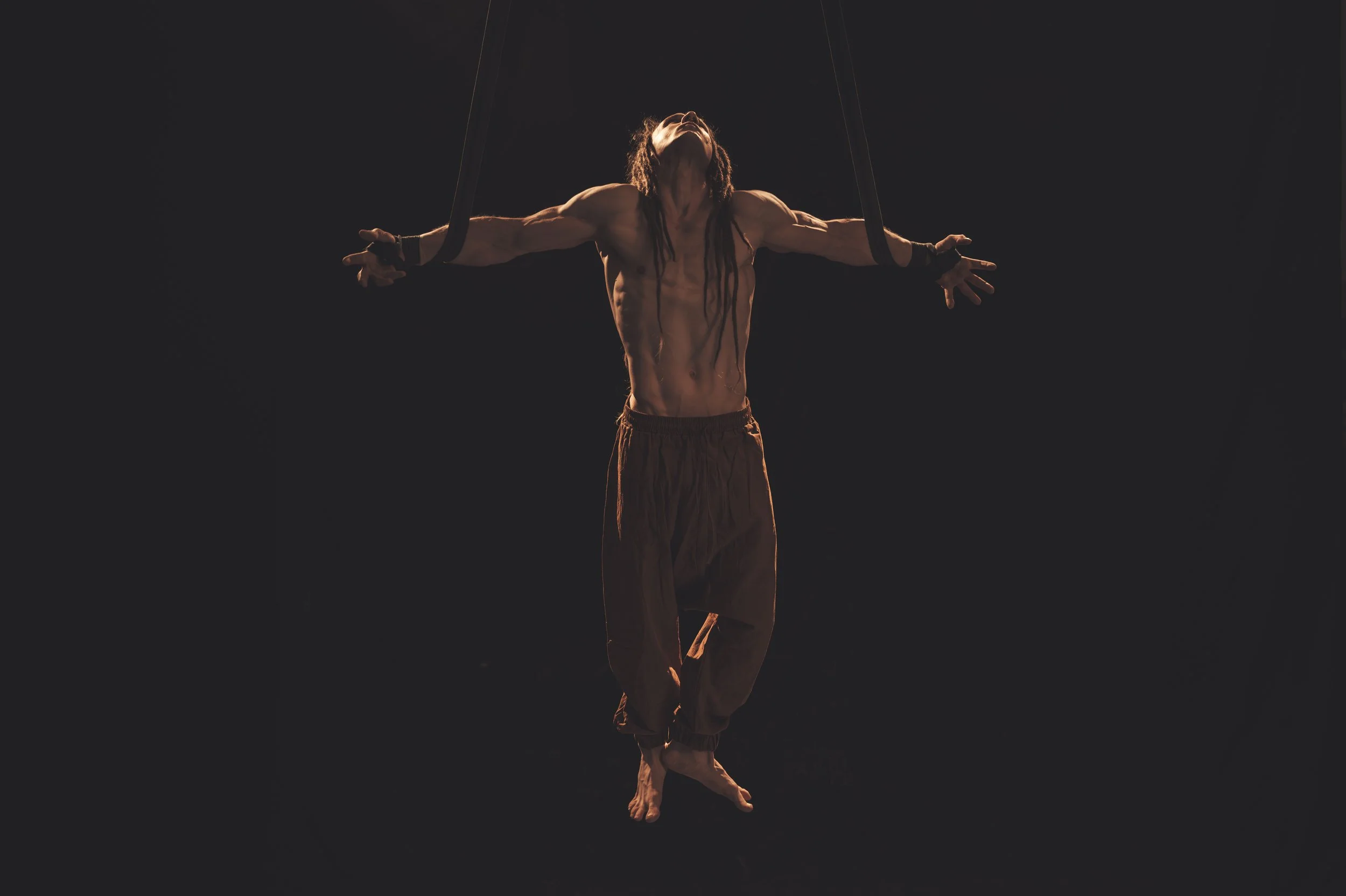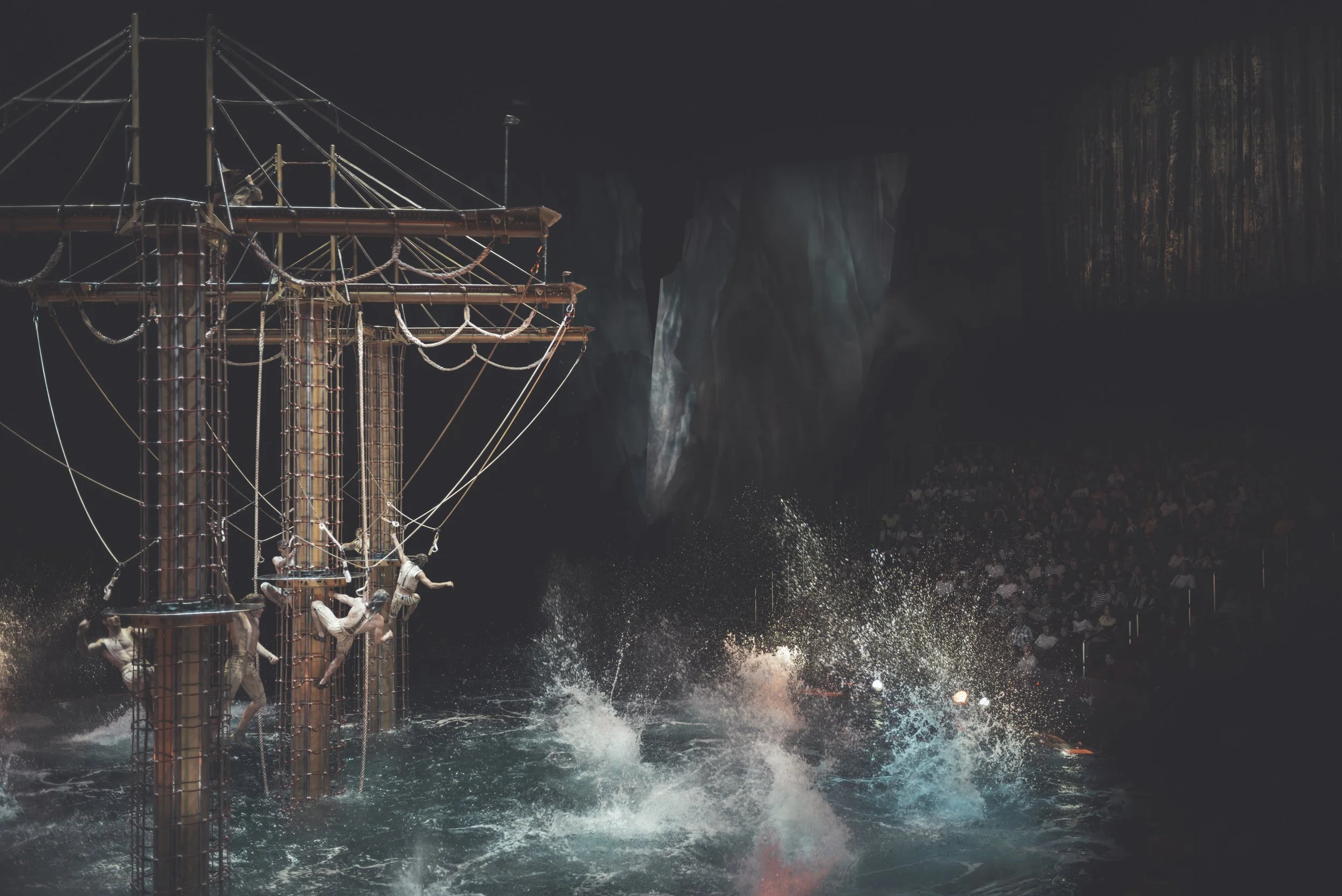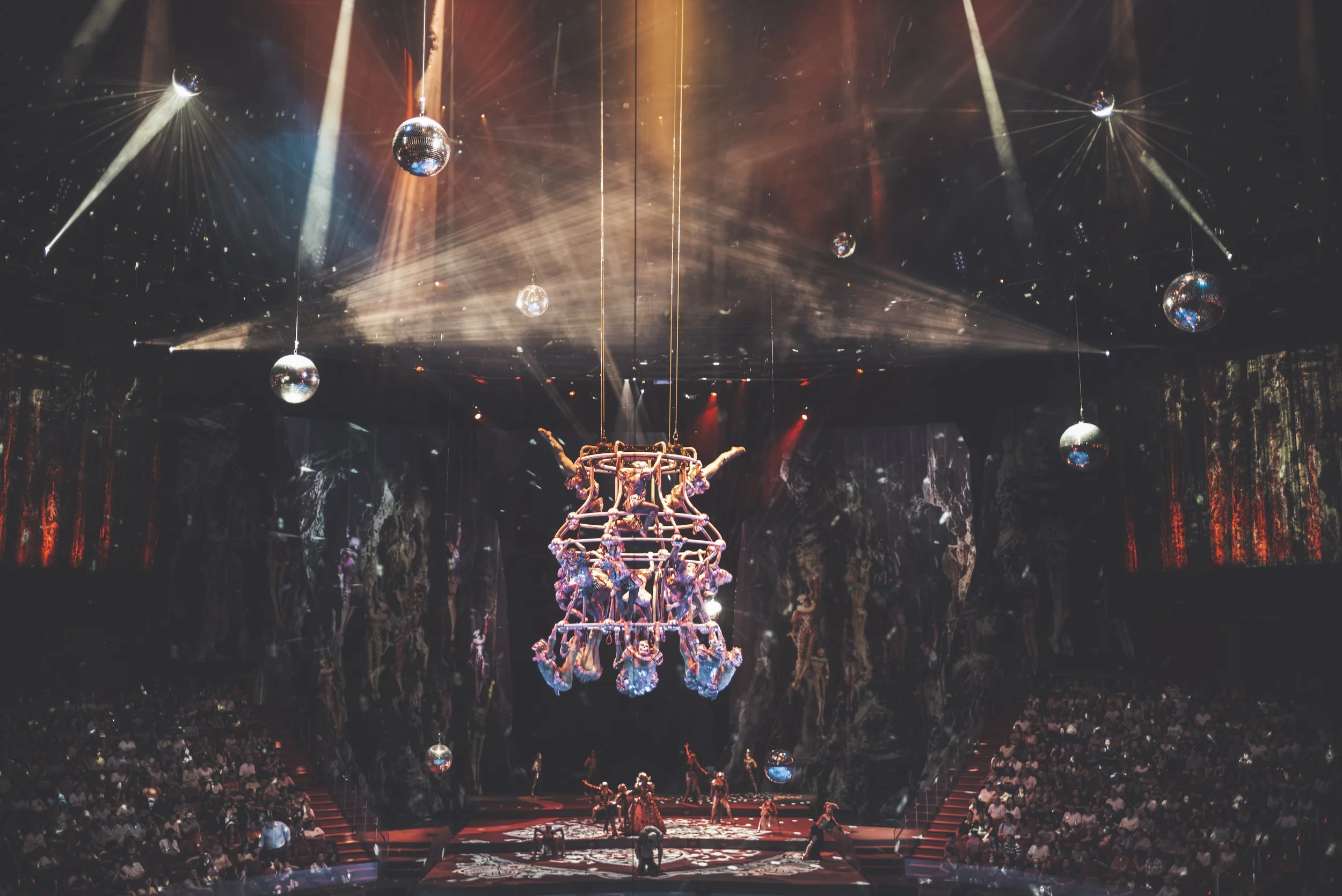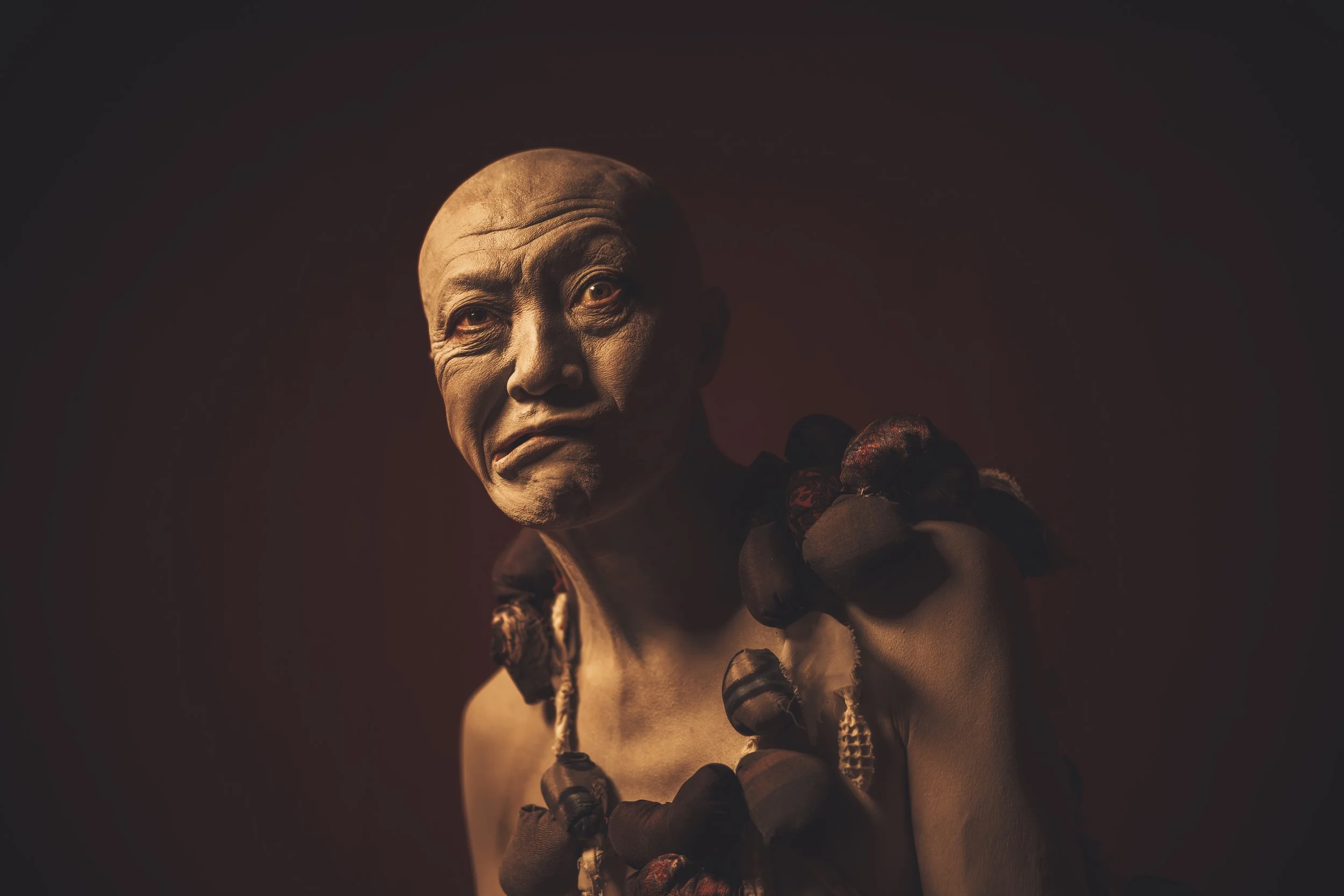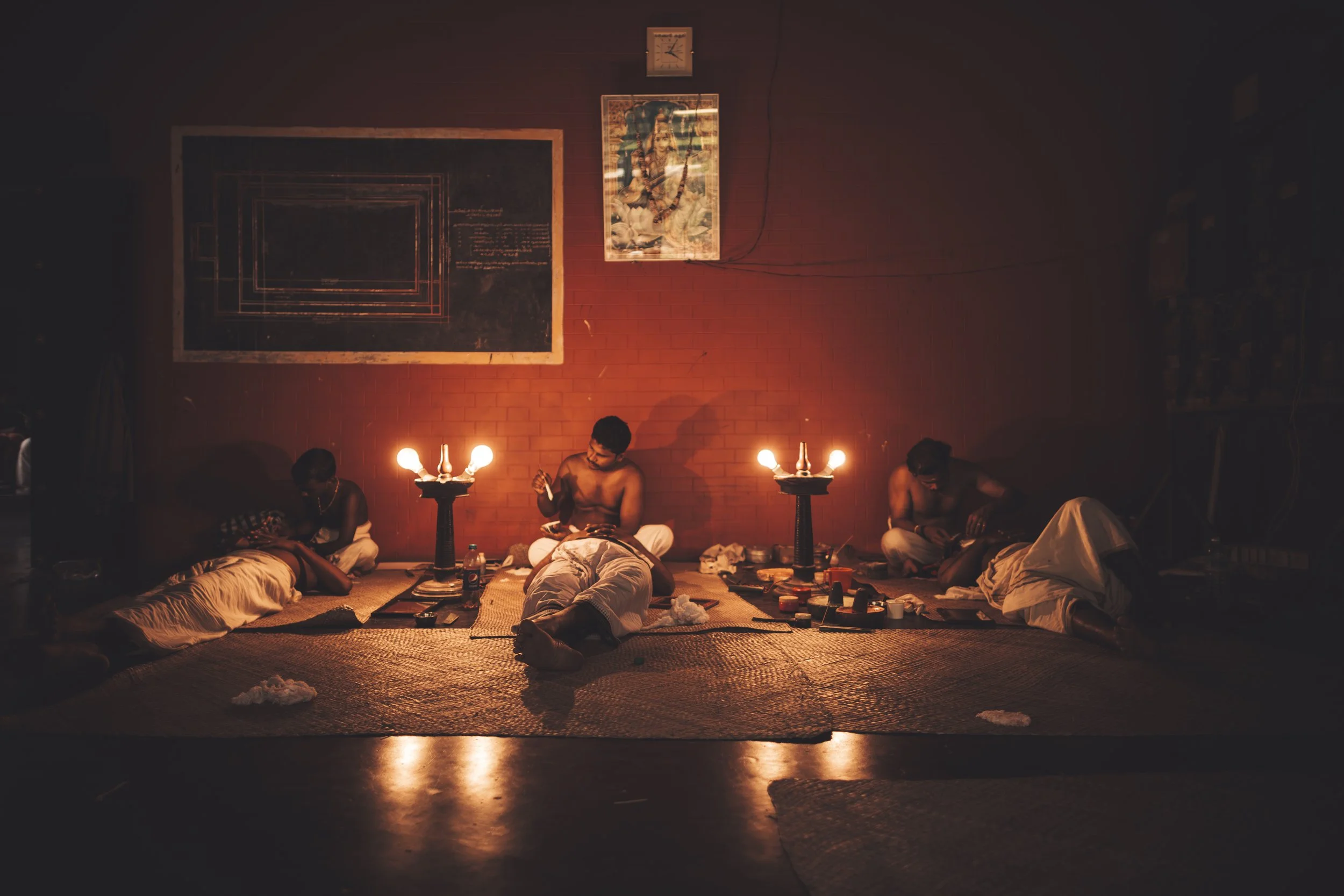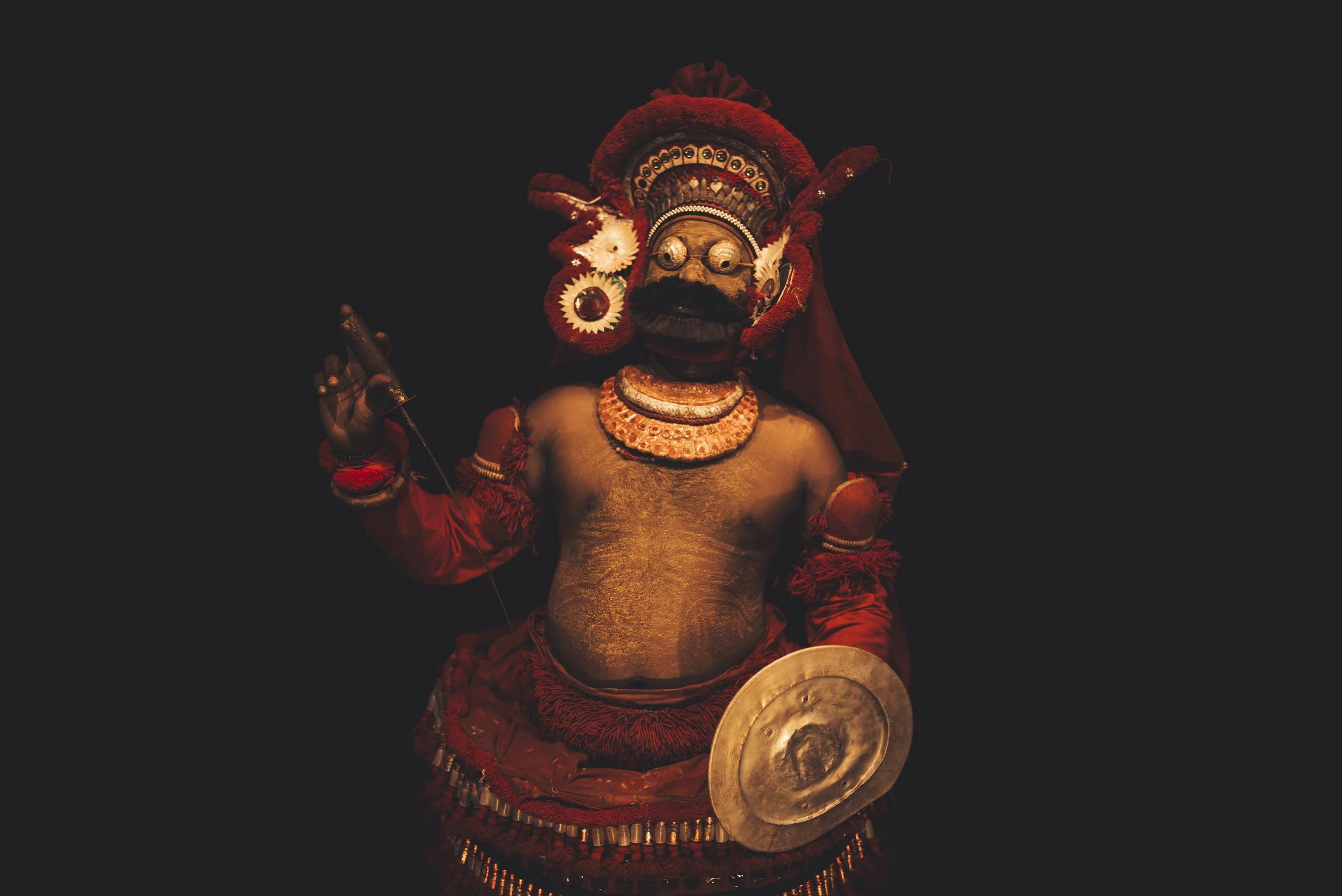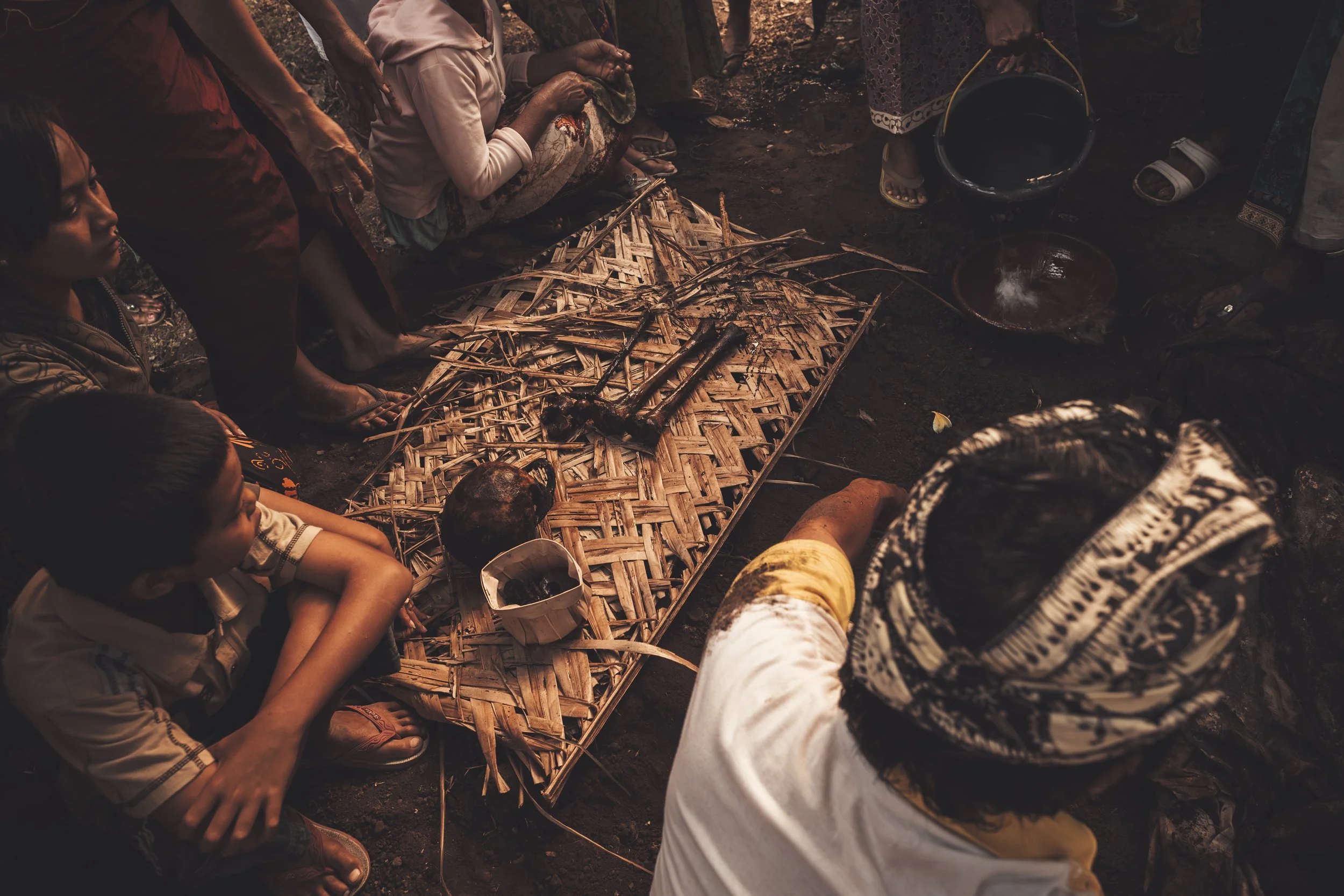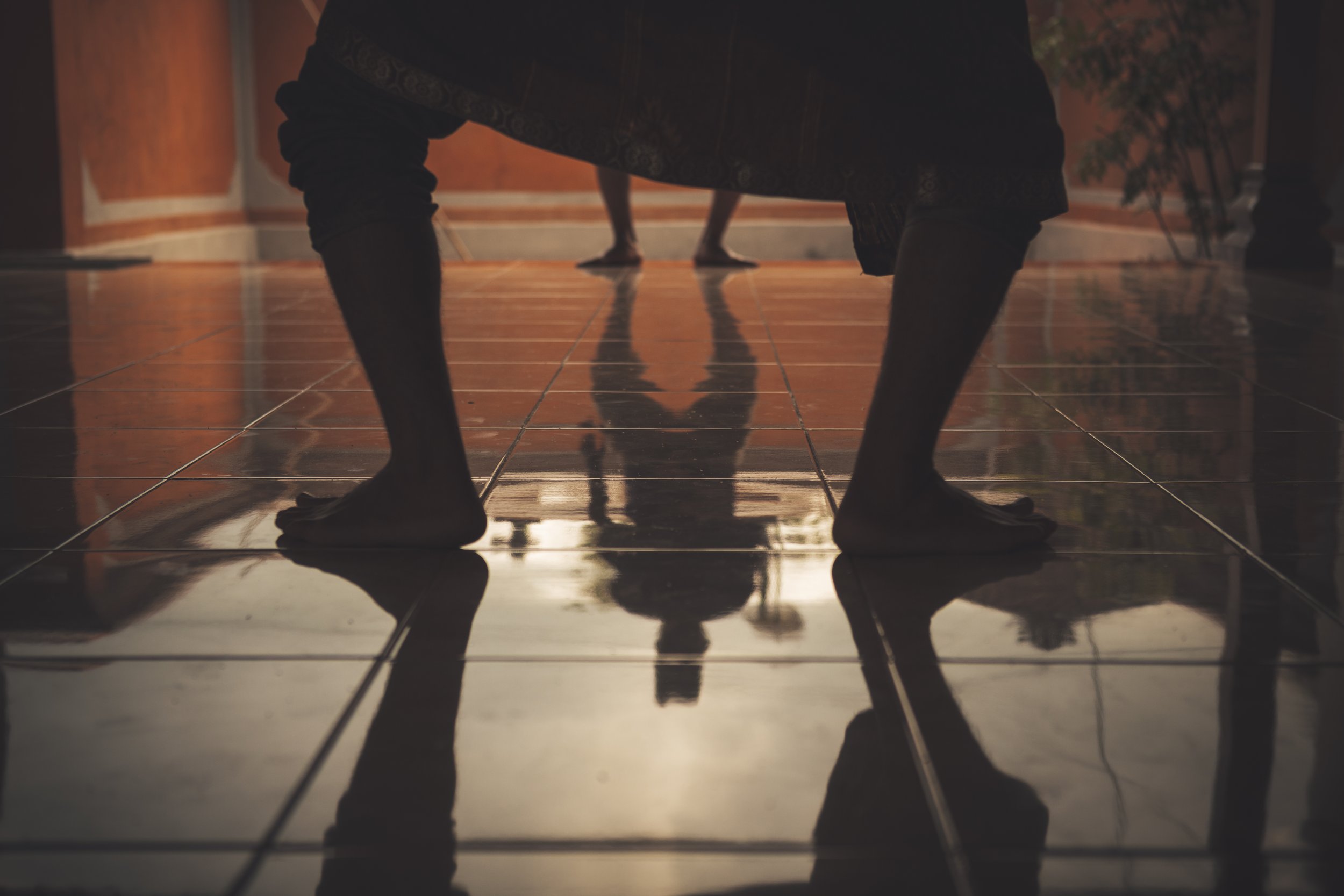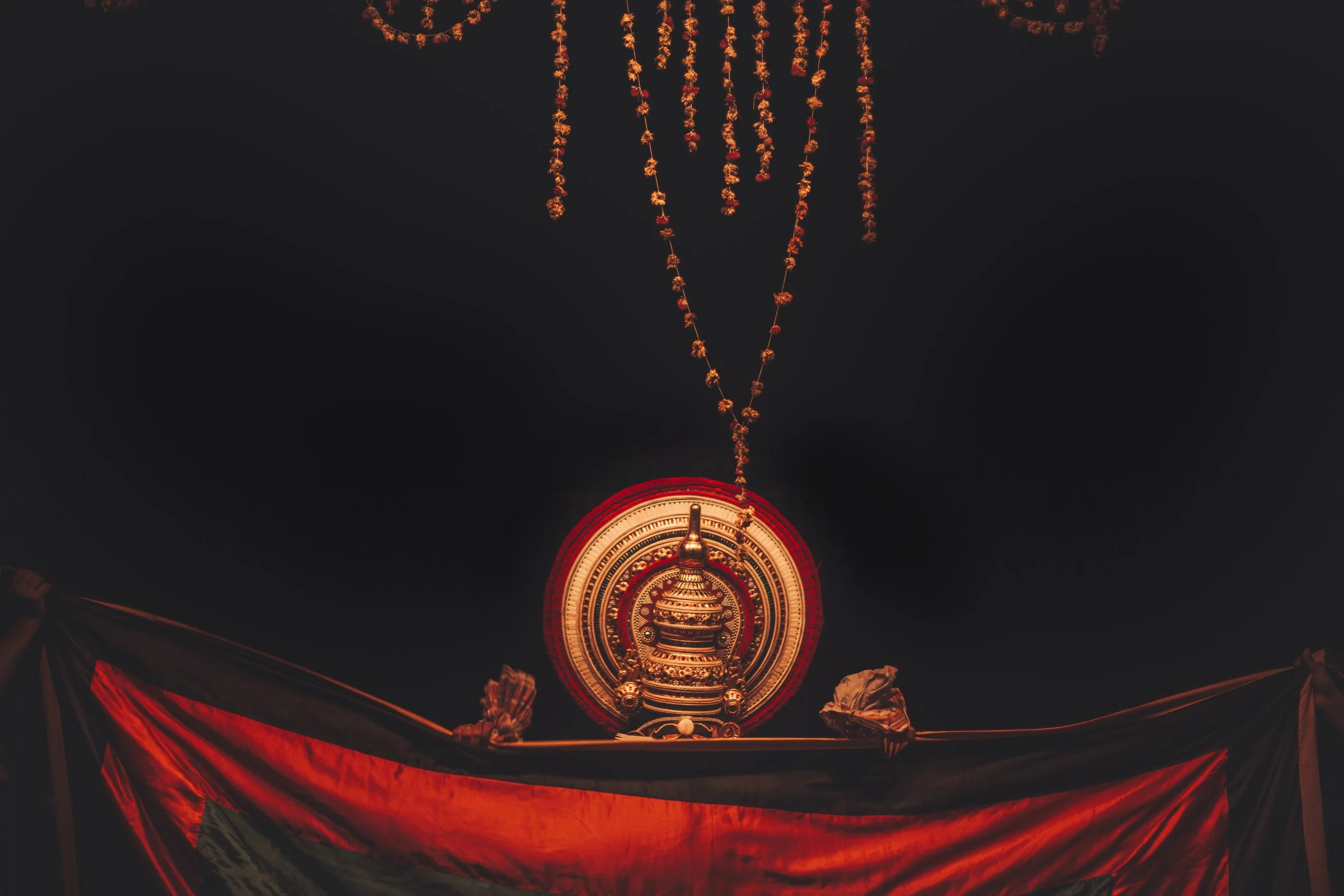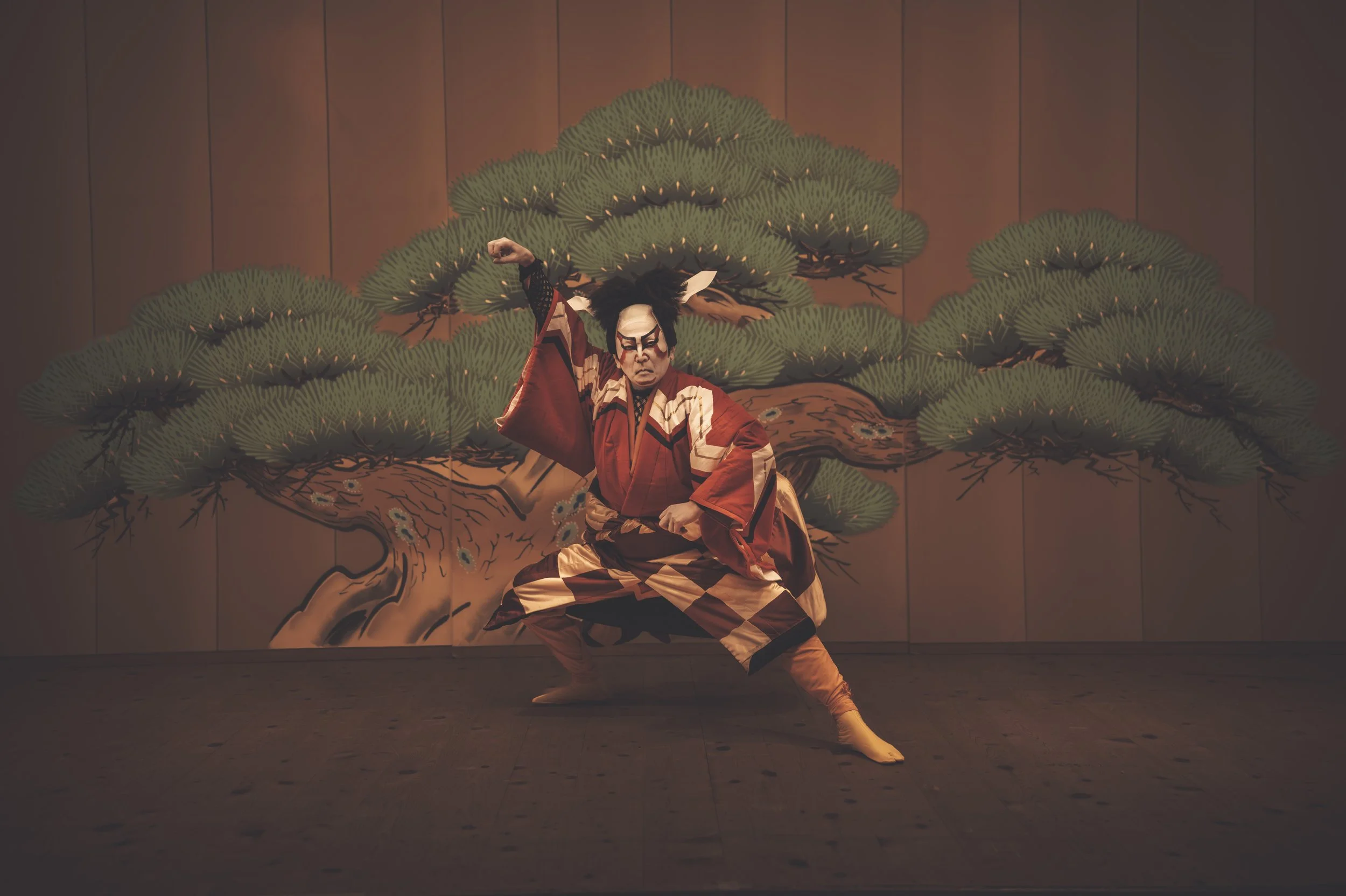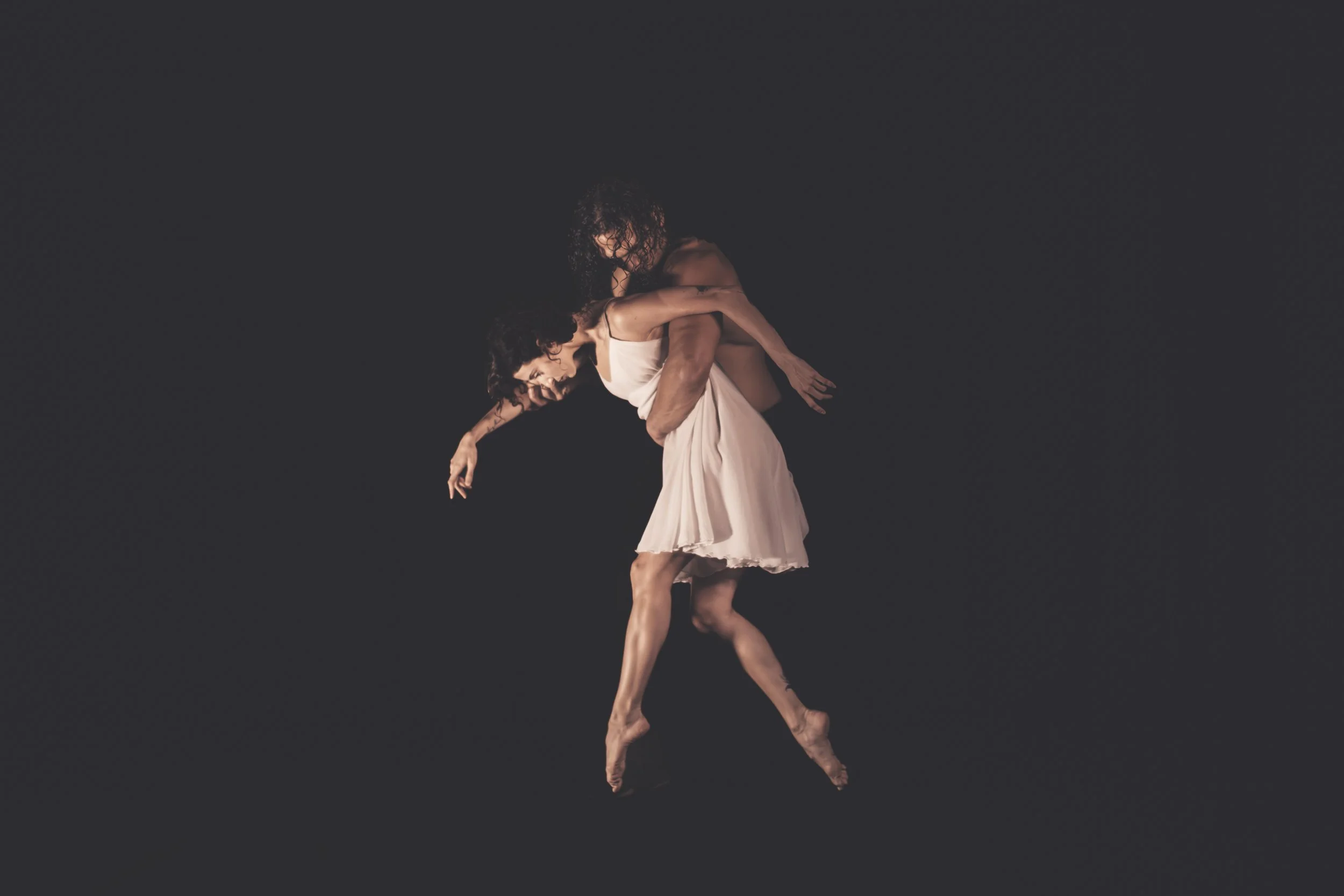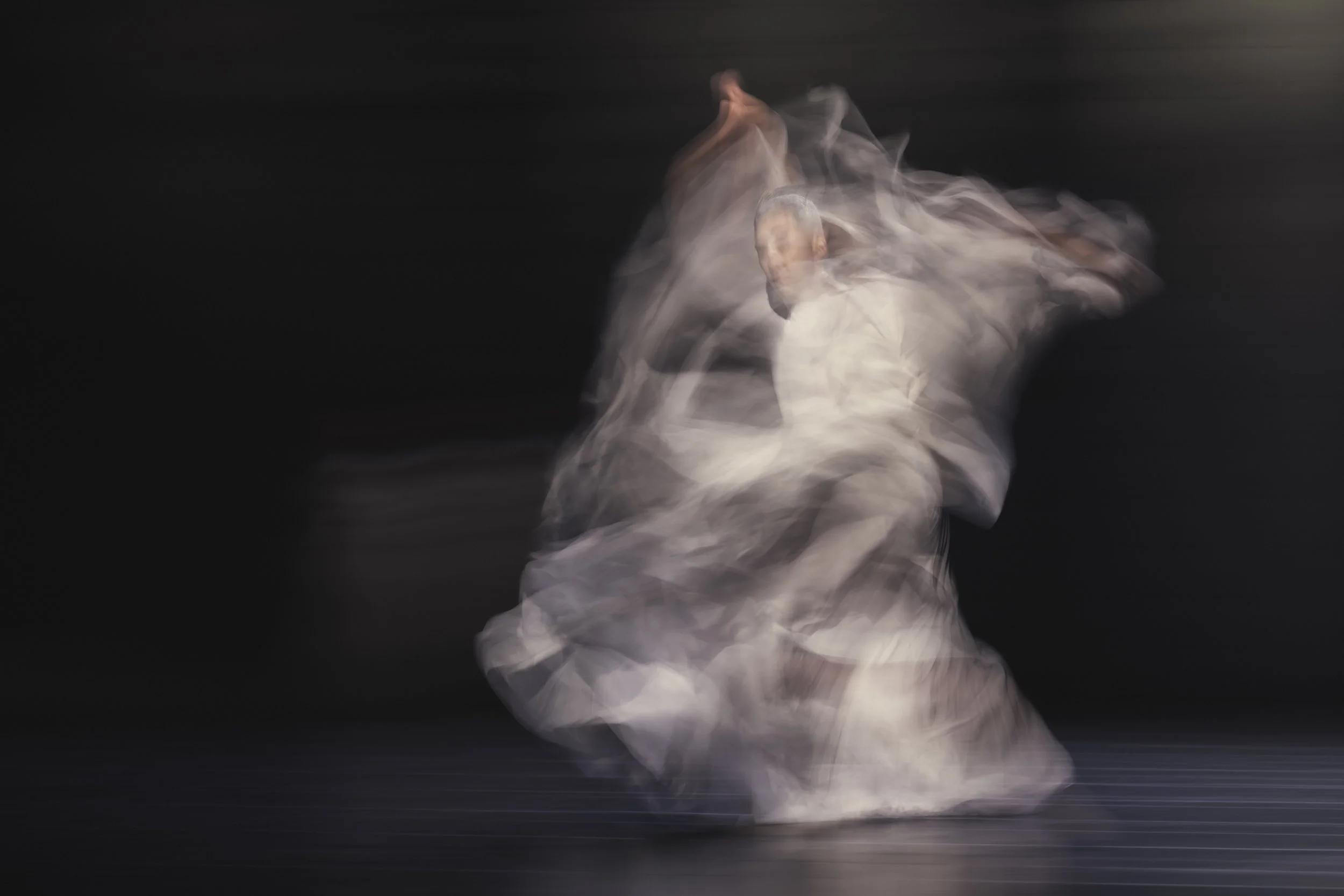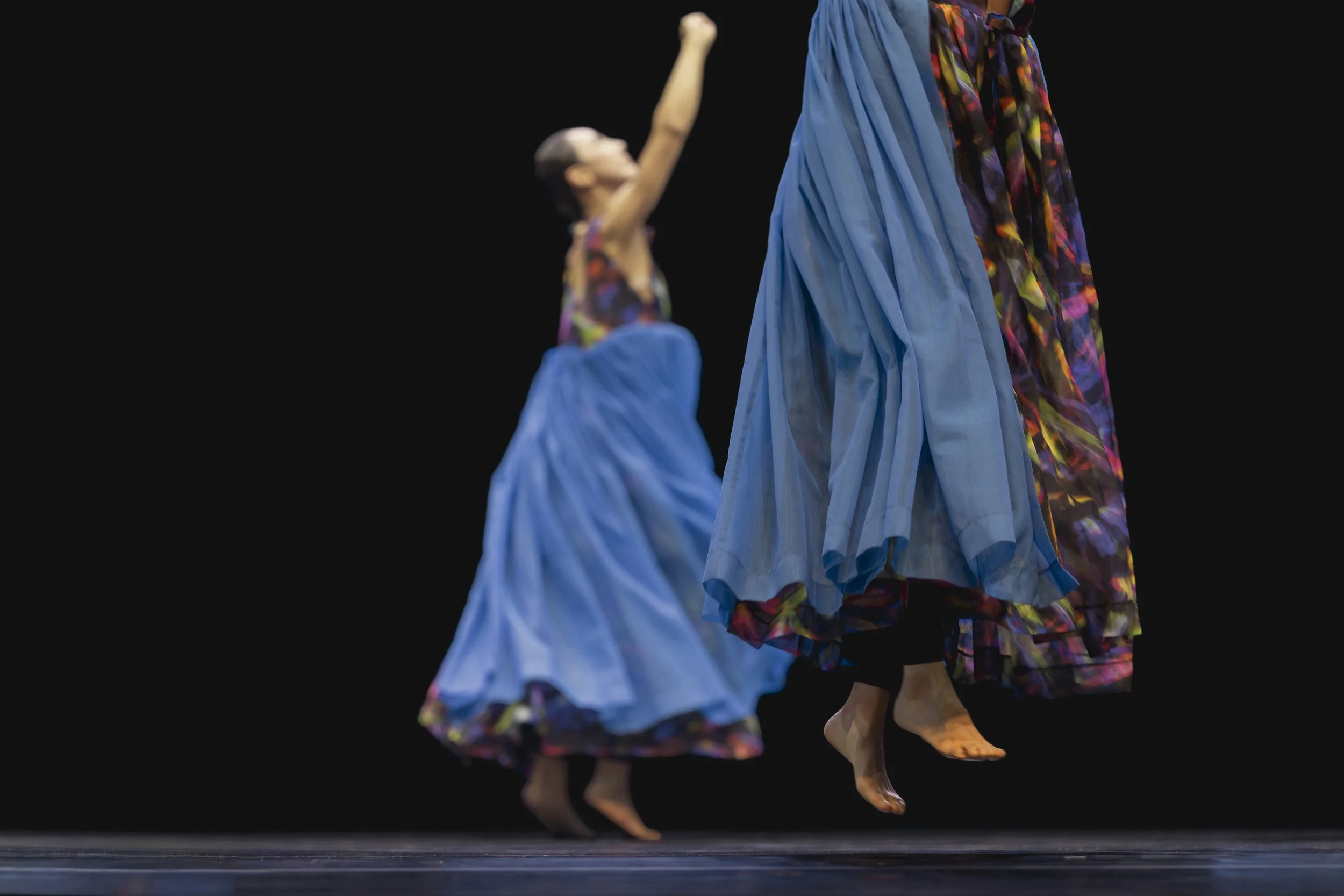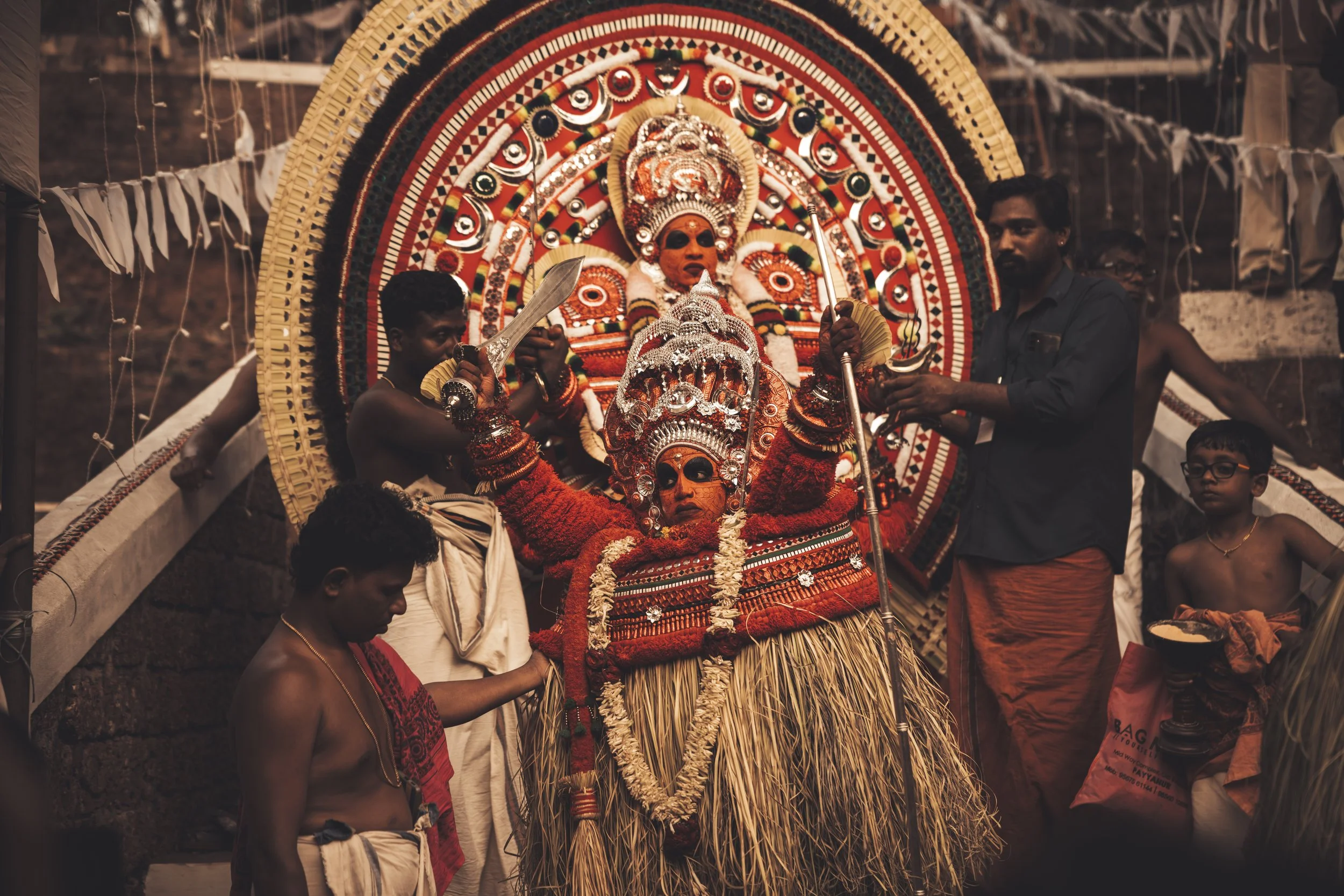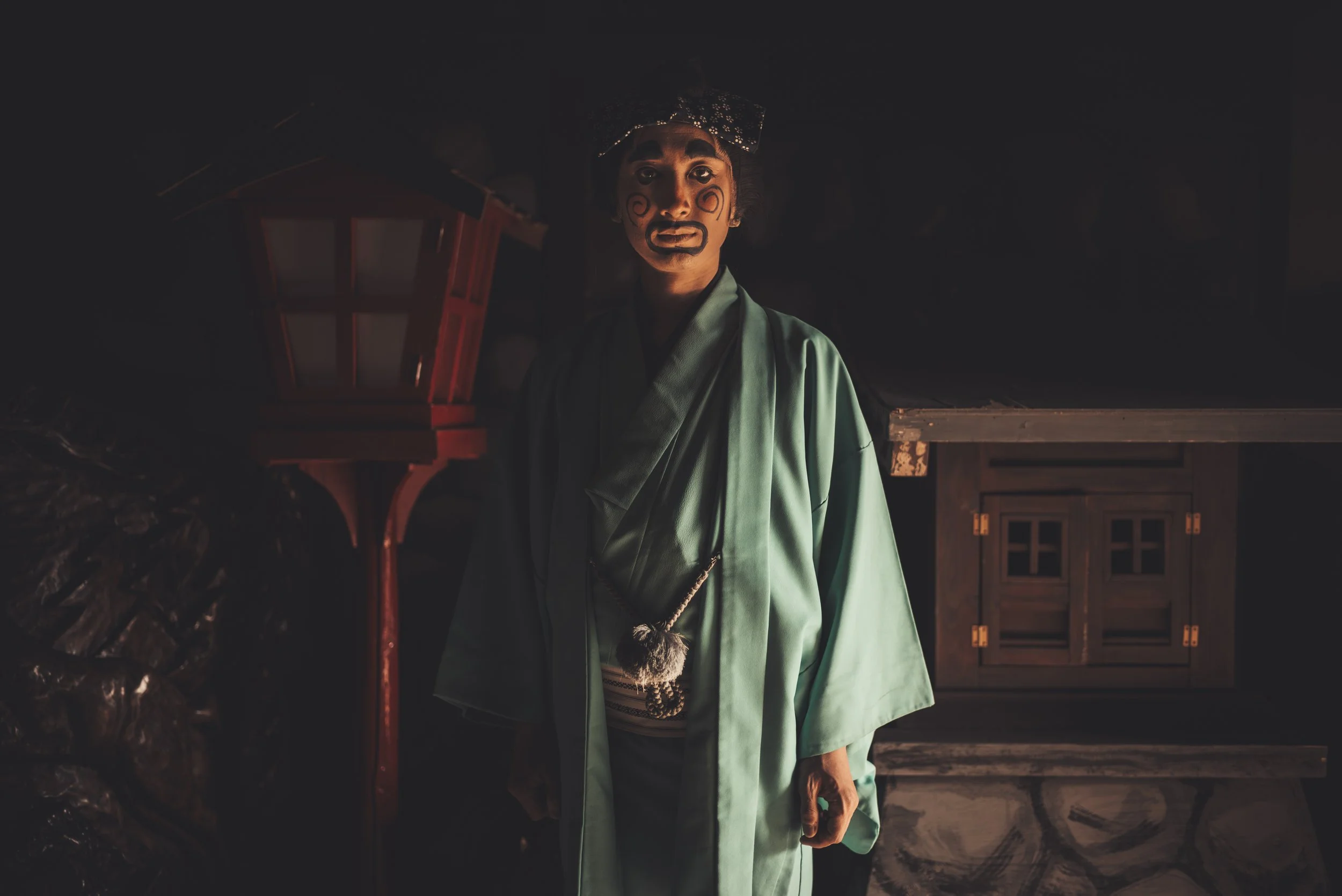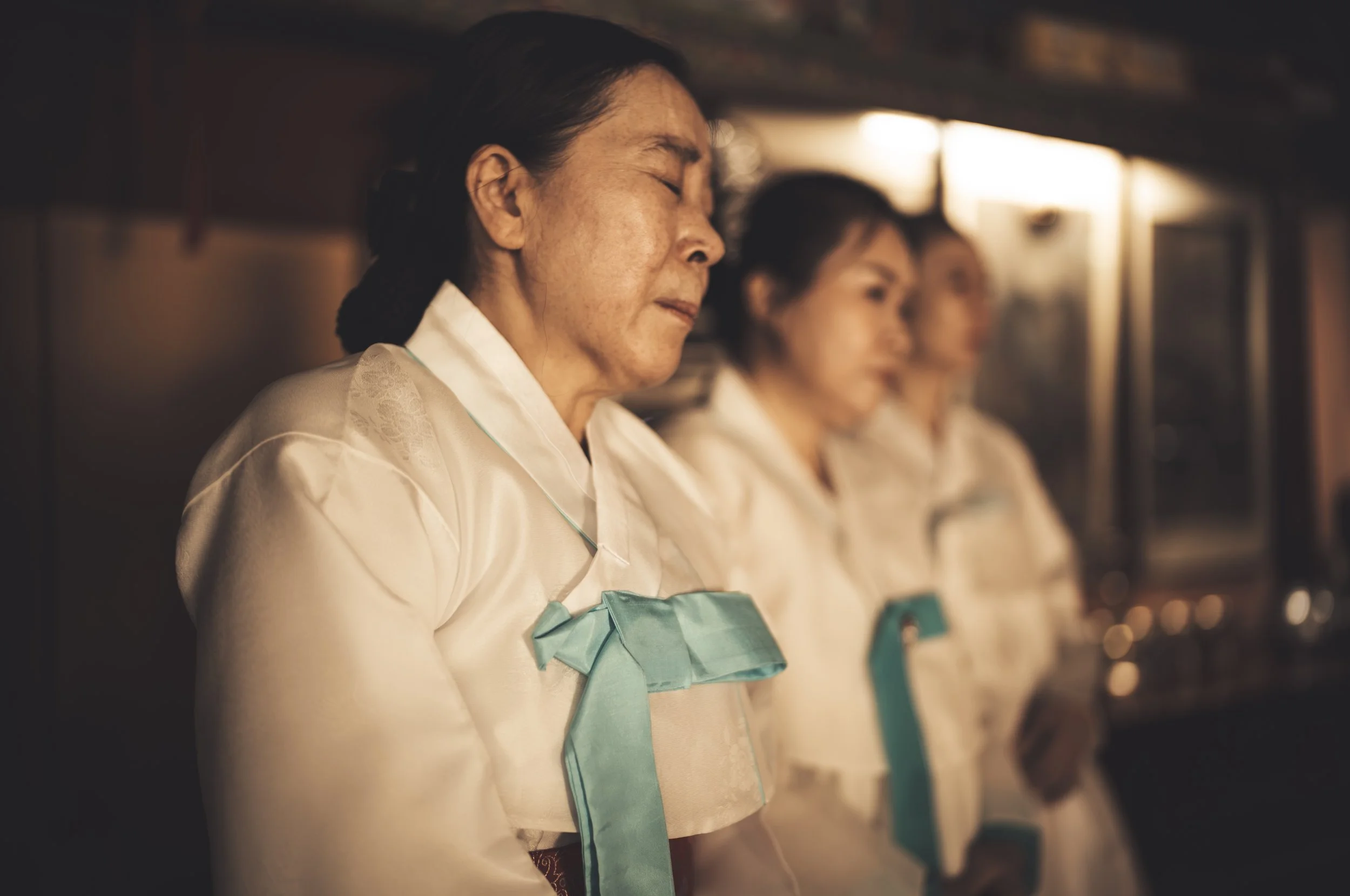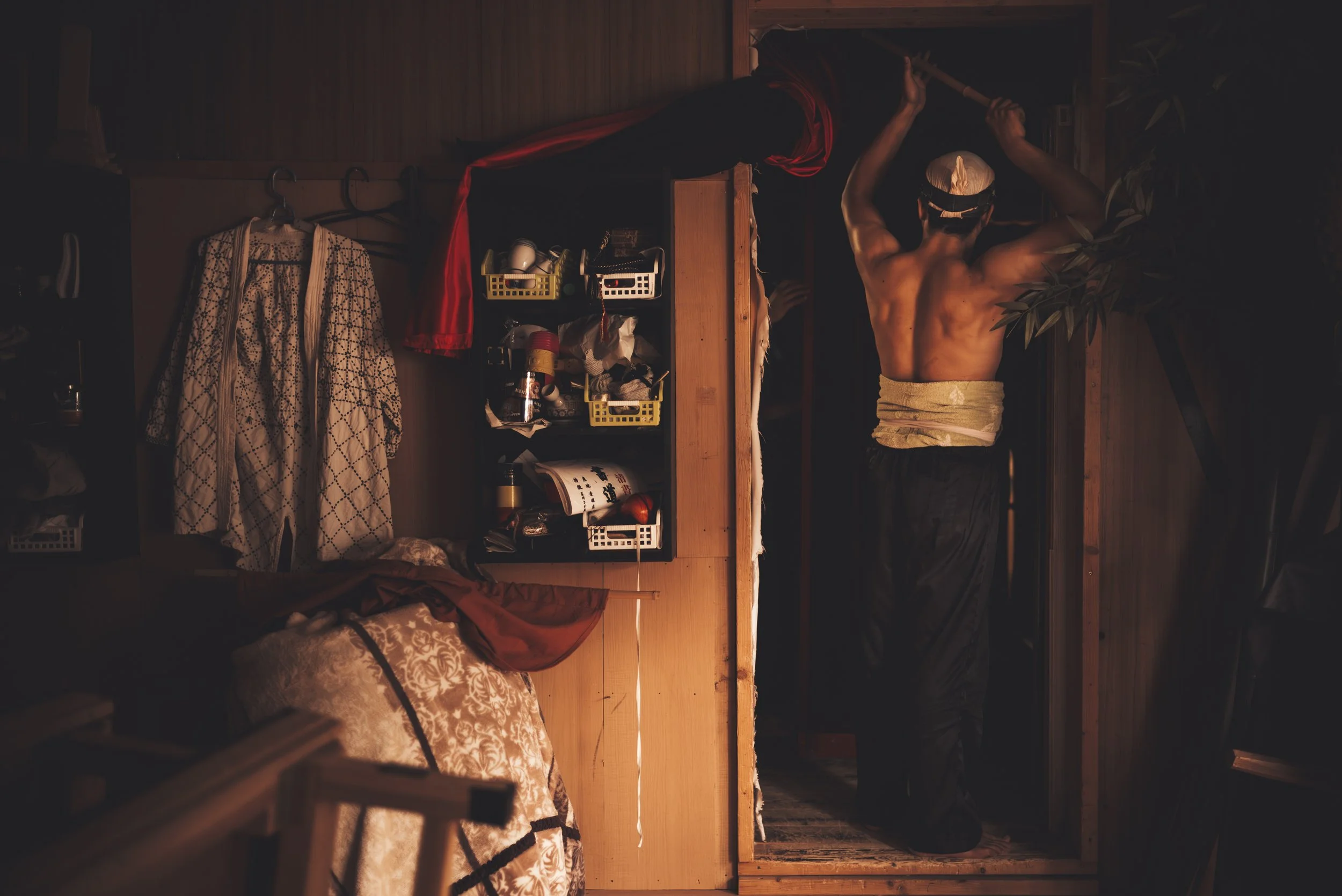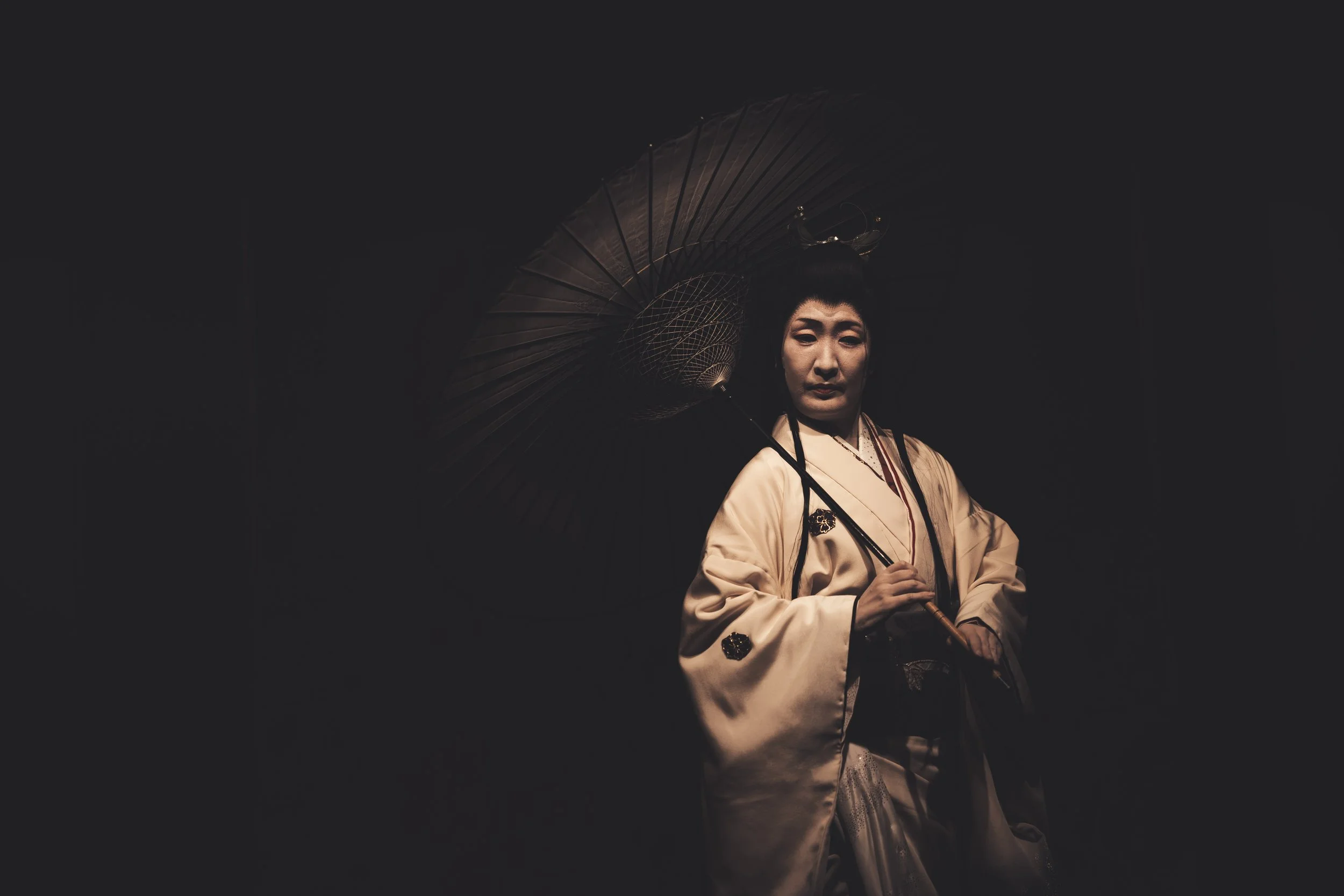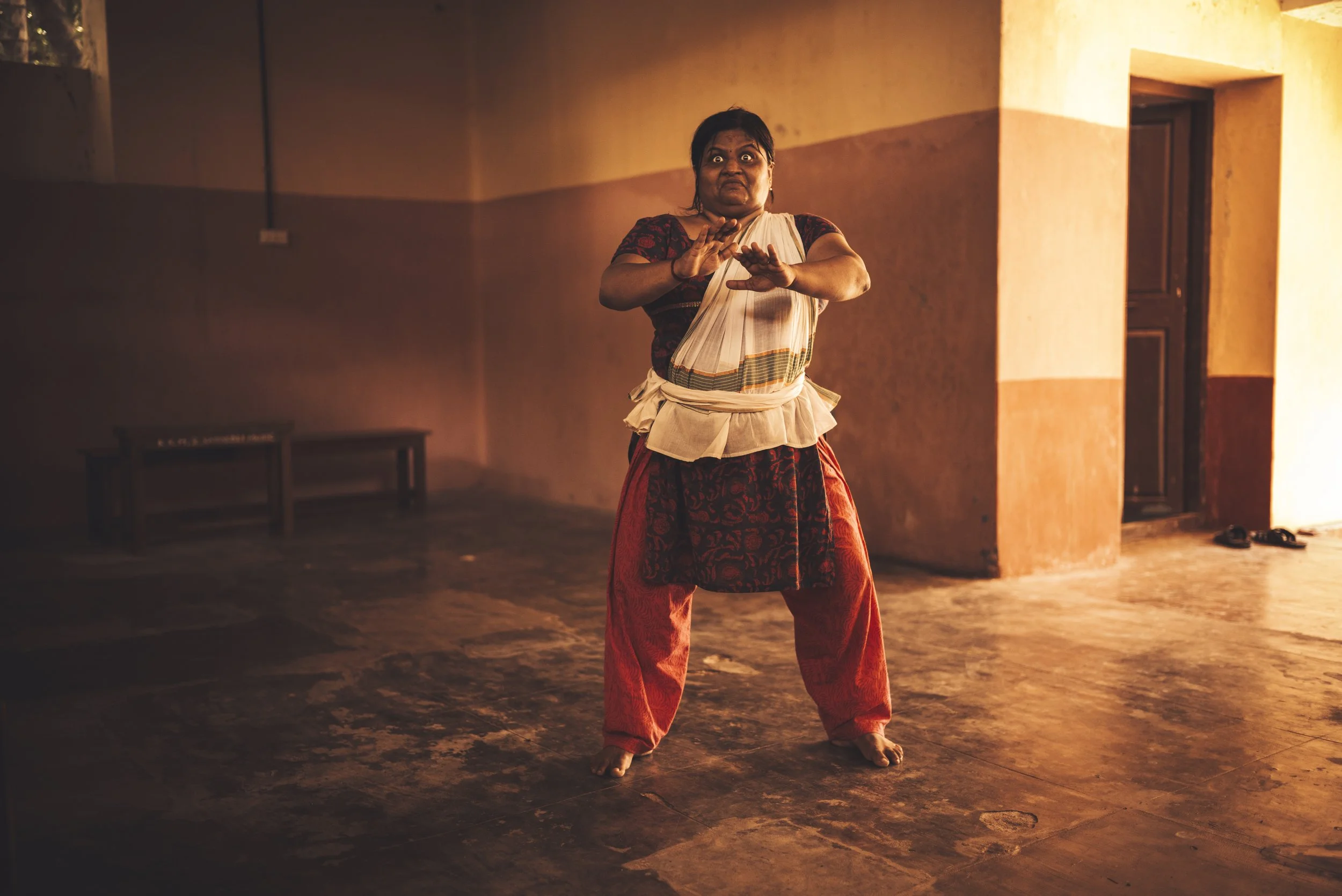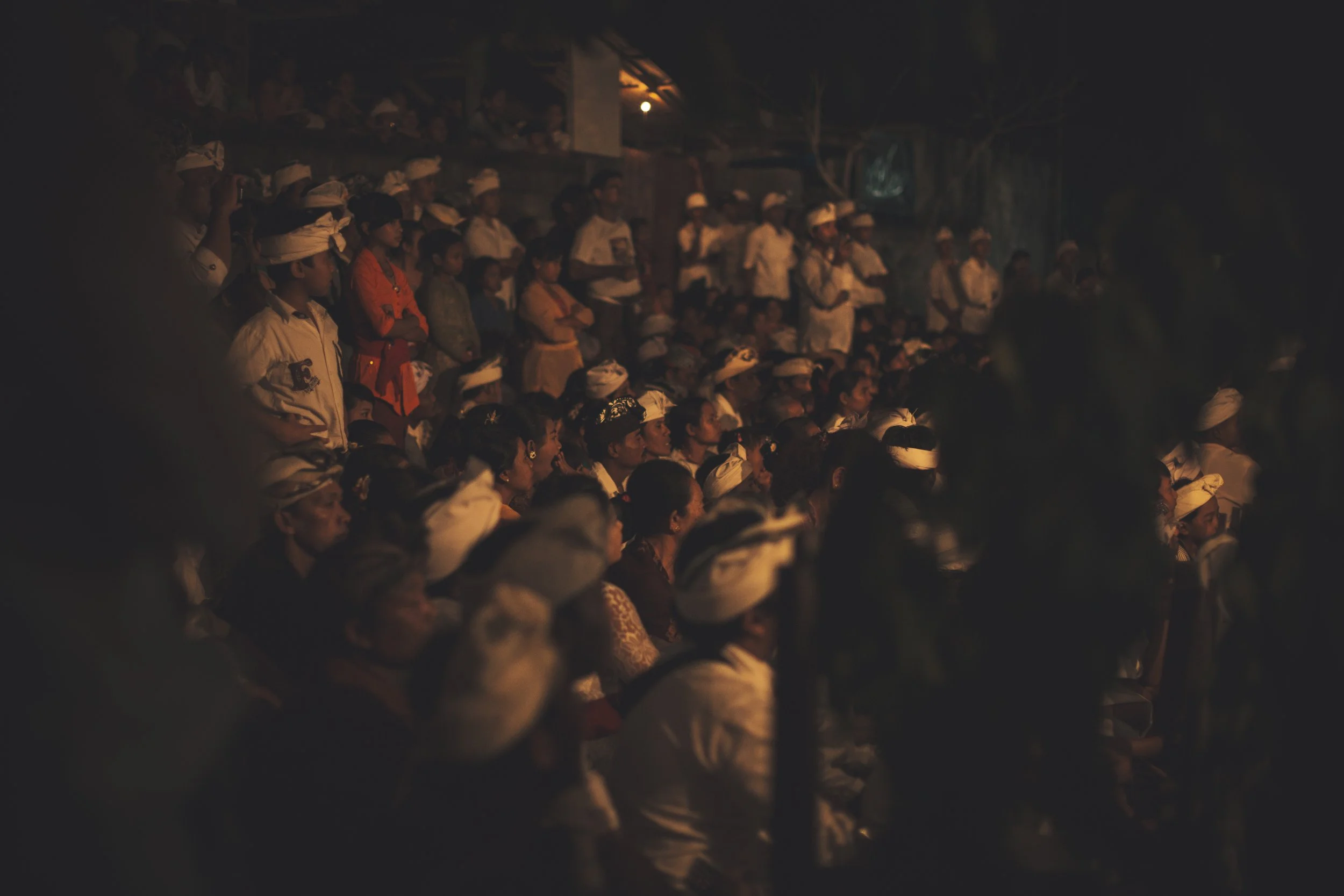

For years I have travelled across Asia and beyond, looking for where theatre comes from. In India a god enters a man’s body. In Korea a shaman lends her voice to the dead. In Japan a ghost comes back to tell his story. Theatre did not begin as entertainment. It began as a need: to tell the story of humankind.
Nobody copied anybody. Shakespeare never saw a Noh play, and the Noh masters never heard of Elsinore. Yet in Hamlet, too, a murdered king walks the ramparts. Put a Balinese Topeng character beside Arlecchino or Pantalone and the same archetypes return, though as far as anyone knows these two theatres never met. From the Greeks to Shakespeare and Zeami, a single river runs underground.
What is shown here is only a glimpse of an archive built over almost two decades, with a contemporary thread running through it. The archive is also made of stories. In Japan, I began photographing Noh with Kinue Oshima and her father. In 1998, she became the first woman of the Kita school to be registered with the Nohgaku Association. In Bali, I Made Djimat, a Topeng master who learned from his mother, let me follow him for years, to places I would never otherwise have seen. In India, Gotipua, danced by boys, is one of the roots of Odissi. In Cambodia, classical dance was almost wiped out under the Khmer Rouge and rebuilt by those who survived.
Behind these images are the masters and families who have carried these arts for centuries. Some photographs were taken as things happened. Others were prepared with the artists. In every case, the stages, the gestures, the masks and the stories belong to them.
I have long felt that the place where theatre happens is sacred. Some of the forms I found are still performed in temples. But the sacred is not only in the walls. It is in the performer who becomes a god, a king, a ghost or a villager. It is also in those who come to watch. This ritual has fascinated me for as long as I can remember. What I am looking for is the moment when a performance leaves the ordinary order of things. I do not fully know where this need comes from. This work is also a way of finding out.
I am not a specialist, and this is not an inventory of traditions. It is an act of witnessing, of remembering and of transmission.